


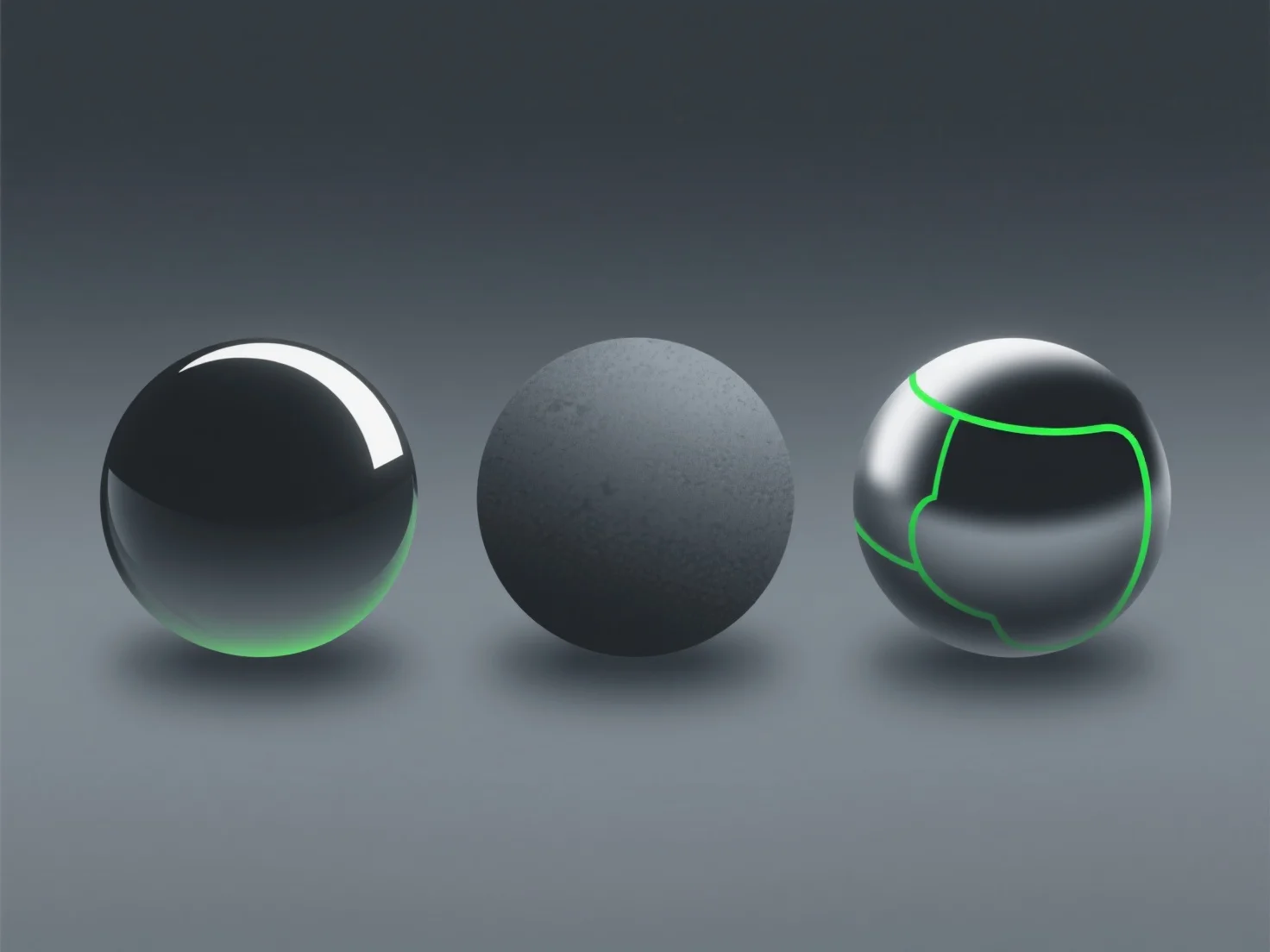
Bahan secara langsung membentuk output visual dari model 3D dengan menentukan penampilan permukaan dan realisme melalui interaksi cahaya, seperti refleksi, penyerapan, atau transparansi.
Mereka merinci properti inti seperti warna, tekstur, kilau, dan kasar, menentukan apakah sebuah model terlihat metalik, matte, transparan, atau bertekstur dalam rendering atau tampilan real-time.
Aplikasi utama di berbagai industri meliputi: - Gaming: Menciptakan permukaan yang realistis (misalnya, armor logam, pakaian kain) untuk meningkatkan imersi dalam adegan. - Arsitektur: Mensimulasikan bahan seperti kayu, kaca, atau beton untuk pratinjau bangunan yang realistis. - Desain Produk: Mengepratinjau bagaimana bahan (plastik, logam, kulit) muncul pada prototipe di bawah pencahayaan yang berbeda.
Menyesuaikan sifat-sifat material.