


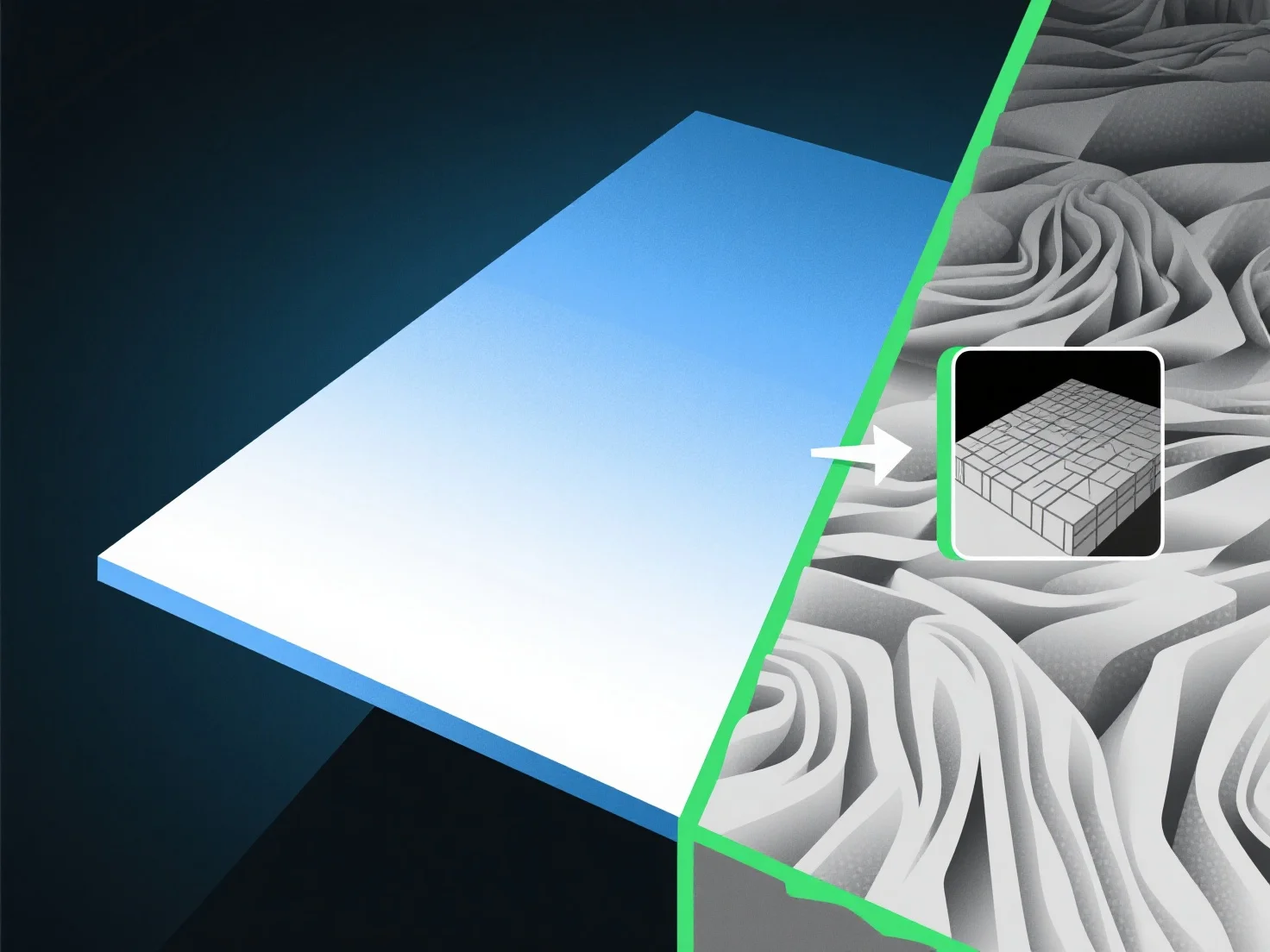
Pemetaan Displacement dalam tekstur 3D mengubah geometri permukaan model dengan menggeser simpul berdasarkan tekstur skala abu-abu, menciptakan kedalaman fisik yang sebenarnya.
- **Peran utama**: Ini menambahkan relief permukaan yang nyata, membuat tekstur akurat secara fisik daripada sekadar meyakinkan secara visual. - **Aplikasi tipikal**: Digunakan untuk medan, batu, atau bahan organik dalam game, film, dan visualisasi produk untuk meningkatkan realisme dan imersi. - **Pertimbangan utama**: Membutuhkan jumlah poligon yang lebih tinggi untuk memastikan permukaan yang dipindahkan tampak halus, tidak seperti pemetaan normal yang bekerja pada model poligon rendah.