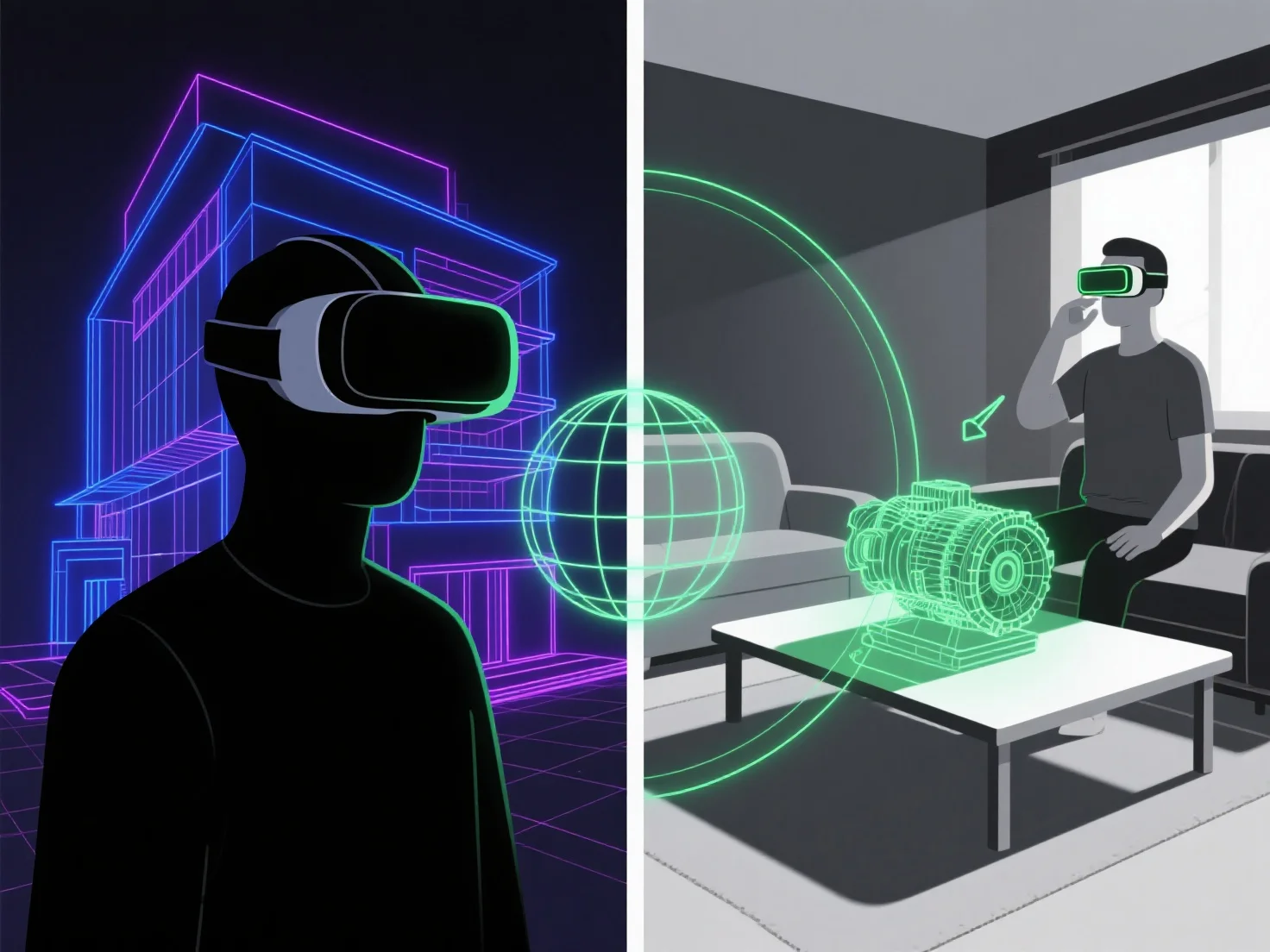
Untuk aplikasi 3D, perbedaan utama antara VR dan AR terletak pada hubungan mereka dengan dunia nyata: VR menciptakan lingkungan 3D virtual yang sepenuhnya imersif dan terisolasi, sedangkan AR melapisi konten digital 3D ke dalam pandangan dunia nyata. VR menghalangi input dunia nyata, memprioritaskan interaksi dengan model 3D dalam ruang simulasi. Ini ideal untuk pengalaman 3D sepenuhnya virtual, seperti panduan desain 3D atau simulasi pelatihan virtual. AR mempertahankan konteks dunia nyata, memungkinkan konten 3D berinteraksi dengan lingkungan fisik. Contohnya termasuk penempatan furnitur 3D di aplikasi dekorasi rumah atau anotasi 3D secara real-time dalam pemeliharaan industri. Singkatnya, pilih VR untuk aplikasi 3D yang membutuhkan imersi lengkap; pilih AR ketika konten 3D harus terintegrasi dengan dunia nyata.


Apa perbedaan antara VR dan AR untuk aplikasi 3D?
VR menciptakan lingkungan 3D virtual yang imersif, sedangkan AR menempatkan konten 3D di atas dunia nyata.