


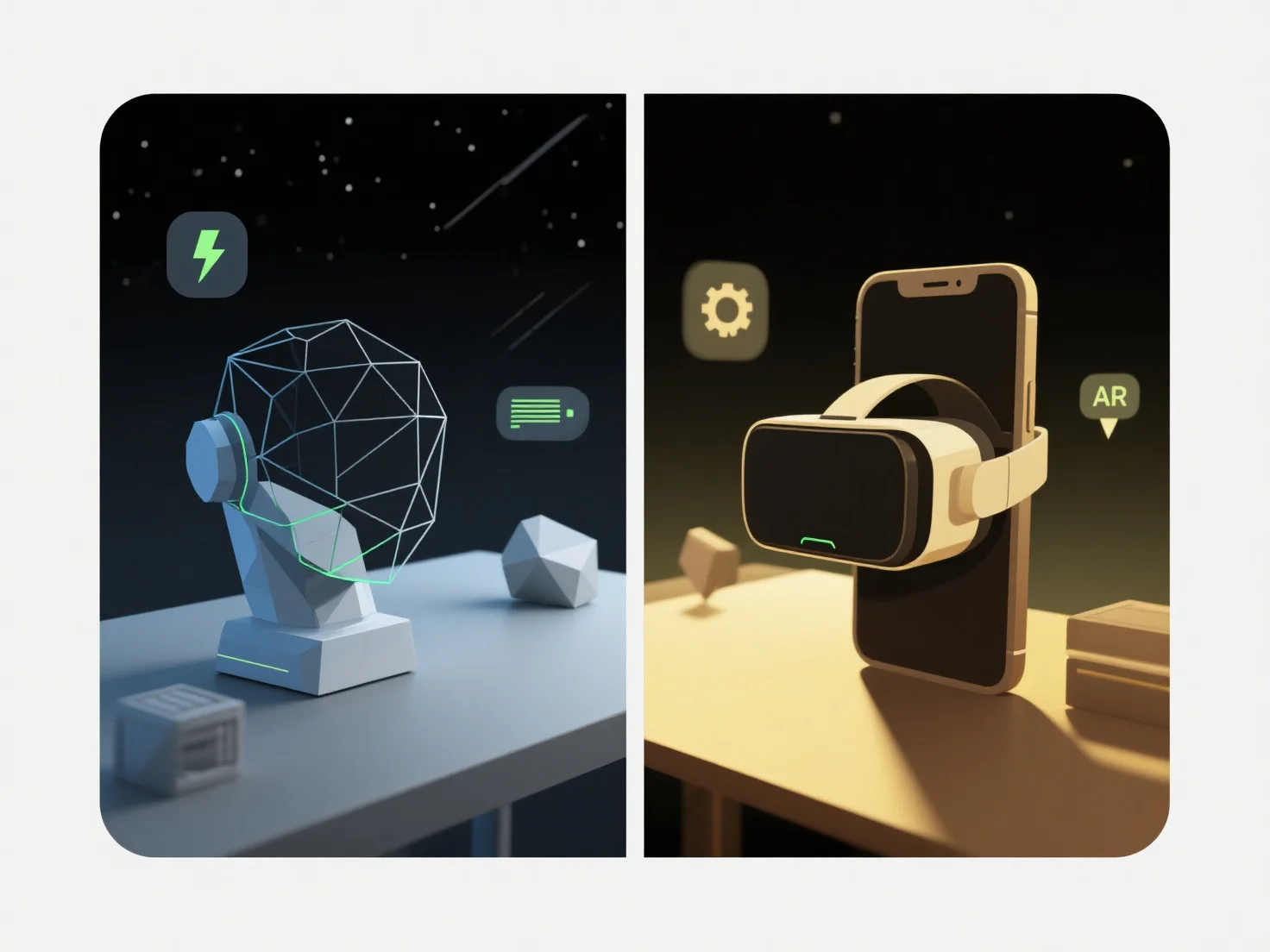
Model 3D untuk lingkungan virtual dan augmented reality harus memenuhi persyaratan adaptasi inti: mengoptimalkan jumlah poligon, memastikan kompatibilitas tekstur, dan mendukung interaksi real-time, menyeimbangkan kesetiaan visual dengan kinerja runtime untuk menghindari keterlambatan dan menjaga imersi.
- **Jumlah poligon**: Gunakan pemodelan low-poly untuk mengurangi beban komputasi, karena jumlah poligon yang tinggi dapat menyebabkan penundaan rendering pada perangkat keras AR/VR. - **Tekstur**: Adopsi alur kerja PBR (Physically Based Rendering) untuk pencahayaan dan shading yang realistis, memastikan kompatibilitas dengan mesin rendering AR/VR. - **Interaksi real-time**: Rancang model yang merespons input pengguna dengan lancar, menyesuaikan dengan batasan pemrosesan perangkat keras untuk menjaga responsifitas.
Pada akhirnya, menguji model pada platform AR/VR target memastikan mereka dapat ditampilkan dengan lancar dan memberikan pengalaman yang imersif.