


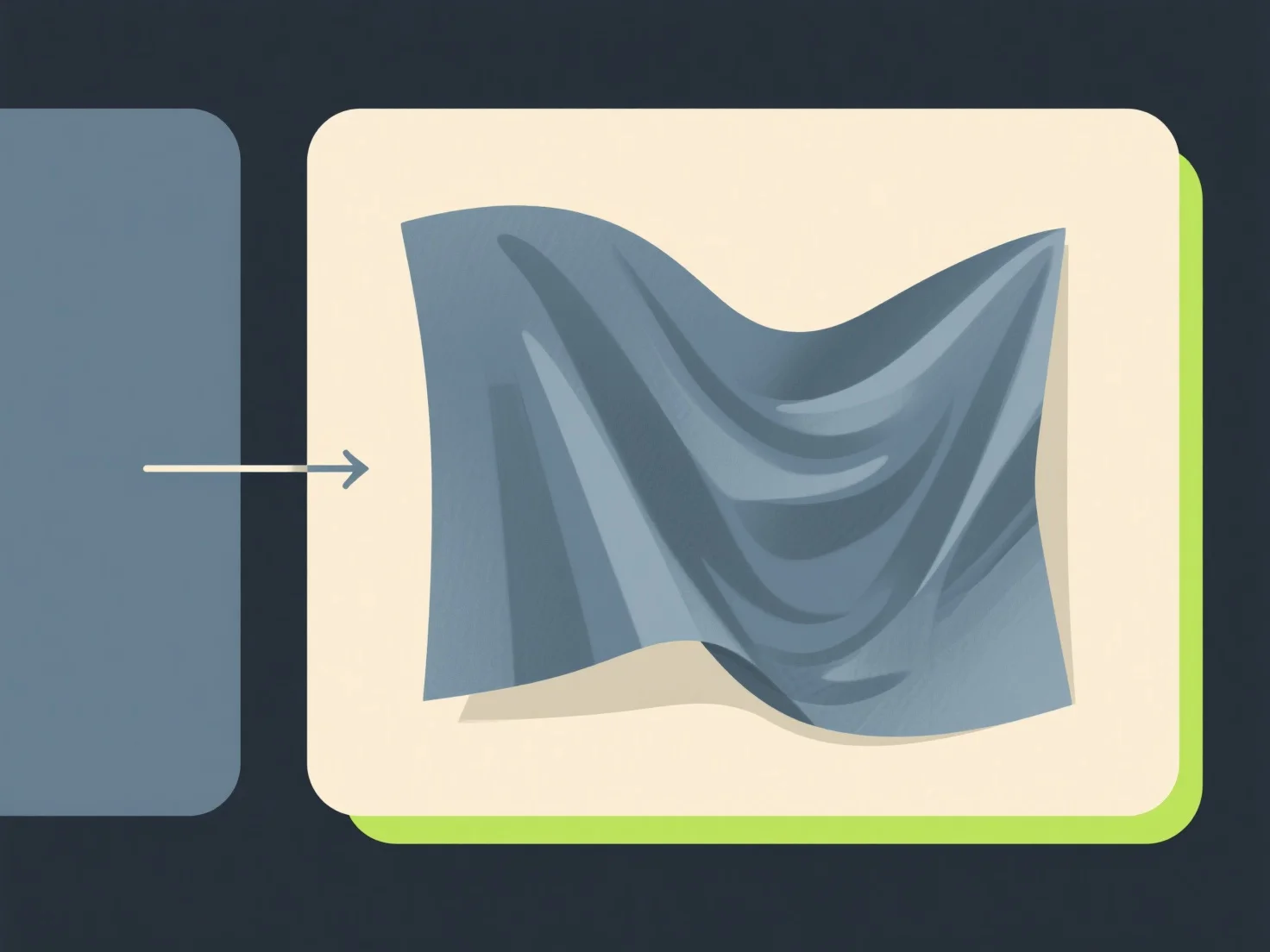
Menyimulasikan lipatan dan kerutan kain dalam model 3D terutama menggunakan mesin simulasi kain berbasis fisika untuk meniru perilaku kain di dunia nyata, menghasilkan lipatan alami melalui gaya yang dihitung dan sifat material.
Langkah-langkah kunci termasuk: - **Perhitungan mesin fisika**: Mesin menghitung gaya seperti gravitasi, tegangan, dan gesekan, dipasangkan dengan sifat kain (misalnya, kekakuan, elastisitas), untuk mensimulasikan deformasi. - **Pengaturan parameter**: Mendefinisikan variabel seperti ketebalan bahan dan tekanan yang diterapkan mengontrol bagaimana kain terlipat seiring waktu. - **Alat pemula**: Perangkat lunak dengan simulasi kain bawaan.
Metode ini memastikan perilaku kain yang realistis dan dinamis dalam model 3D.