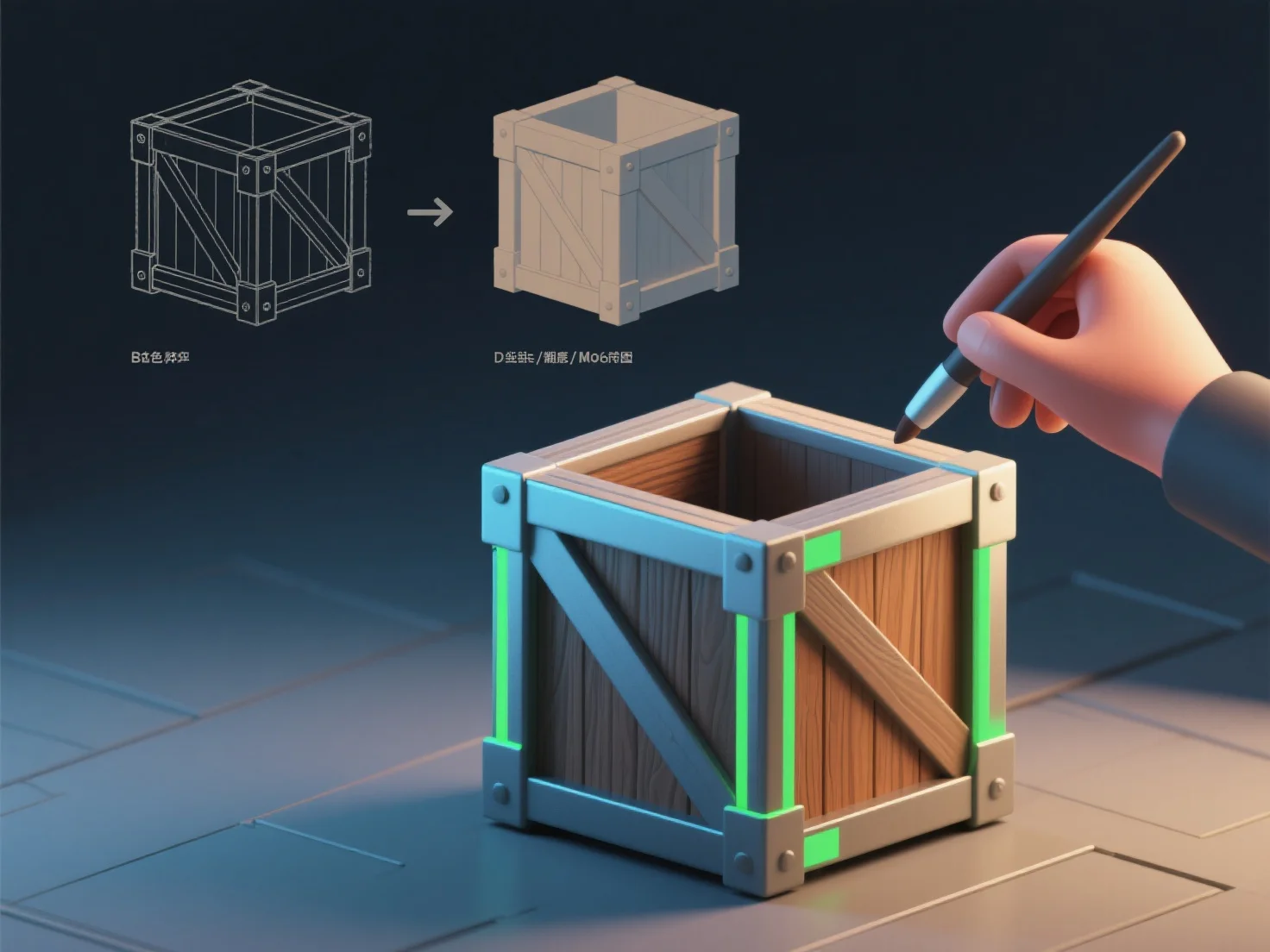
Le processus de texturation de la modélisation 3D implique généralement quatre étapes principales : le dépliage UV, la création/importation de textures, l'application de textures et l'ajustement des détails. Le dépliage UV convertit la surface du modèle 3D en une disposition 2D, assurant que les textures s'alignent sans distorsion, comme aplatir un objet 3D en une carte 2D. La création/importation de textures implique soit de créer des textures personnalisées (par exemple, via un logiciel comme Substance Painter), soit d'importer des textures préfabriquées à partir de bibliothèques de textures. L'application de textures mappe ces images 2D sur les surfaces du modèle, liant la texture 2D à la géométrie 3D. L'ajustement des détails affine des propriétés telles que la couleur, la rugosité ou les cartes normales pour améliorer le réalisme, en effectuant des réglages pour obtenir des résultats réalistes. Pour les débutants, l'utilisation d'outils conviviaux est recommandée.


Quelles étapes sont impliquées dans le processus de texturation de la modélisation 3D ?
La texturation de modélisation 3D comprend quatre étapes principales : le dépliage UV, la création/importation de textures, l'application et l'ajustement des détails, avec des outils adaptés aux débutants pour simplifier le processus.