


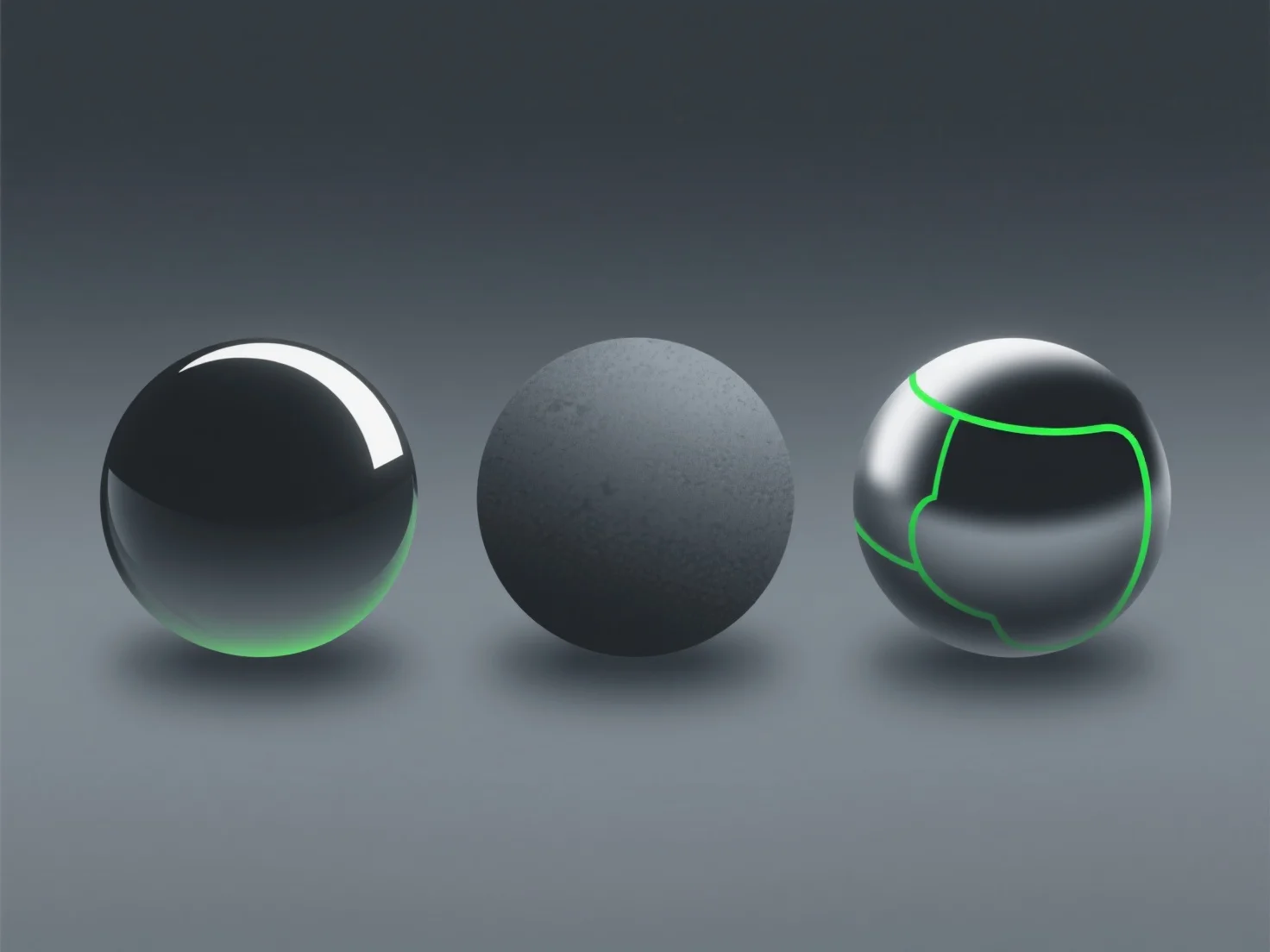
Les matériaux façonnent directement la sortie visuelle des modèles 3D en définissant l'apparence de la surface et le réalisme grâce à l'interaction de la lumière, telle que la réflexion, l'absorption ou la transparence.
Ils détaillent les propriétés fondamentales telles que la couleur, la texture, la brillance et la rugosité, déterminant si un modèle a l'air métallique, mat, transparent ou texturé dans les rendus ou les affichages en temps réel.
Les principales applications dans divers secteurs comprennent : - Jeux vidéo : Création de surfaces réalistes (par exemple, armure métallique, vêtements en tissu) pour améliorer l'immersion dans la scène. - Architecture : Simulation de matériaux tels que le bois, le verre ou le béton pour des aperçus réalistes des bâtiments. - Conception de produits : Prévisualisation de l'apparence des matériaux (plastique, métal, cuir) sur les prototypes sous différents éclairages.
Ajustement des propriétés des matériaux.