


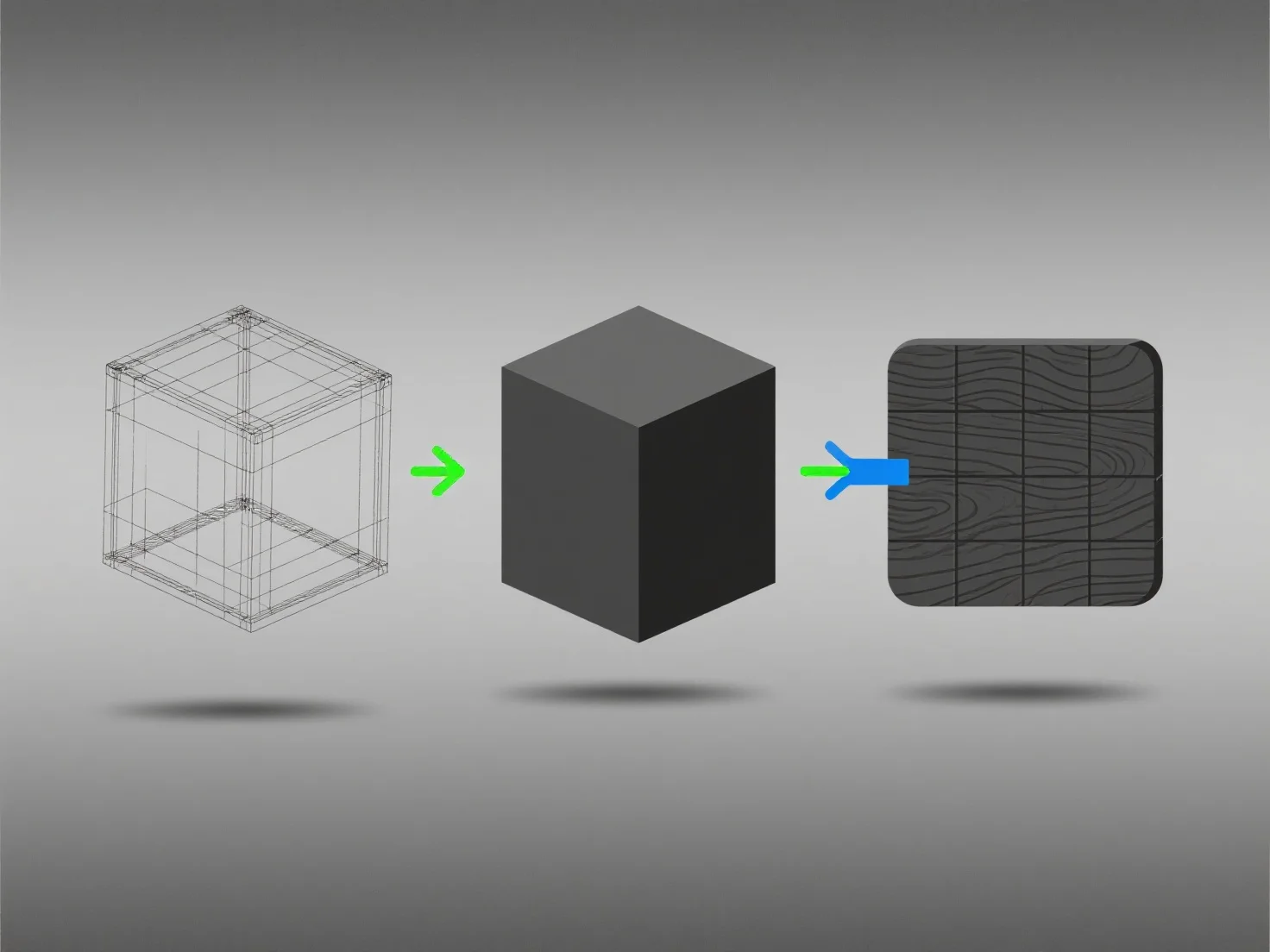
Les textures améliorent la composition des modèles 3D en ajoutant des détails visuels et des caractéristiques de surface, renforçant le réalisme et définissant l'identité visuelle du modèle.
- **Simuler des matériaux réels** : Ils utilisent la couleur, les motifs et les cartes (par exemple, diffuse pour la couleur de base, normale pour les aspérités de surface) pour imiter des matériaux tels que le bois, le métal ou le tissu, rendant le modèle plus réaliste. - **Différencier les surfaces** : Les textures aident à distinguer les différentes parties du modèle (par exemple, un siège en cuir d'un cadre en plastique), clarifiant la structure et l'utilisation. - **Guider la perception de la forme** : En ajoutant des reflets, des ombres ou de la rugosité, les textures mettent en évidence la profondeur et la forme, faisant apparaître la géométrie plate comme tridimensionnelle.
En bref, les textures relient la géométrie de base et les détails réalistes, élevant la composition d'un modèle 3D de simple à visuellement convaincant.