


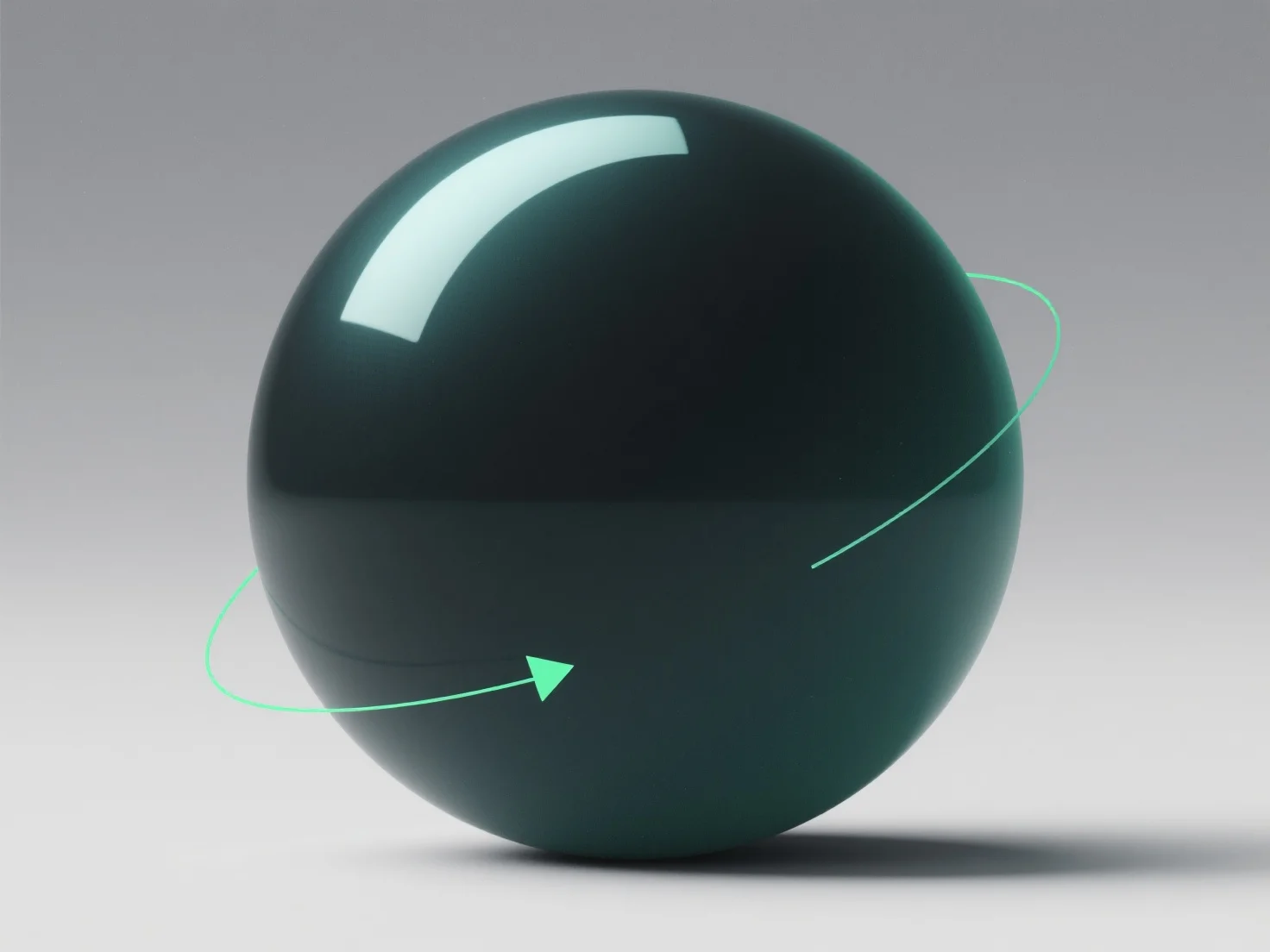
Dans les modèles 3D, la couleur diffuse et la réflexion spéculaire sont des propriétés distinctes d'interaction de la lumière : la couleur diffuse diffuse la lumière de manière uniforme pour la couleur de base, tandis que la réflexion spéculaire réfléchit la lumière de manière directionnelle pour les reflets brillants.
- **Couleur diffuse** : Détermine la teinte de base d'un objet en dispersant la lumière uniformément dans toutes les directions. Visible de la plupart des angles, elle crée une apparence globale non brillante.
- **Reflet spéculaire** : Imité la brillance en réfléchissant la lumière dans un faisceau étroit et concentré. Produit des reflets lumineux.
Ensemble, ils définissent l'apparence d'une surface : diffuse pour la couleur de base, spéculaire pour la brillance.