


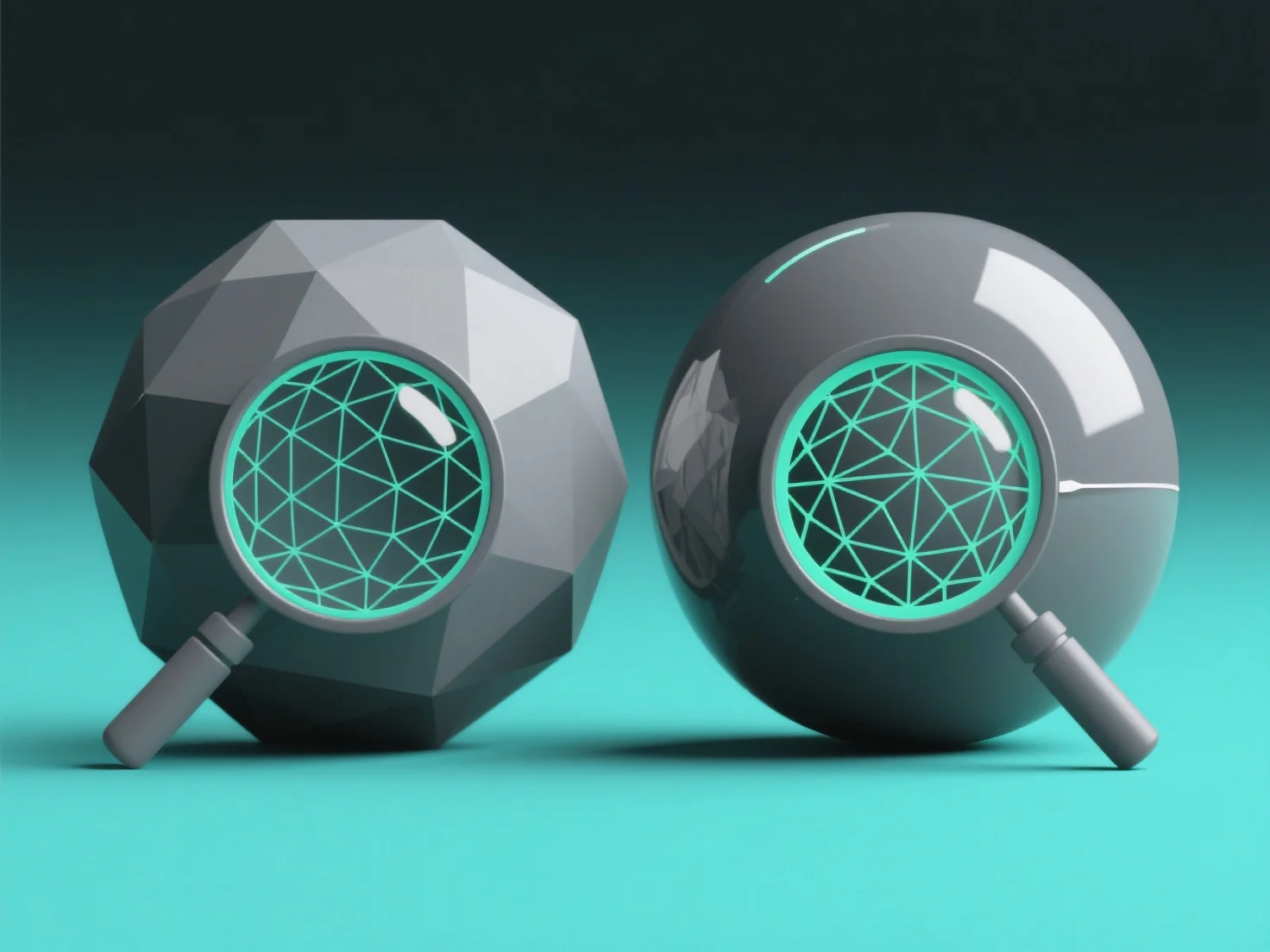
La modélisation en haute polygonalité crée des modèles 3D avec un grand nombre de polygones pour une extrême précision, tandis que la modélisation en basse polygonalité utilise moins de polygones pour plus de simplicité et d'efficacité. Les principales différences résident dans l'accent mis sur les détails et les scénarios d'application.
Le rendu en haute polygonalisation priorise la fidélité visuelle, avec des polygones denses capturant les détails les plus fins.
Le low-poly met l'accent sur les performances, avec des polygones épars réduisant la charge de rendu. Il convient aux applications en temps réel : jeux vidéo (fréquence d'images fluide), AR/VR (interaction sans décalage) ou applications mobiles (chargement rapide).
Choisissez le high-poly pour des projets hyper-réalistes et non interactifs ; le low-poly pour des travaux 3D interactifs et critiques en termes de performances.