Accueil/Hitem3D FAQ/How does the choice of 3D tool impact the final render quality?

How does the choice of 3D tool impact the final render quality?

3D tool choice impacts render quality via rendering engine, features, and optimization for specific goals.

How does the choice of 3D tool impact the final render quality?

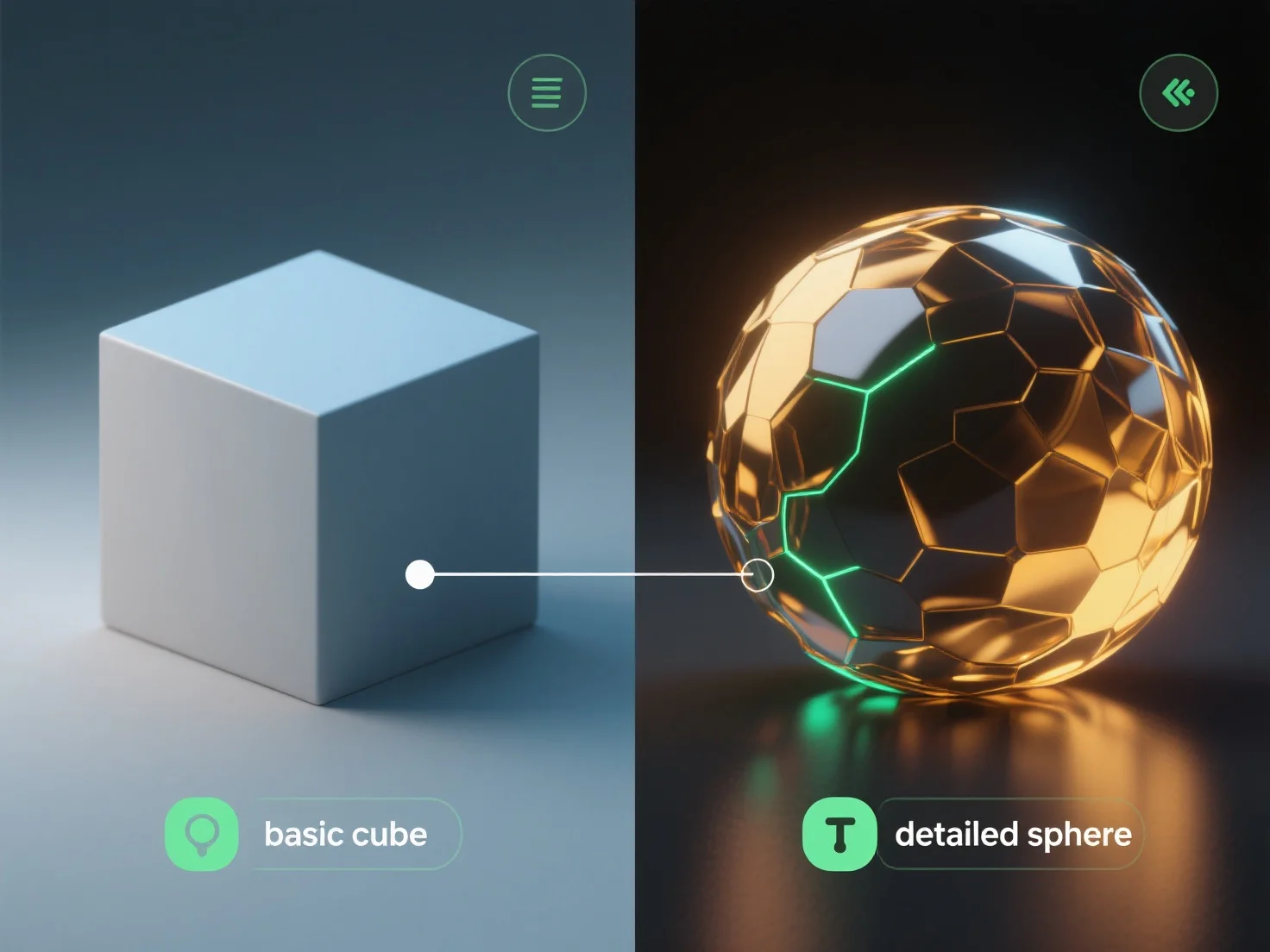
The choice of 3D tool significantly impacts final render quality, primarily through its rendering engine, feature set, and optimization for specific output goals.

The rendering engine (e.g., ray tracing, rasterization) dictates how light, textures, and materials are simulated. Advanced engines handle complex lighting (e.g., global illumination) and high-res textures better, boosting realism; simpler engines may limit detail or material accuracy.

Supported features like material libraries, texture resolution, and lighting tools also matter. Tools with robust material systems and texture support ensure finer details, while limited features can lead to flat or unrealistic renders.

Optimization for goals (e.g., photorealism vs real-time) impacts quality. For photorealism, tools with strong ray tracing (e.g., Blender Cycles) excel; for fast previews, real-time engines (e.g., Unreal Engine) prioritize speed over extreme detail.

PrécédentSuivant
Produit
Studio Web
Plateforme API
Fonctionnalités
Image vers 3D
Multi‑vue vers 3D
Relief
Segmentation
Modèles
Modèle général
Modèle portrait
Ressources
Blog
FAQ
Docs API
À propos
Tarifs