


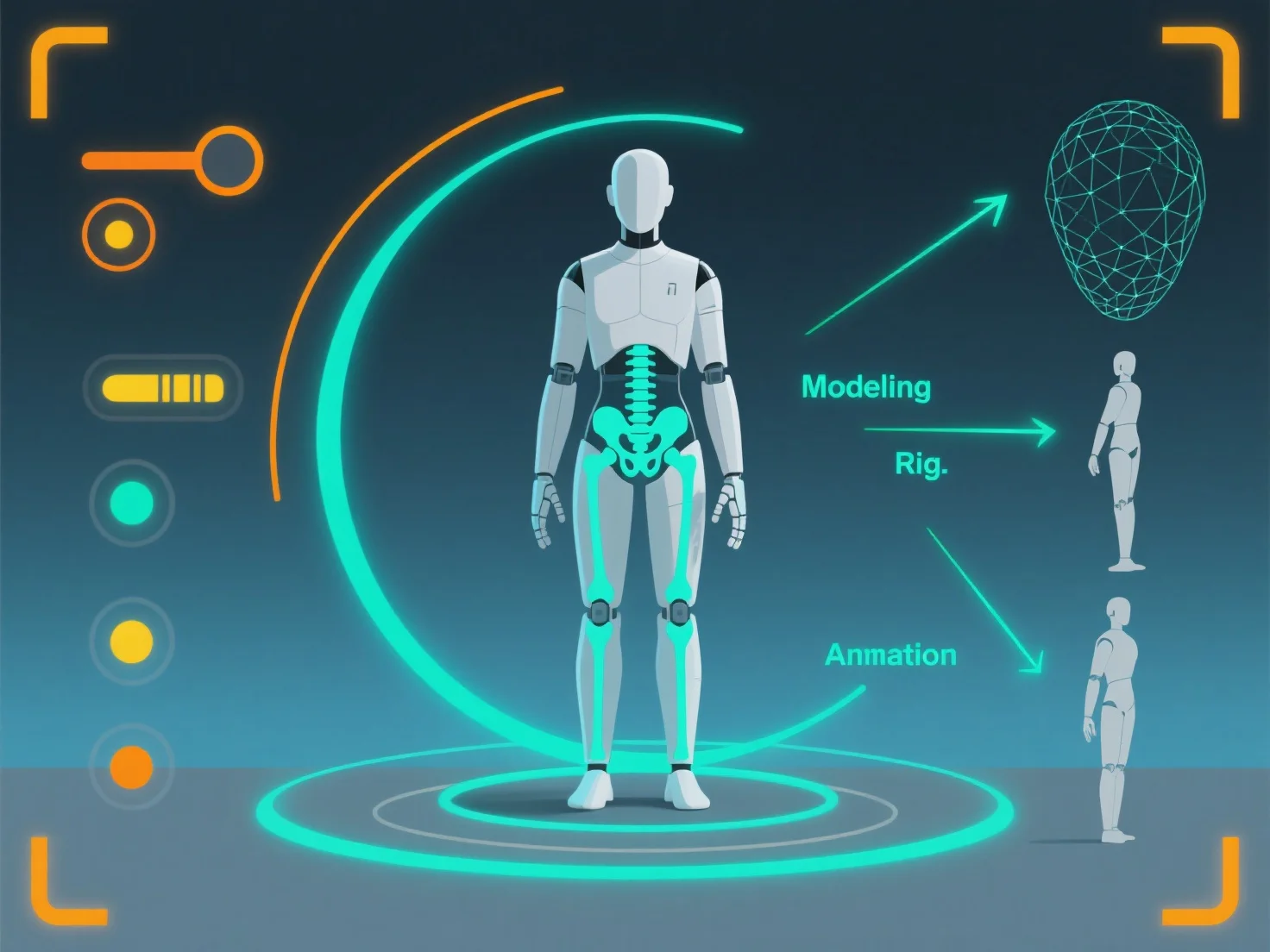
Le rigging est une étape clé dans le pipeline d'animation 3D, située après la modélisation 3D et avant l'animation. Il transforme les modèles 3D statiques en éléments animables en créant des squelettes numériques et des systèmes de contrôle, permettant aux animateurs de réaliser des mouvements réalistes.
- **Placement du pipeline** : Il a lieu après la modélisation (une fois que les modèles 3D sont finalisés) et avant l'animation, afin de s'assurer que les animateurs disposent d'un rig fonctionnel pour animer les personnages. - **Tâches principales** : Il consiste à construire des armatures (squelettes numériques avec articulations) et des rigs de contrôle (interfaces conviviales) pour manipuler les mouvements, les expressions ou les déformations. - **Rôle clé** : Il relie les modèles statiques à l'animation dynamique, rendant les modèles réactifs aux entrées des animateurs pour des mouvements naturels et réalistes.
En bref, le rigging est le lien crucial entre la modélisation et l'animation, permettant d'équiper les modèles 3D de la structure nécessaire au mouvement.