


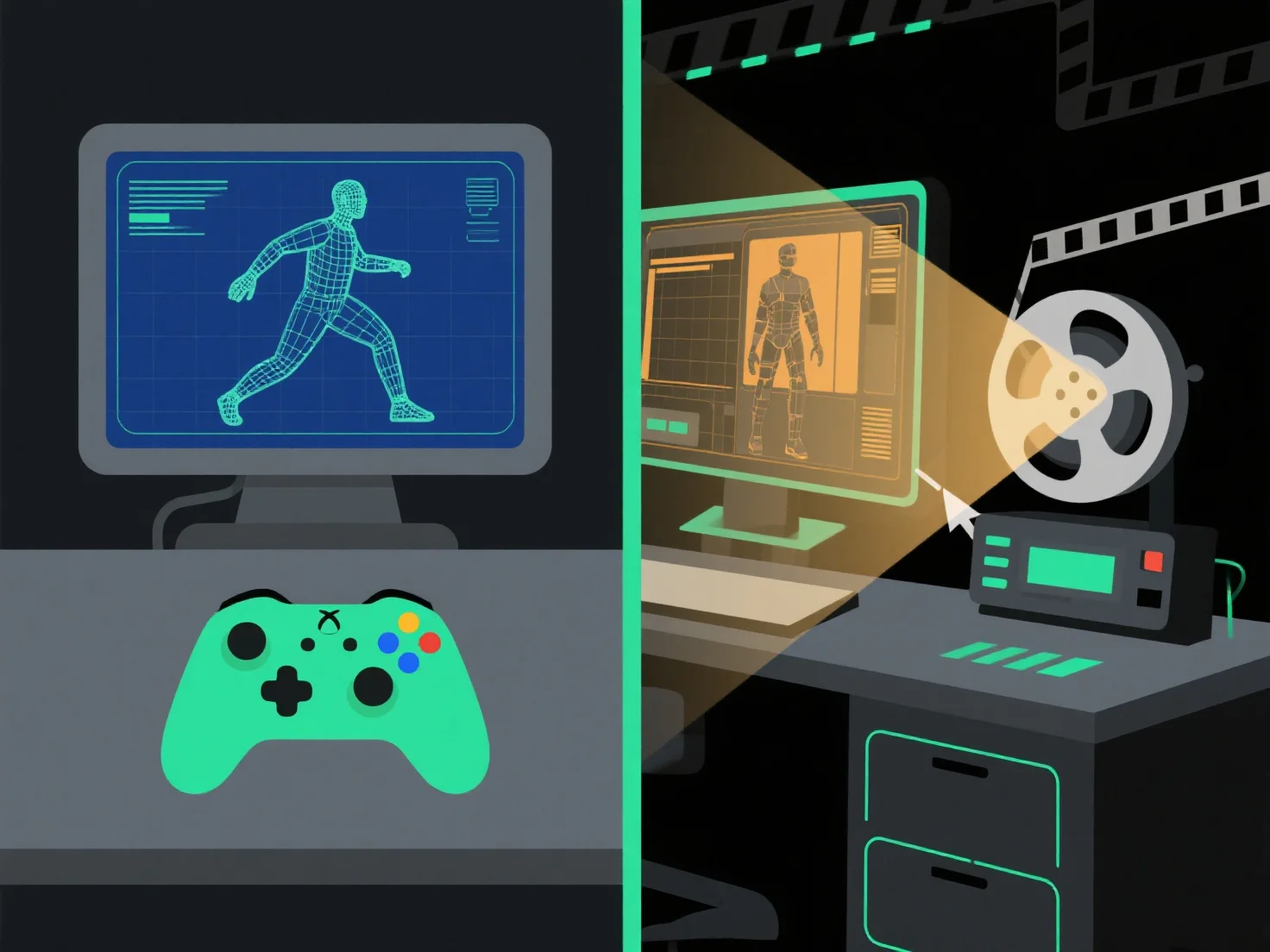
Les applications 3D en temps réel utilisent des techniques d'animation simplifiées, telles que des cycles pré-cuits ou des rigs low-poly, pour prioriser la vitesse, tandis que les applications 3D hors ligne exploitent des méthodes complexes telles que le keyframing très détaillé ou les simulations physiques, car elles ne sont pas contraintes par les exigences de rendu en temps réel.
Les principales différences découlent des besoins de performance : - Les applications en temps réel (par exemple, jeux, AR/VR) nécessitent un rendu instantané, donc les animations sont optimisées pour un traitement rapide. Elles utilisent souvent des mouvements précalculés ou des structures osseuses simplifiées pour éviter les délais. - Les applications hors ligne.