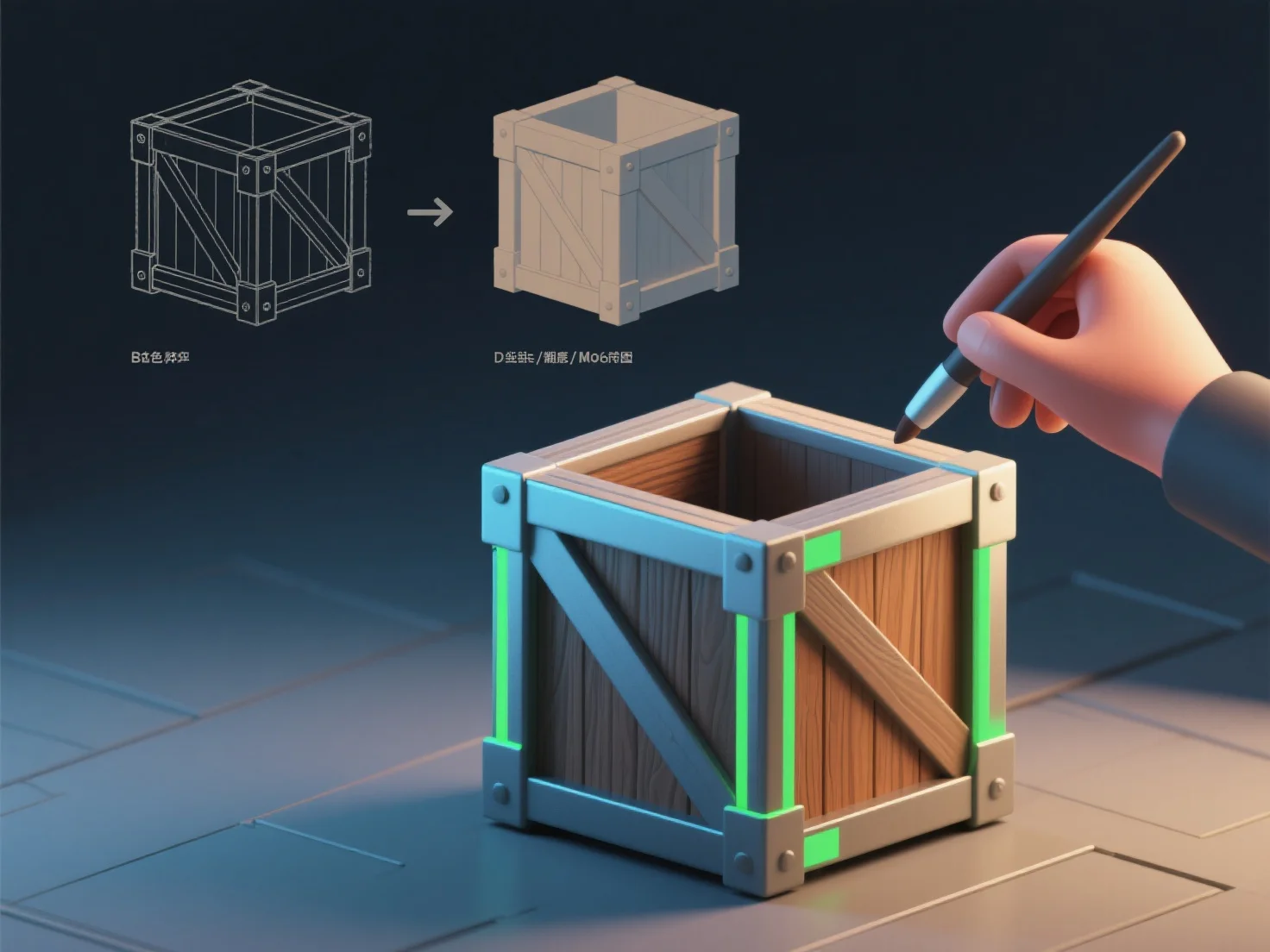
El proceso de texturizado en el modelado 3D generalmente involucra cuatro pasos principales: desempaquetado UV, creación/importación de texturas, aplicación de texturas y ajuste de detalles. El desempaquetado UV convierte la superficie del modelo 3D en un diseño 2D, asegurando que las texturas se alineen sin distorsión, como aplanar un objeto 3D en un mapa 2D. La creación/importación de texturas implica hacer texturas personalizadas (por ejemplo, mediante software como Substance Painter) o importar las ya creadas de bibliotecas de texturas. La aplicación de texturas asigna estas imágenes 2D a las superficies del modelo, vinculando la textura 2D con la geometría 3D. El ajuste de detalles refina propiedades como el color, la rugosidad o los mapas normales para mejorar el realismo, ajustando para obtener resultados realistas. Para principiantes, usar herramientas fáciles de usar.


¿Qué pasos están involucrados en el proceso de texturización del modelado 3D?
La texturización del modelado 3D tiene cuatro pasos principales: desempaquetado UV, creación/importación de texturas, aplicación y ajuste de detalles, con herramientas fáciles de usar que lo simplifican para principiantes.