


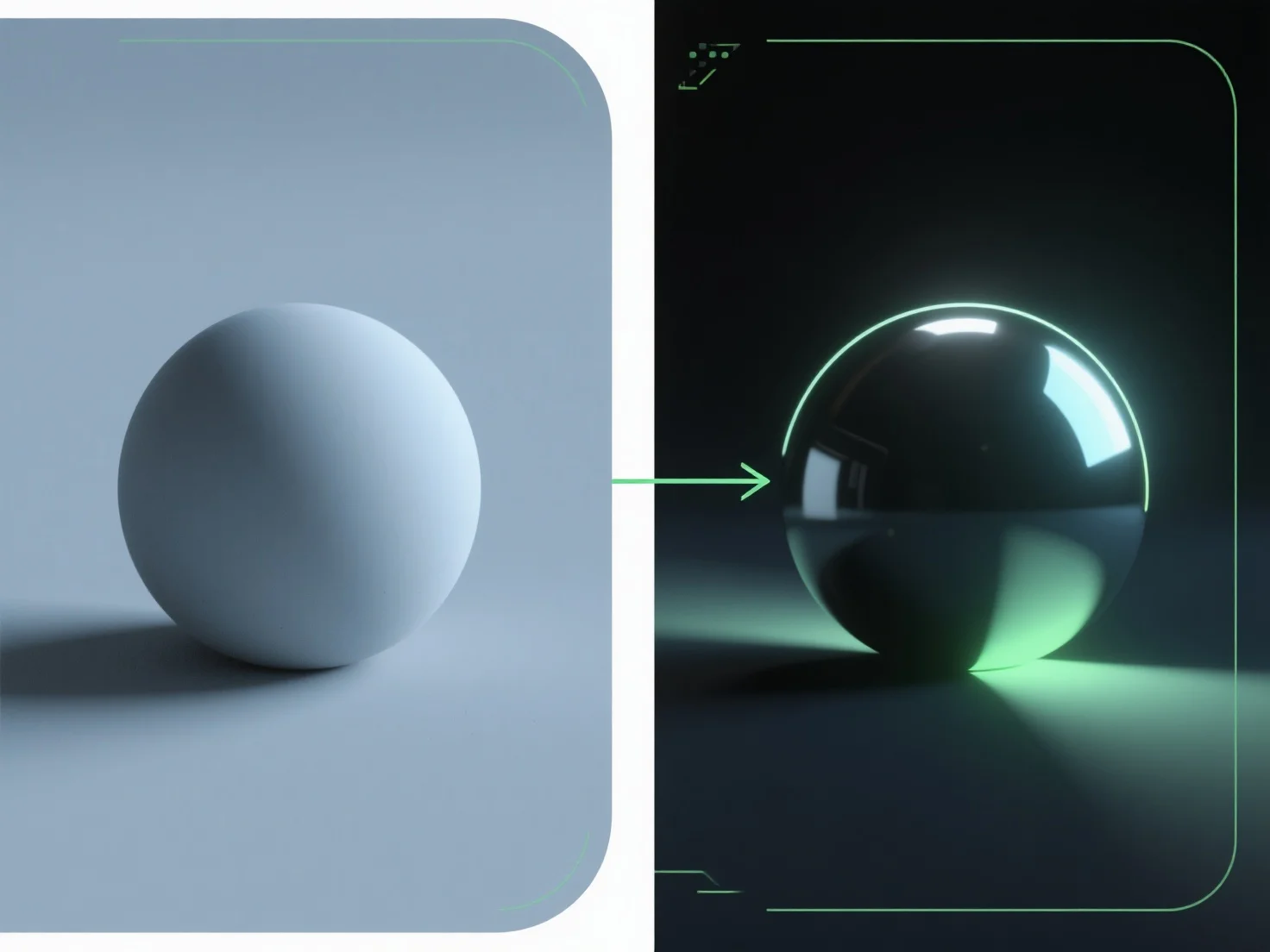
El renderizado es el proceso general de crear imágenes 2D a partir de modelos 3D, mientras que el trazado de rayos es una técnica de renderizado especializada que simula las trayectorias de la luz para generar imágenes realistas.
El renderizado abarca todos los métodos para convertir datos 3D en imágenes visibles, incluyendo enfoques comunes como la rasterización. El trazado de rayos, como un subconjunto del renderizado, funciona rastreando los rayos de luz desde la cámara hasta las fuentes de luz, imitando con precisión los efectos de iluminación del mundo real, como las sombras, los reflejos y las refracciones.
En la aplicación, las técnicas de renderizado varían según la necesidad: la rasterización prioriza la velocidad para usos en tiempo real como juegos, mientras que el trazado de rayos se elige para obtener imágenes realistas de alta calidad en películas o imágenes estáticas.