


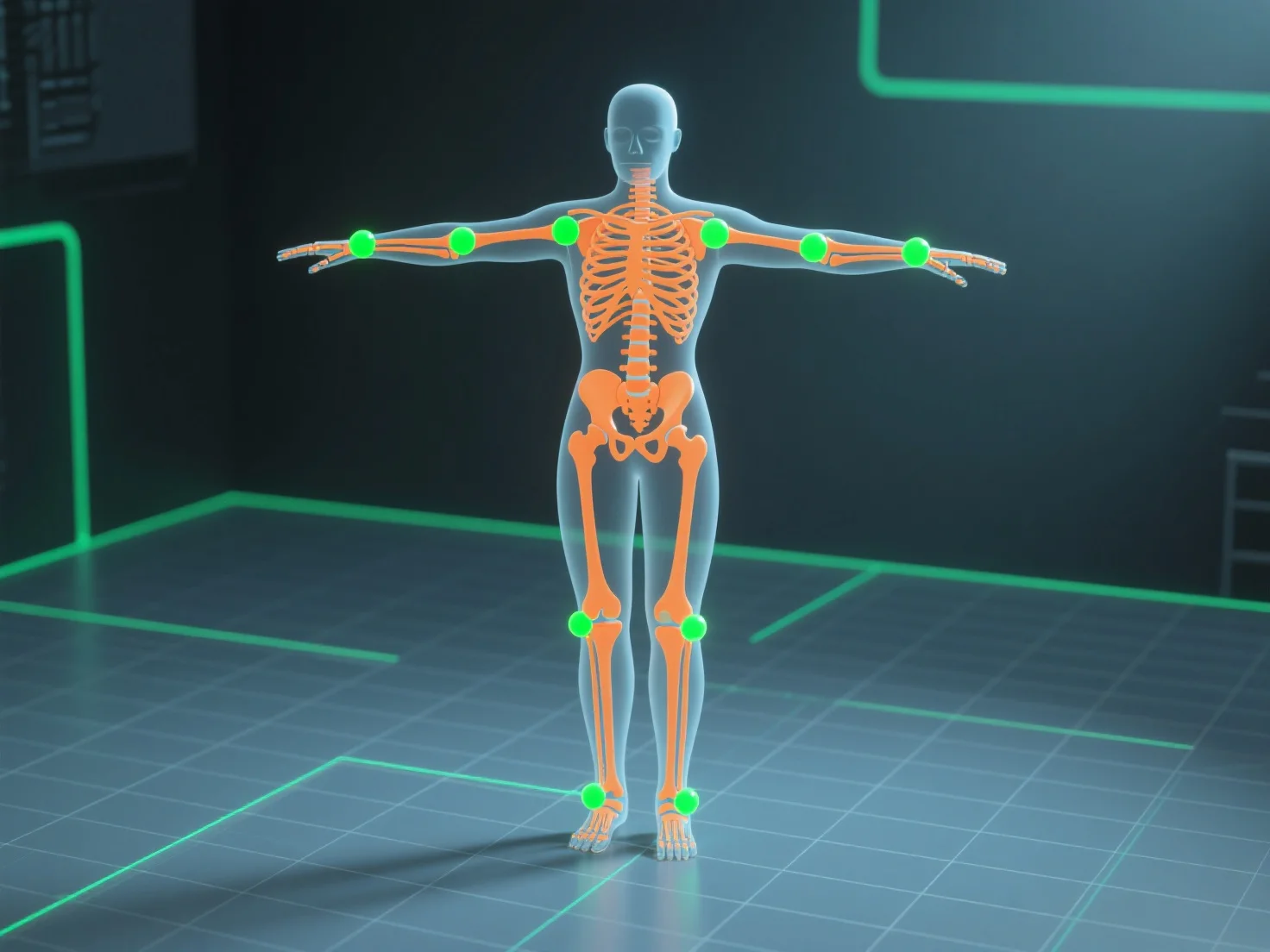
El rigging en la animación de personajes 3D implica construir un esqueleto digital (armadura) y un sistema de control para permitir el movimiento realista del personaje, que sirve como puente entre el modelado 3D y la animación.
Comienza con la construcción de una estructura ósea jerárquica que refleja las características anatómicas: extremidades, columna vertebral, huesos faciales, para imitar el movimiento natural.
A continuación, se agregan restricciones como la cinemática inversa (IK) o la cinemática directa (FK): la IK simplifica el posicionamiento de las extremidades.
Finalmente, se integran controles fáciles de usar (deslizadores, manijas), que permiten a los animadores ajustar fácilmente las poses, expresiones o gestos sin manipular los huesos individuales.
Esto asegura que los personajes se muevan de forma natural, haciendo del rigging un paso crítico previo a la animación.