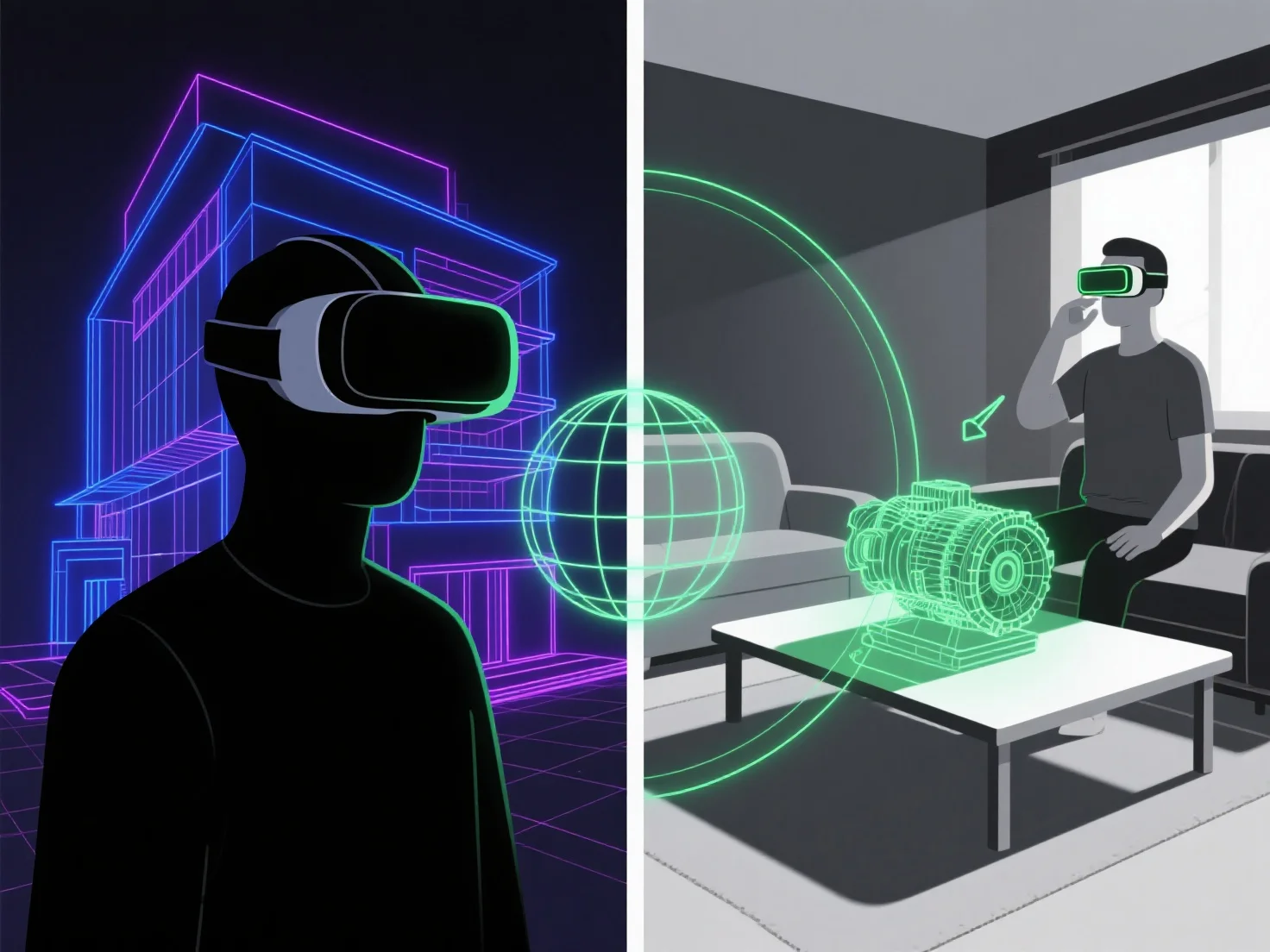
Para aplicaciones 3D, la diferencia fundamental entre la RV y la RA radica en su relación con el mundo real: la RV crea un entorno 3D virtual totalmente inmersivo y aislado, mientras que la RA superpone contenido digital 3D sobre la vista del mundo real. La RV bloquea la entrada del mundo real, priorizando la interacción con modelos 3D en un espacio simulado. Es ideal para experiencias 3D totalmente virtuales, como recorridos de diseño 3D o simulaciones de entrenamiento virtuales. La RA conserva el contexto del mundo real, permitiendo que el contenido 3D interactúe con el entorno físico. Ejemplos incluyen la colocación de muebles 3D en aplicaciones de decoración del hogar o anotaciones 3D en tiempo real en mantenimiento industrial. En resumen, elija la RV para aplicaciones 3D que requieren una inmersión completa; opte por la RA cuando el contenido 3D debe integrarse con el mundo real.


¿Cuáles son las diferencias entre la RV y la RA para aplicaciones 3D?
La RV crea un entorno 3D virtual inmersivo, mientras que la RA superpone contenido 3D sobre el mundo real.