


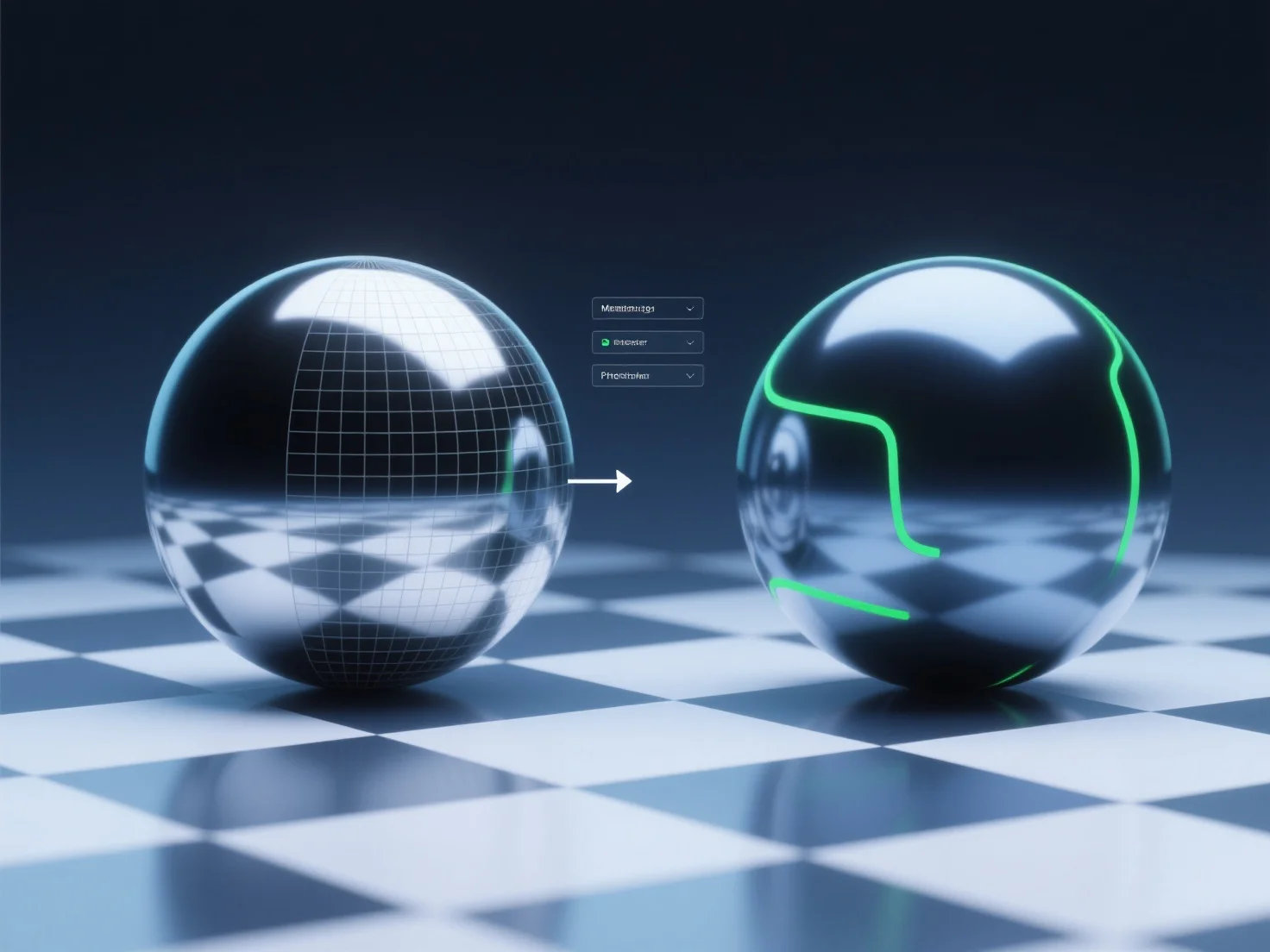
Los mapas de reflexión son imágenes 2D que simulan la reflexión de la luz en superficies de materiales 3D, mejorando el realismo al imitar cómo los materiales reflejan su entorno.
- **Función principal**: Replican los reflejos del mundo real (por ejemplo, una habitación de metal o objetos cercanos en vidrio) sin configuraciones de iluminación complejas, lo que ahorra tiempo de renderizado. - **Método de aplicación**: La imagen 2D se asigna a las propiedades de reflexión del material (por ejemplo, brillo, metalicidad), lo que determina el comportamiento del rebote de la luz en la superficie. - **Casos de uso clave**: Ideal para materiales como pintura de automóviles, piedra pulida o vidrio, añadiendo detalles realistas para que las superficies 3D se vean más auténticas.