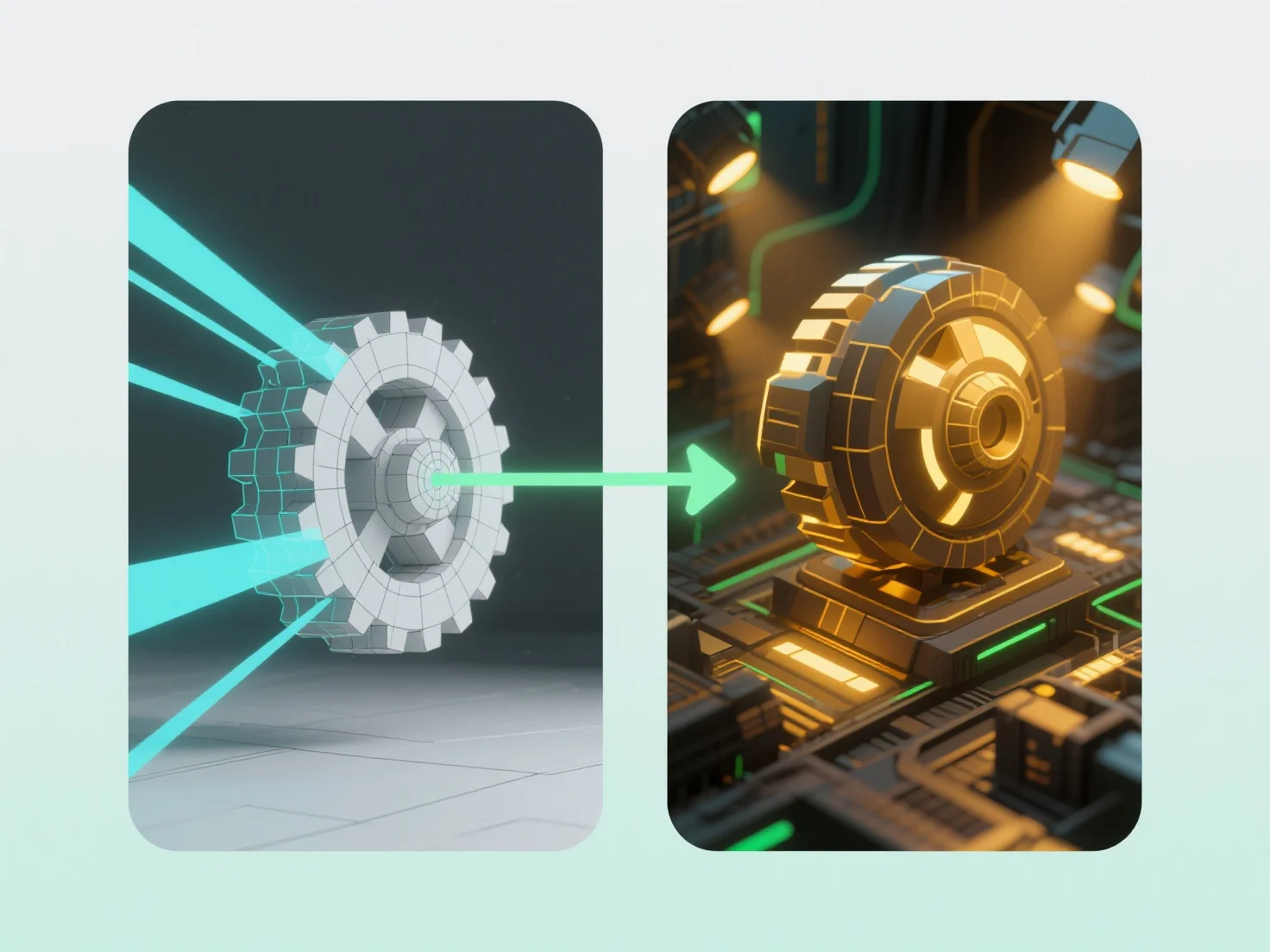
Real-time 3D rendering and offline rendering differ in process by prioritizing speed vs. quality: real-time uses simplified, on-the-fly computations for instant output, while offline relies on intensive, time-consuming processing for high detail.
Real-time rendering generates images immediately by reducing polygon counts, using basic lighting/shading, and leveraging GPU acceleration to meet real-time frame rates (e.g., 30-60 FPS). It skips complex calculations to ensure instant feedback, common in games or live previews.
Offline rendering, however, processes each frame over extended periods (minutes to hours per frame). It applies advanced techniques like ray tracing, high-res textures, and global illumination, storing rendered frames for later use (e.g., movies, animations) rather than outputting in real time.