


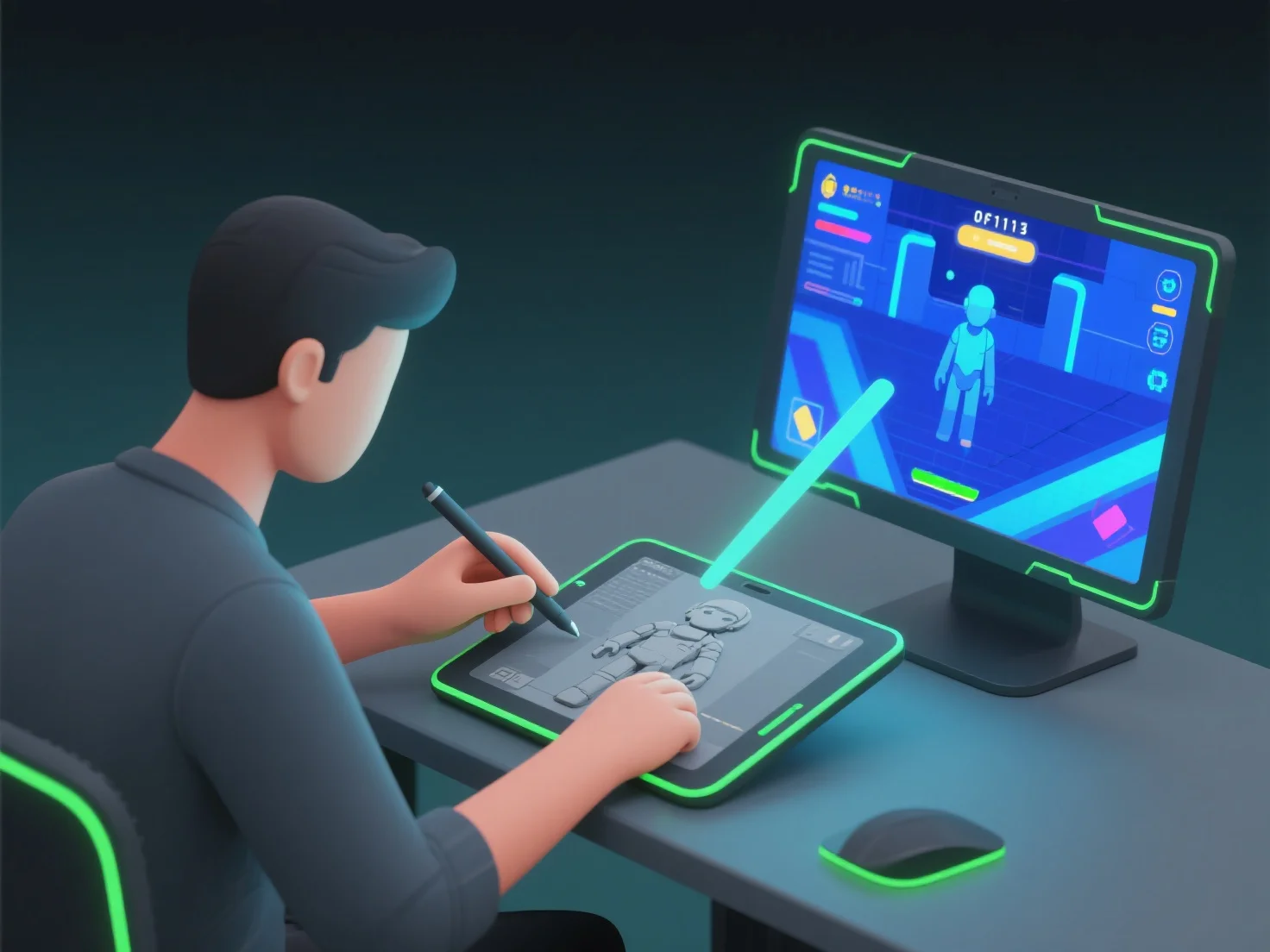
Un modelador 3D contribuye al desarrollo de medios interactivos creando activos 3D fundamentales que forman la base visual para la interacción del usuario, permitiendo una participación dinámica a través de elementos virtuales manipulables, explorables o receptivos.
Las aplicaciones clave en diversas industrias incluyen: - Videojuegos: Diseñar personajes jugables, mundos inmersivos y objetos interactivos (por ejemplo, un personaje que reacciona a los controles del jugador o una puerta que se abre por comando). - AR/VR: Desarrollar modelos 3D que se integren con entornos reales, mejorando la inmersión (por ejemplo, muebles virtuales colocados en una habitación real a través de AR). - Simulaciones interactivas: Crear representaciones 3D precisas para herramientas de entrenamiento.
Para apoyar una interacción fluida, los modeladores se centran en optimizar los activos para un rendimiento en tiempo real, equilibrando el detalle con el número de polígonos para ofrecer experiencias de usuario sin interrupciones.