


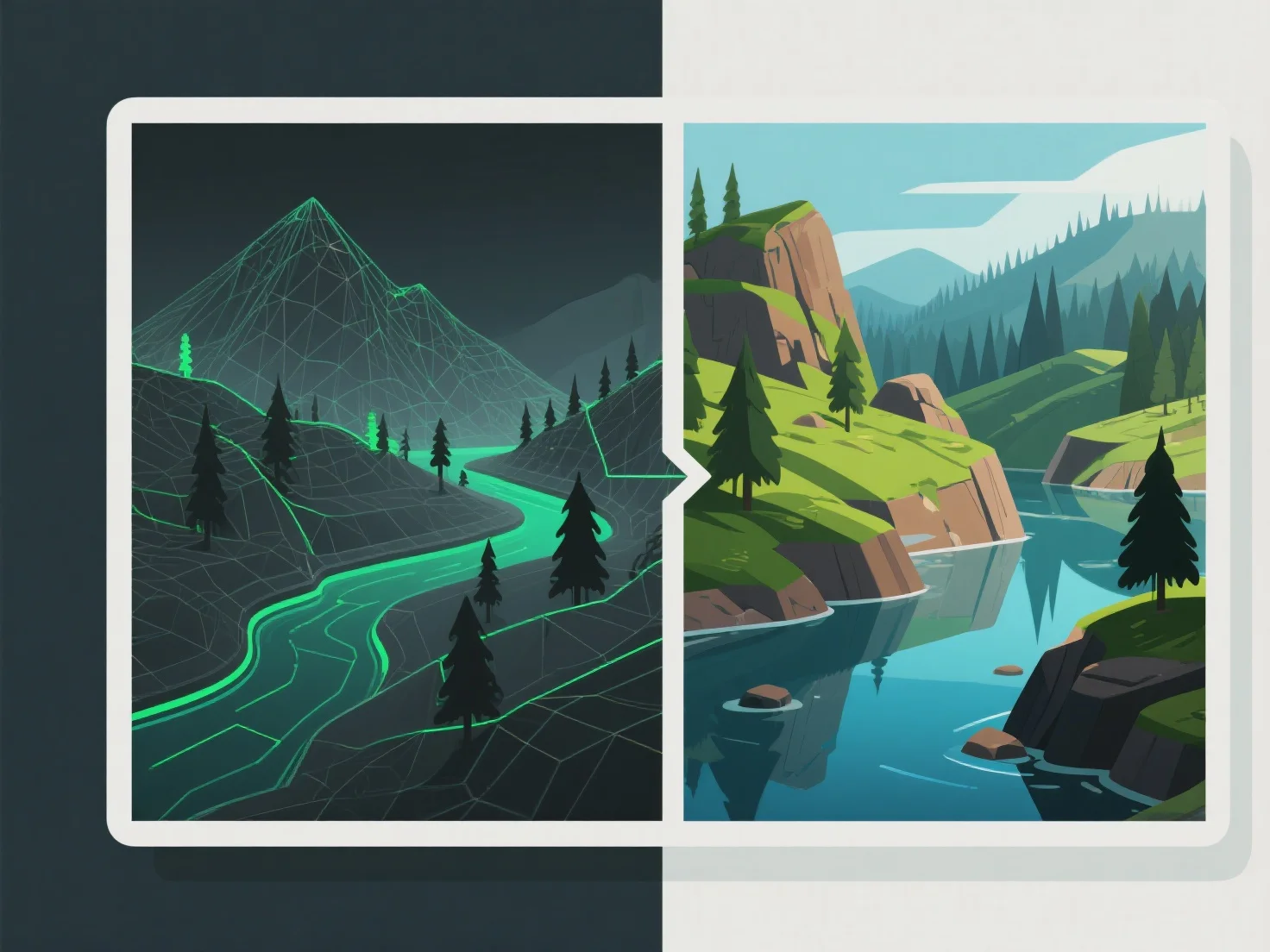
El modelado 3D ayuda a diseñar paisajes realistas para videojuegos al crear terrenos tridimensionales detallados y elementos ambientales que imitan la física y la estética del mundo real, haciendo que los paisajes sean inmersivos y realistas.
Permite un control preciso sobre las características del terreno: los diseñadores ajustan la altura, la pendiente y la textura para replicar con precisión formaciones naturales como montañas, valles o mesetas.
Integra elementos naturales: agregar vegetación (árboles, hierba), cuerpos de agua (ríos, lagos) y efectos dinámicos.
Aprovecha los datos del mundo real: el uso de escaneos 3D de paisajes reales garantiza proporciones, texturas y detalles precisos, fundamentales para entornos hiperrealistas.
Esta combinación de control, integración natural y referencias del mundo real da como resultado paisajes que se sienten auténticos y atractivos para los jugadores.