


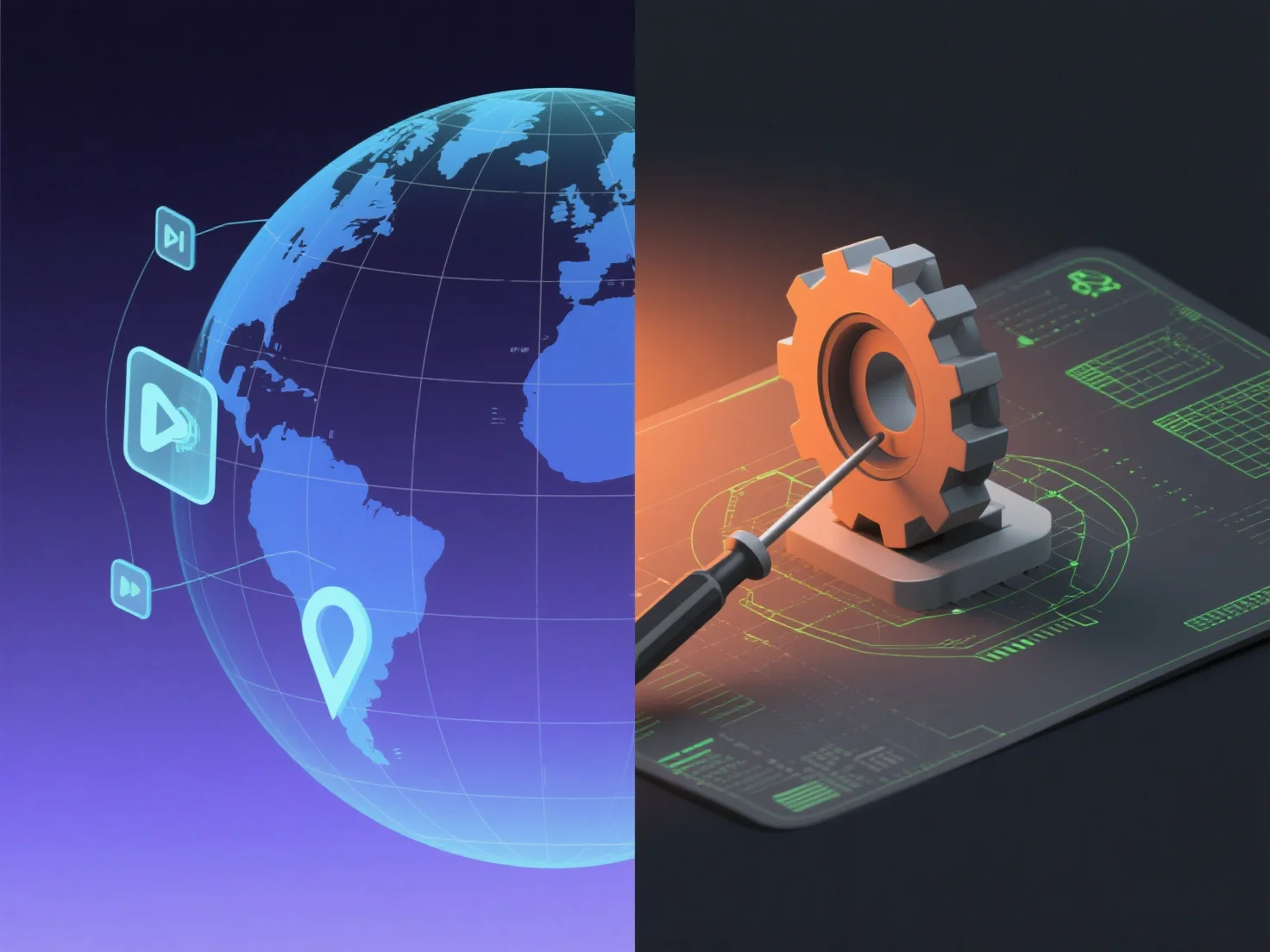
Las soluciones 3D se adaptan a los escenarios en línea y fuera de línea principalmente a través de diferencias en la transmisión de datos, los modos de interacción y la dependencia del hardware.
Las soluciones 3D en línea priorizan los modelos ligeros y el renderizado en tiempo real para minimizar la latencia de la red, a menudo utilizando la computación en la nube para tareas que requieren muchos recursos, como la transmisión de AR/VR.
Por el contrario, las soluciones 3D fuera de línea aprovechan el hardware local para una renderización de alta detalle e interacciones complejas, como el software de diseño de escritorio o las exposiciones en persona con modelos 3D físicos.
En la práctica, los escenarios en línea son adecuados para proyectos colaborativos o acceso remoto, mientras que los fuera de línea son mejores para diseños detallados o simulaciones de alto rendimiento.