


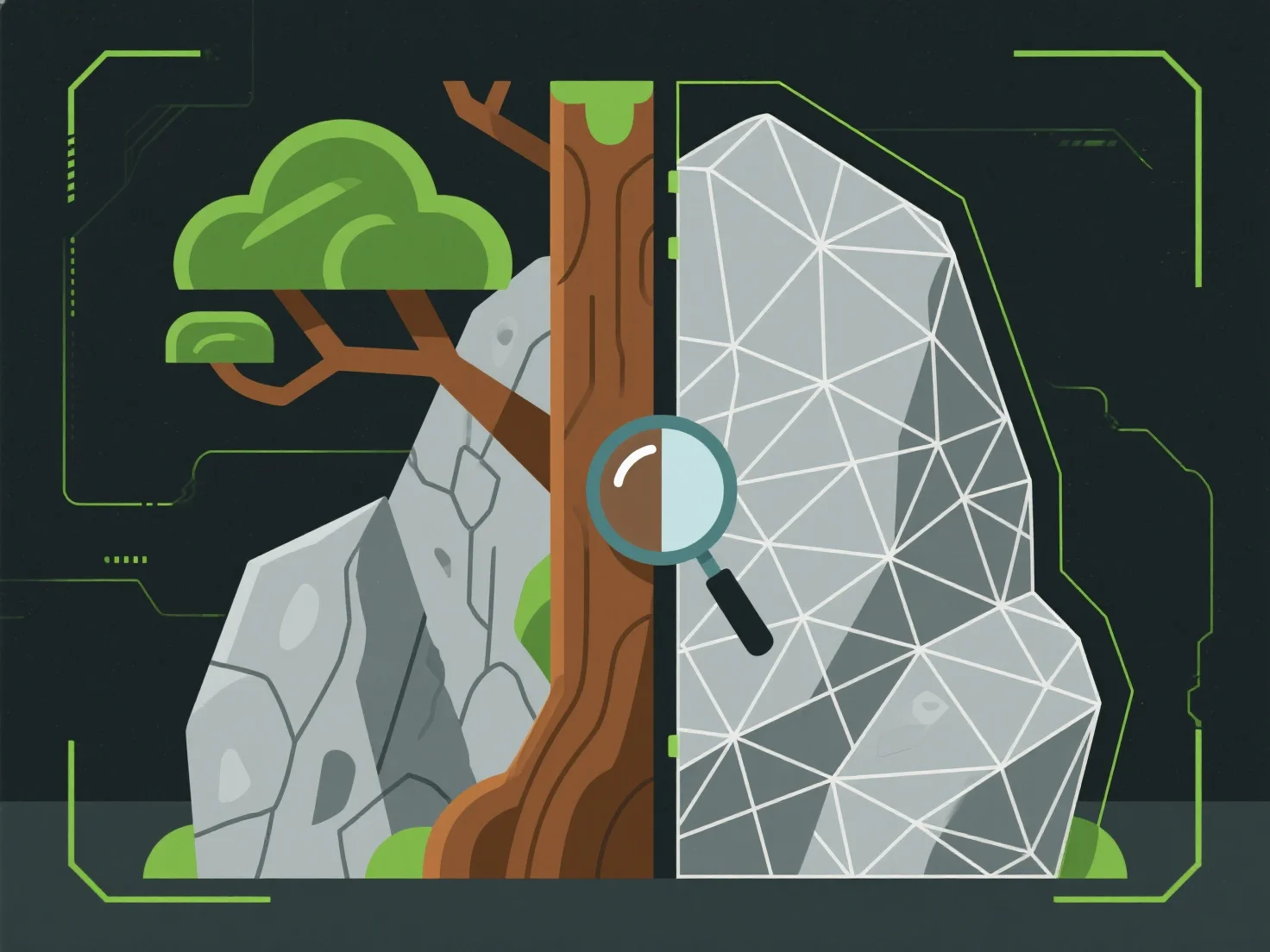
En el modelado 3D, los activos ambientales como árboles y rocas se componen combinando fundamentos geométricos básicos con textura, detalle y técnicas especializadas para lograr el realismo.
Comienzan con una malla base simplificada (a menudo de baja poligonización) para definir la forma central. Por ejemplo, un cilindro para el tronco de un árbol o un polígono rugoso para una roca.
A continuación, se aplican texturas de alta resolución: patrones de corteza para árboles, granos de piedra para rocas, utilizando herramientas como PBR (Renderizado basado en física) para imitar los materiales del mundo real.
Para los árboles, se pueden agregar grupos de hojas o ramas mediante sistemas de partículas o geometría instanciada; las rocas a menudo utilizan mapas de desplazamiento para simular grietas o protuberancias.
Este enfoque en capas equilibra la eficiencia y el realismo, haciéndolo accesible para principiantes que pueden comenzar con formas básicas y bibliotecas de texturas gratuitas.