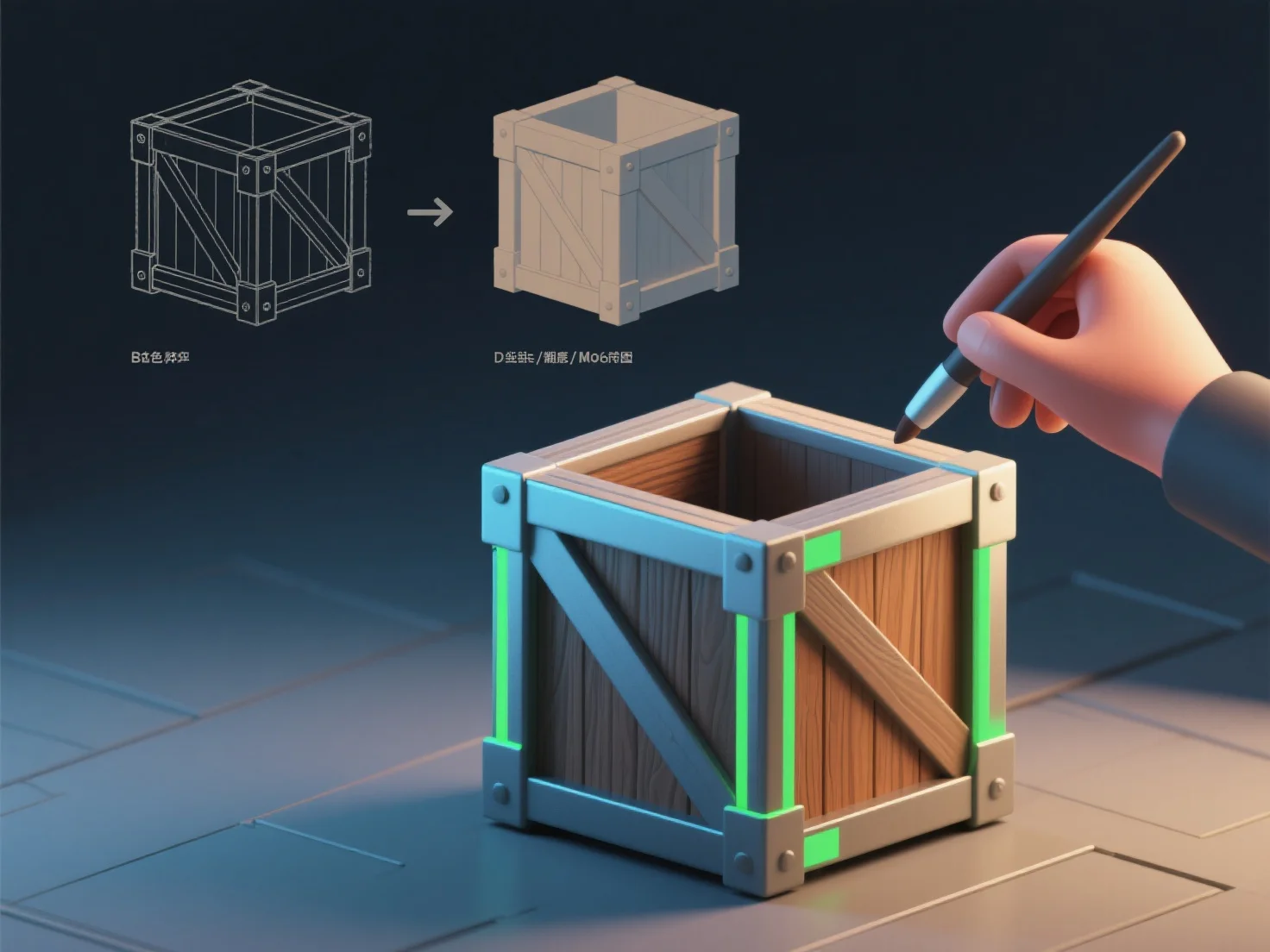
Der Texturierungsprozess bei der 3D-Modellierung umfasst typischerweise vier Hauptschritte: UV-Unwrapping, Texturerstellung/Import, Texturanwendung und Detailanpassung. UV-Unwrapping wandelt die Oberfläche des 3D-Modells in ein 2D-Layout um und stellt sicher, dass die Texturen ohne Verzerrungen ausgerichtet sind, etwa wie das Abflachen eines 3D-Objekts in eine 2D-Karte. Bei der Texturerstellung/Import werden entweder benutzerdefinierte Texturen erstellt (z. B. mit Software wie Substance Painter) oder vorgefertigte Texturen aus Texturbibliotheken importiert. Bei der Texturanwendung werden diese 2D-Bilder auf die Oberflächen des Modells abgebildet, wodurch die 2D-Textur mit der 3D-Geometrie verknüpft wird. Bei der Detailanpassung werden Eigenschaften wie Farbe, Rauheit oder Normal-Maps verfeinert, um die Realität zu verbessern, und es werden Anpassungen für naturgetreue Ergebnisse vorgenommen. Für Anfänger empfiehlt sich die Verwendung benutzerfreundlicher Tools.


Welche Schritte sind beim Texturierungsprozess der 3D-Modellierung involviert?
Die 3D-Modellierung und Texturierung besteht aus vier Hauptschritten: UV-Unwrapping, Texturerstellung/-Import, Anwendung und Detailanpassung, wobei anfängerfreundliche Werkzeuge dies vereinfachen.