


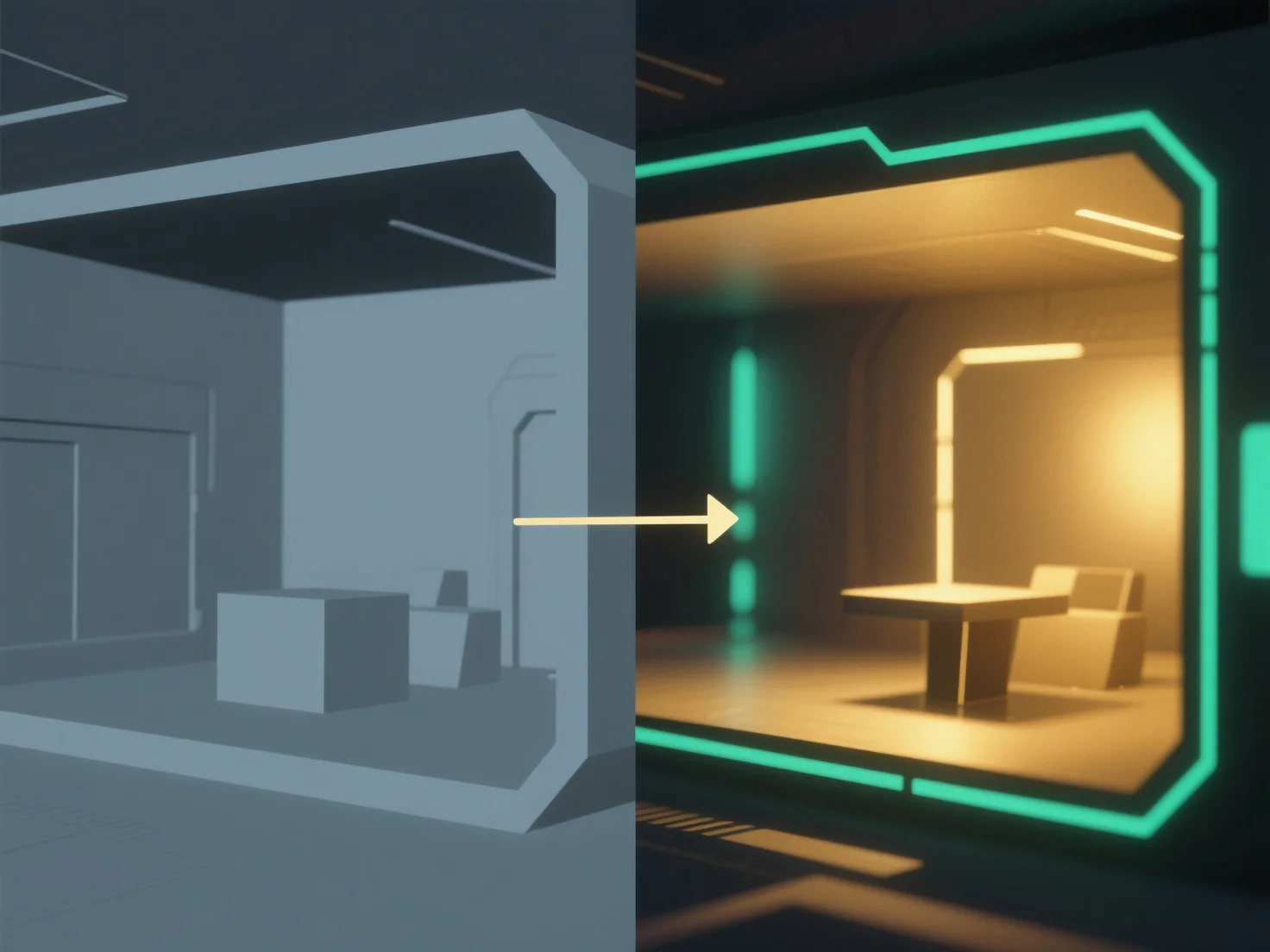
Die Nachbearbeitung in 3D-Grafiken verbessert die visuelle Qualität, indem Effekte nach dem ersten Rendering angewendet werden und die Rohdaten durch Verfeinerung von Farben, Beleuchtung und Details in polierte, realistische oder stilisierte Bilder umgewandelt werden.
Schlüsselfunktionen umfassen: Anpassen der Farben, um eine Stimmung zu erzeugen oder den Ton zu korrigieren; Hinzufügen von Lichteffekten.
Industrieanwendungen: - Spieleentwicklung: Verwendet dynamische Farbkorrektur oder Bewegungsunschärfe, um die Immersion im Spiel zu verbessern. - Filmproduktion: Passt 3D-Renderings mit Live-Action-Aufnahmen durch präzise Farbabstimmung an. - Architektonische Visualisierung: Verbessert Kundenpräsentationen mit realistischer Beleuchtung und Texturanpassungen.
Für Anfänger hilft das Experimentieren mit grundlegenden Filtern in Tools wie Blenders Compositor dabei zu beobachten, wie kleine Anpassungen die visuelle Wirkung verstärken.