


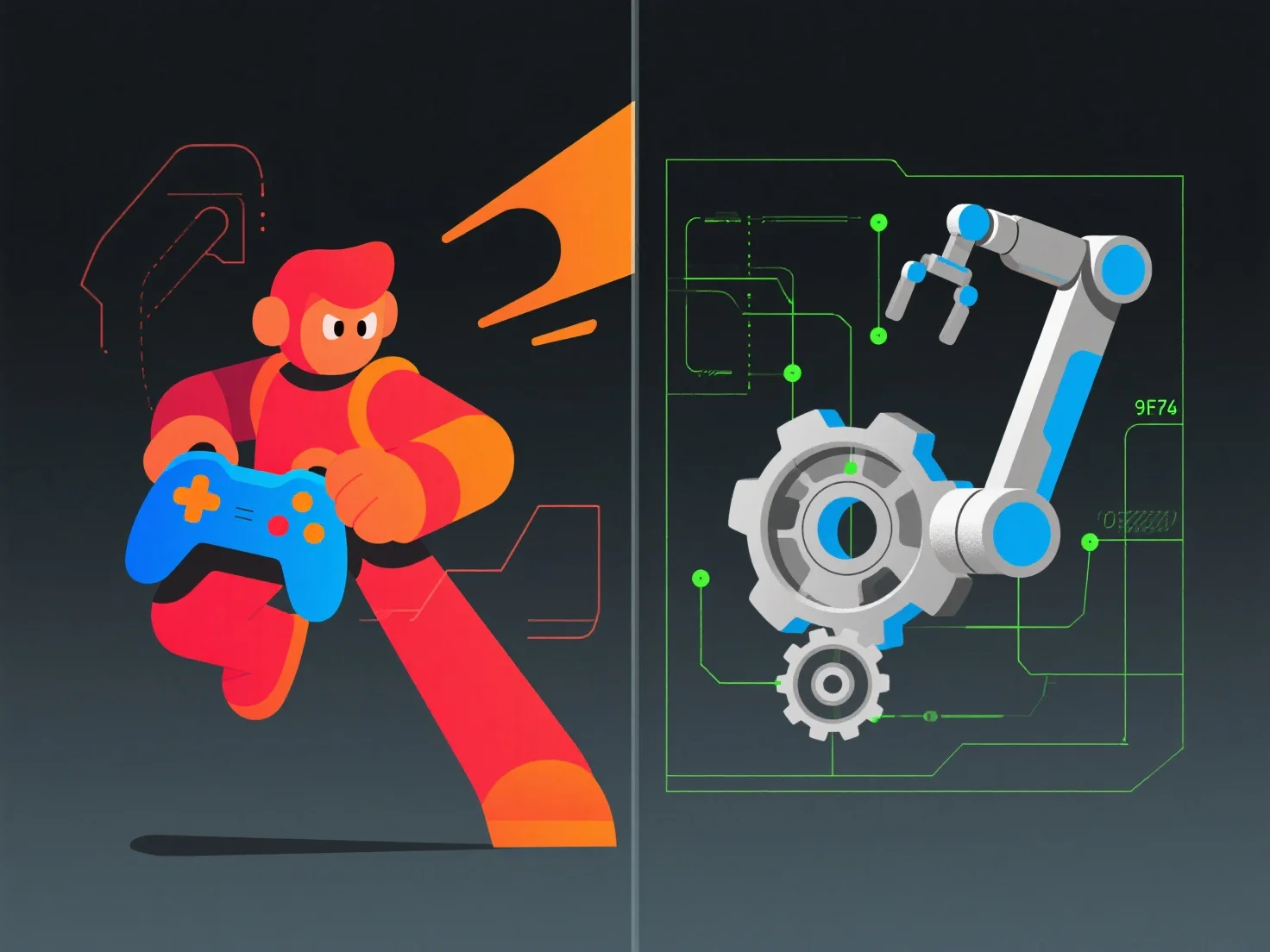
Die Hauptunterschiede zwischen der Verwendung von 3D in Spielen und in der Fertigung liegen im Zweck, in der Detailgenauigkeit und in den Anwendungszielen.
3D-Modelle für Spiele legen den Schwerpunkt auf visuelle Attraktivität und Echtzeit-Rendering, um das Eintauchen des Spielers zu verbessern. Sie verwenden häufig Polygon-Optimierung und Textur-Mapping, um Qualität und Leistung in Einklang zu bringen, und vereinfachen nicht essentielle Details für ein flüssiges Gameplay.
Die Herstellung von 3D-Modellen konzentriert sich dagegen auf technische Genauigkeit. Sie erfordert präzise Dimensionen, Materialeigenschaften und funktionale Integrität und wird in der Regel mit CAD-Tools erstellt, um Prototyping, Produktion oder strukturelle Simulationen zu unterstützen.