


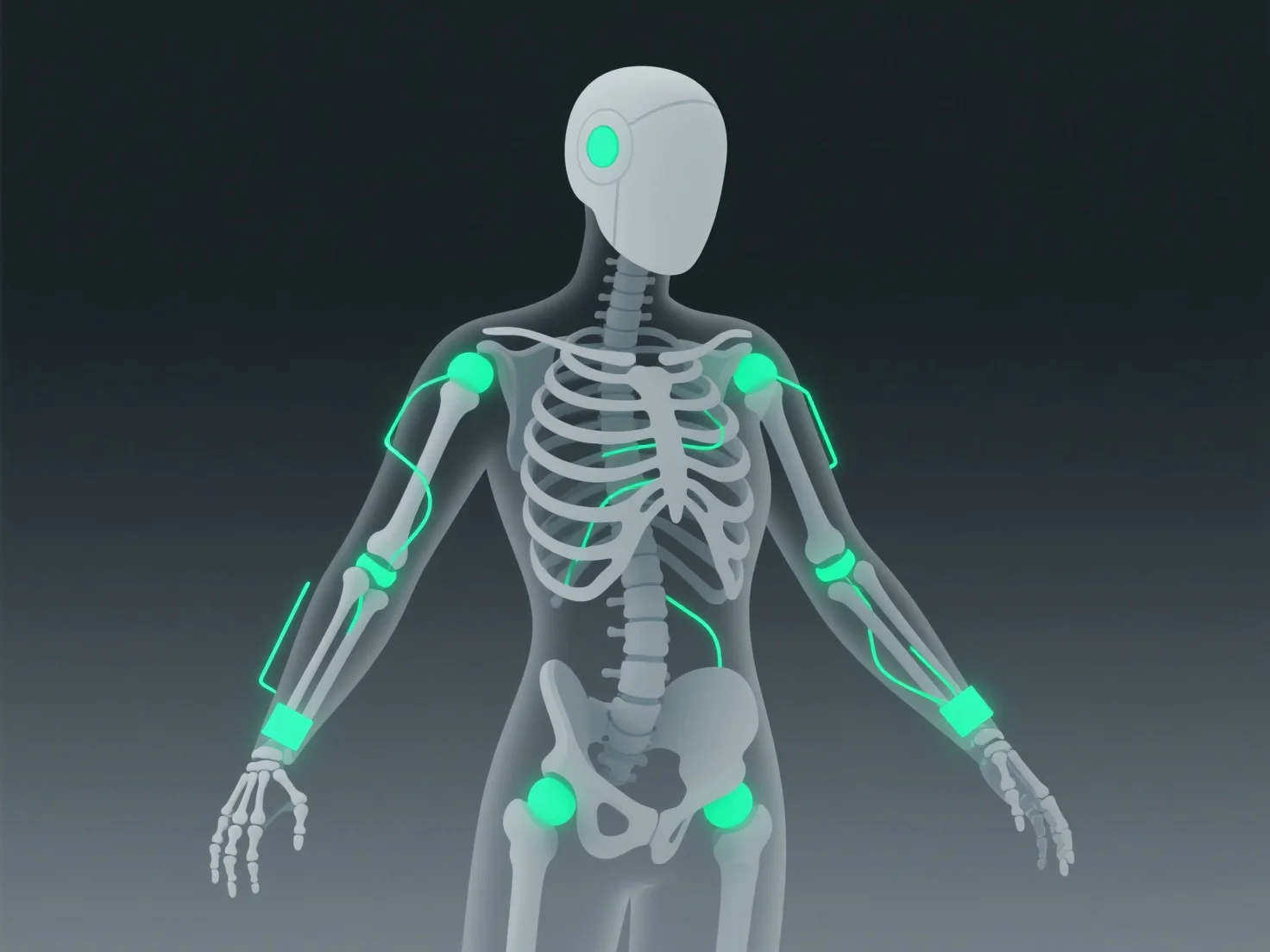
Die Hauptkomponenten eines 3D-Charakter-Rigs umfassen das Skelett, das Steuerungs-Rig, das Skinning und die Einschränkungen, die zusammen eine reibungslose, animatorfreundliche Charakterbewegung ermöglichen.
- **Skelett**: Die zugrunde liegende Knochenstruktur, die den Bewegungsbereich des Charakters definiert und anatomische Gelenke imitiert, um Rotation und Gliedmaßenbewegung zu unterstützen. - **Steuerungsrigg**: Animator-orientierte Schnittstellen (z. B. Schieberegler, Griffe), die die Pose-Manipulation vereinfachen und die Komplexität im Vergleich zur direkten Knochenanpassung reduzieren. - **Skinning**: Der Prozess, bei dem das 3D-Mesh an das Skelett gebunden wird, um sicherzustellen, dass sich das Mesh natürlich deformiert, wenn sich die Knochen bewegen (z. B. das Beugen des Arms, der die Haut dehnt). - **Einschränkungen**: Regeln, die Interaktionen regeln, wie z. B. die Begrenzung der Gelenkrotation, um unnatürliche Posen zu verhindern, oder die Verknüpfung von Steuerelementen für synchronisierte Bewegungen.
Diese Komponenten arbeiten zusammen, um Rigs für Spiele, Filme und Simulationen zu erstellen, und sorgen für ein ausgewogenes Verhältnis zwischen Flexibilität und einfacher Animation.