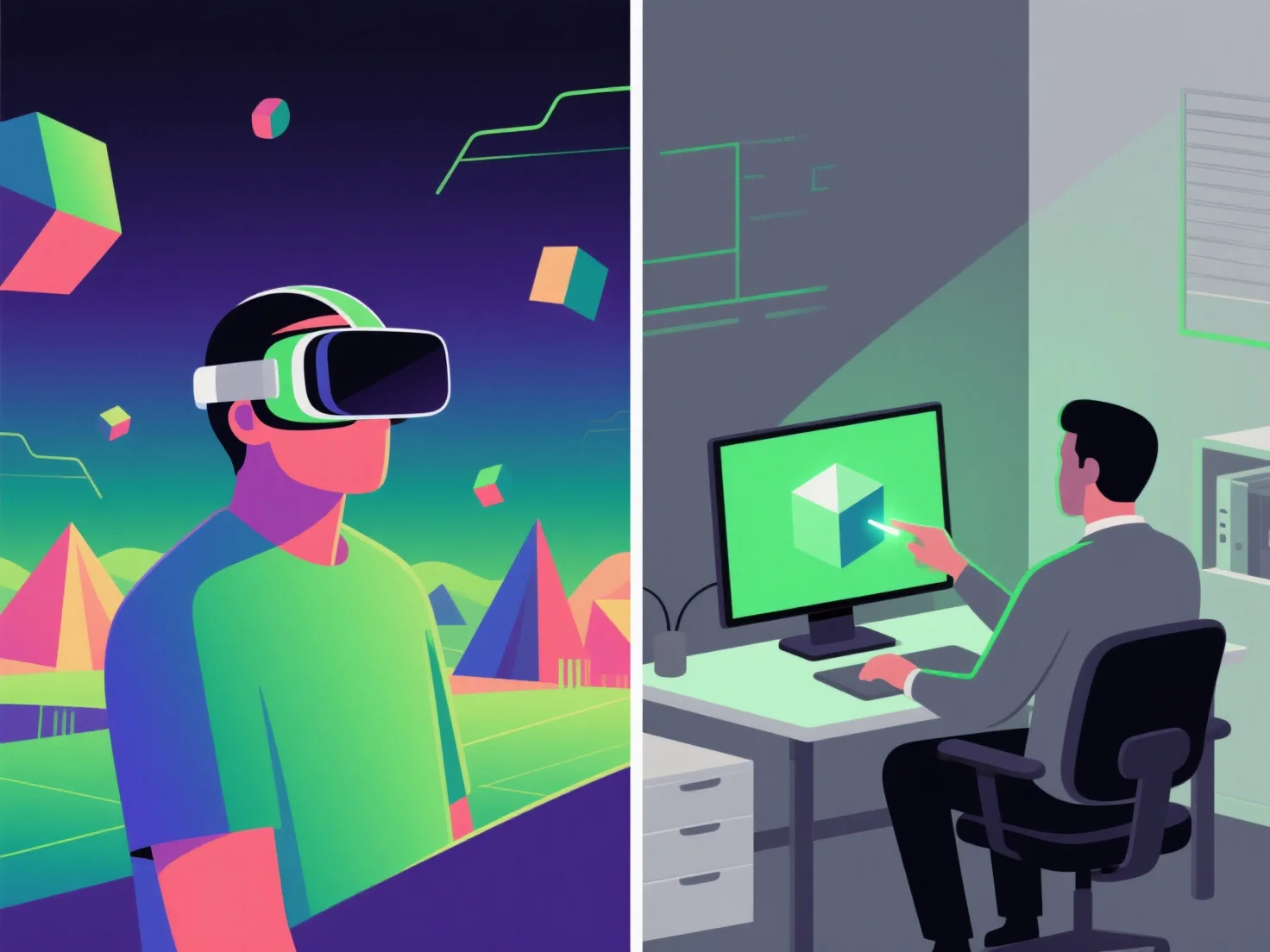
Die VR-basierte 3D-Präsentation unterscheidet sich von Desktop-3D-Erlebnissen vor allem in der Tiefe der Immersion, den Interaktionsmethoden und dem Fokus auf Anwendungsfälle. VR nutzt Head-Mounted-Displays, um eine vollständig umschlossene 360°-virtuelle Umgebung zu liefern, die ein starkes räumliches Gefühl erzeugt, bei dem sich die Nutzer „innerhalb“ des 3D-Raums fühlen. Im Gegensatz dazu präsentiert Desktop-3D 3D-Modelle auf einem flachen Bildschirm mit festen Betrachtungswinkeln, was zu einer begrenzten Immersion führt. VR-Interaktion basiert auf natürlichen Körperbewegungen, wie Handverfolgung, Kopfdrehung oder Gestensteuerung, für ein intuitives Engagement mit 3D-Objekten. Desktop-3D hingegen verwendet Maus, Tastatur oder Touch-Eingaben, um Modelle auf dem Bildschirm zu manipulieren, mit weniger körperlicher Beteiligung. VR eignet sich hervorragend für Szenarien, die eine tiefe Immersion erfordern, wie Trainingssimulationen oder immersives Gaming. Desktop-3D ist ideal für bildschirmbasierte Aufgaben wie Architekturvorschauen oder Bildungsdemos, bei denen eine schnelle, zugängliche 3D-Anzeige ausreicht. Kurz gesagt, VR priorisiert Immersion und natürliche Interaktion, während Desktop-3D einen praktischen, bildschirmgebundenen 3D-Zugang bietet.


Wie unterscheidet sich eine VR-basierte 3D-Präsentation von 3D-Erlebnissen auf dem Desktop?
3D auf VR-Basis unterscheidet sich von Desktop-3D in Bezug auf die Immersionstiefe, die Interaktionsmethoden und den Schwerpunkt der Anwendungsfälle.