


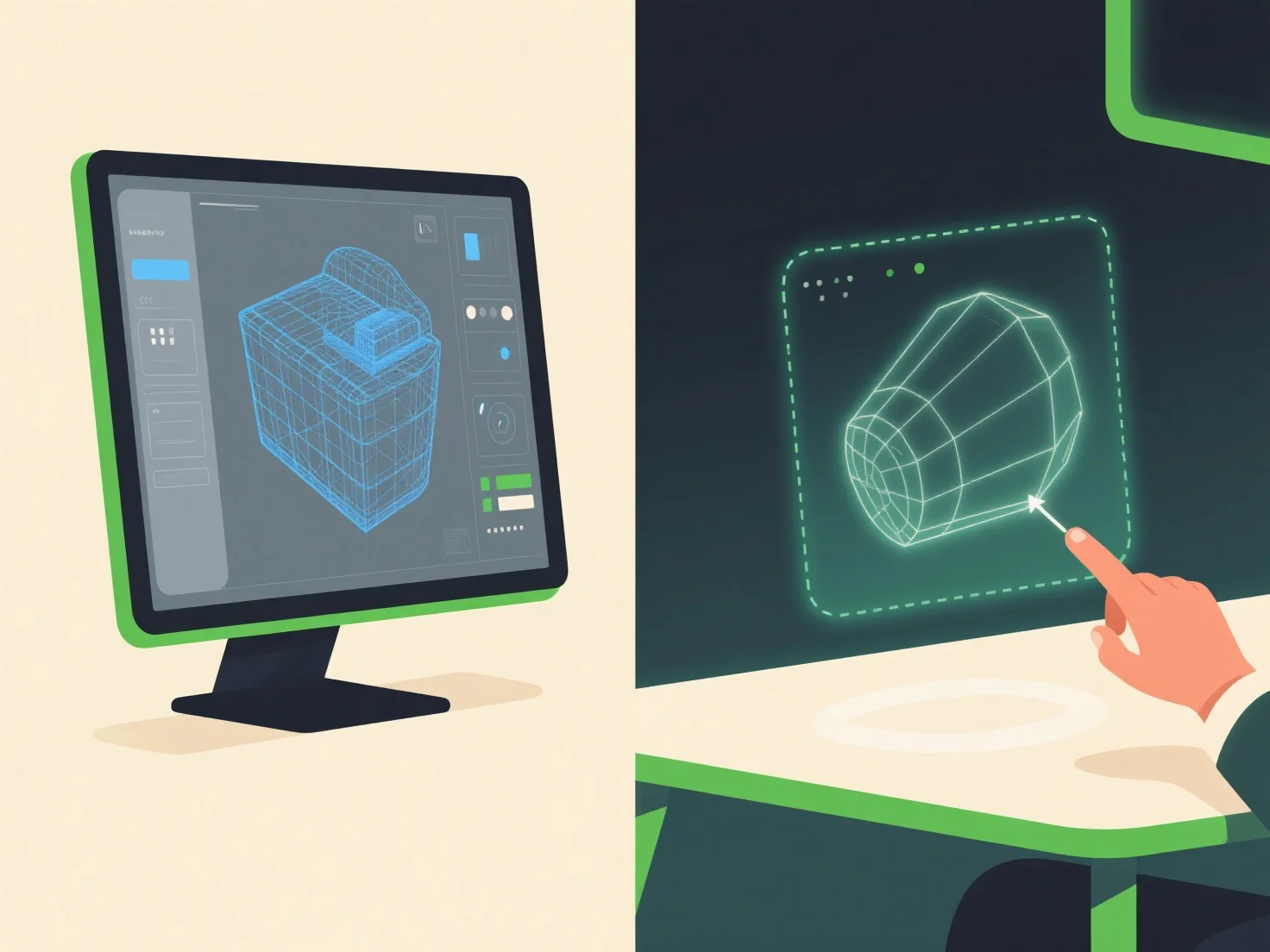
Die AR-basierte 3D-Präsentation unterscheidet sich von der On-Screen-3D-Visualisierung hauptsächlich in der Umgebungsintegration und Interaktion: AR überlagert 3D-Modelle auf die reale Welt, während On-Screen-3D auf einen 2D-Bildschirm beschränkt ist.
- **Anzeigenumgebung**: AR verbindet 3D-Inhalte mit der physischen Umgebung des Benutzers (z. B. ein Möbelmodell in einem Wohnzimmer) und schafft so ein Gefühl der Präsenz. Die On-Screen-3D-Visualisierung zeigt Modelle innerhalb eines festen Bildschirms, ohne Kontext zur realen Welt. - **Interaktionserlebnis**: AR ermöglicht räumliche Interaktion, sodass Benutzer 3D-Modelle drehen, skalieren oder um sie herumgehen können, um Details aus allen Blickwinkeln zu betrachten. On-Screen-3D beschränkt die Interaktion auf die Bildschirmgrenzen und begrenzt so das immersive Erkunden.
Kurz gesagt, eignet sich AR für Szenarien, die einen realen Kontext und interaktive Immersion erfordern, während On-Screen-3D besser für detaillierte, bildschirmgebundene Analysen geeignet ist.