


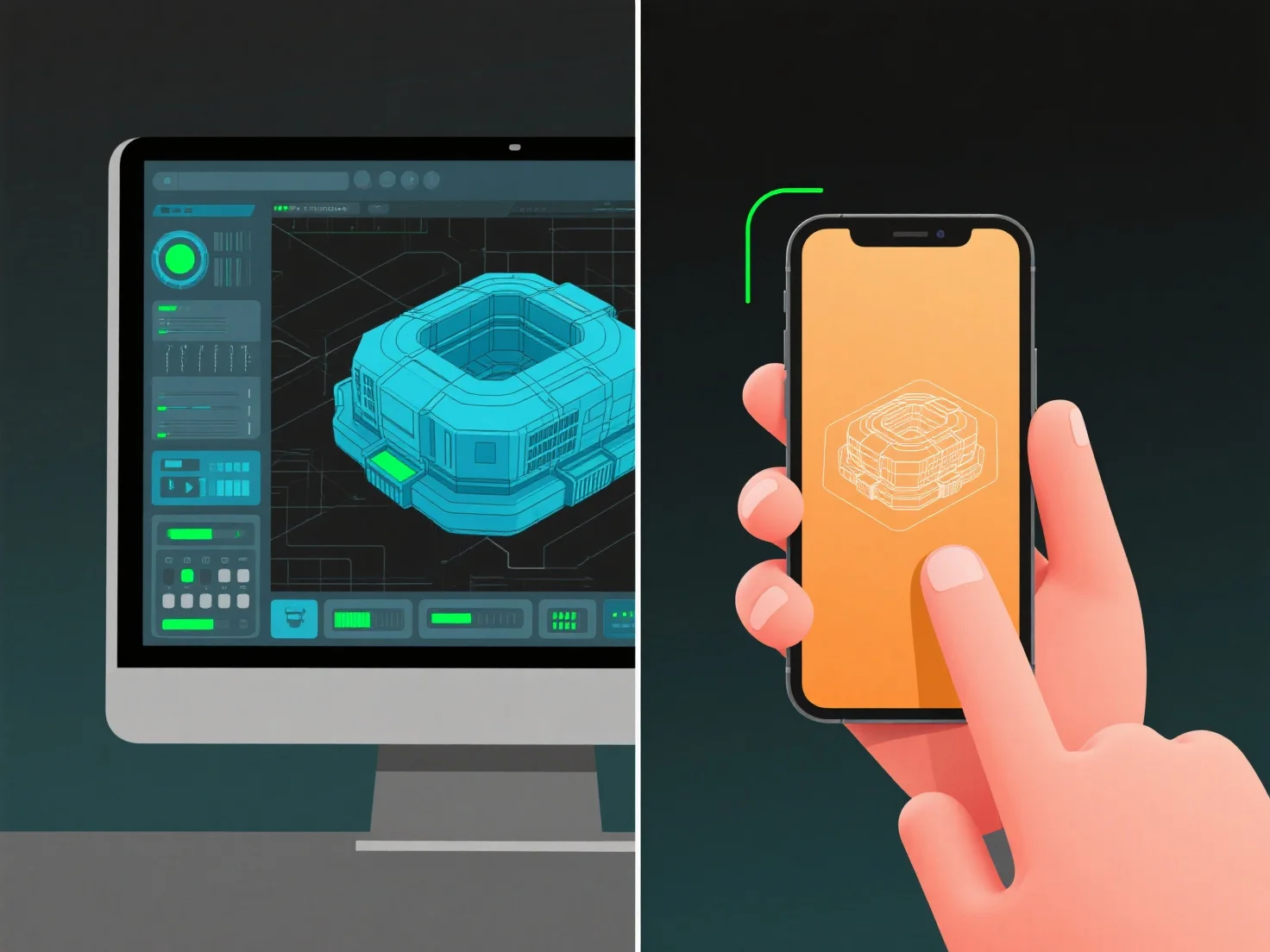
Die 3D-Präsentation unterscheidet sich zwischen Desktop- und mobilen Kontexten hauptsächlich in Bezug auf Hardware-Unterstützung, Interaktionsmethoden und Leistungsprioritäten.
Desktops mit leistungsstarken GPUs und größeren Bildschirmen ermöglichen hochdetaillierte 3D-Modelle, komplexe Texturen und Echtzeit-Rendering-Effekte. Mobilgeräte, die durch kleinere Displays und Akku-Beschränkungen eingeschränkt sind, verwenden häufig vereinfachte Modelle, optimierte Shader und Touch-Interaktionen wie Wischen zum Drehen oder Zoomen mit zwei Fingern.
Zum Beispiel können Desktops Multi-Monitor-3D-Visualisierung für Designarbeiten unterstützen, während mobile Geräte sich auf leichte AR/VR-3D-Overlays für den Einsatz unterwegs konzentrieren.
Bei der Entwicklung von 3D-Inhalten sollten Sie die Anzahl der Polygone des Modells für mobile Geräte optimieren, um ein reibungsloses Laden zu gewährleisten, während Desktops eine höhere Komplexität für detaillierte Präsentationen verarbeiten können.