


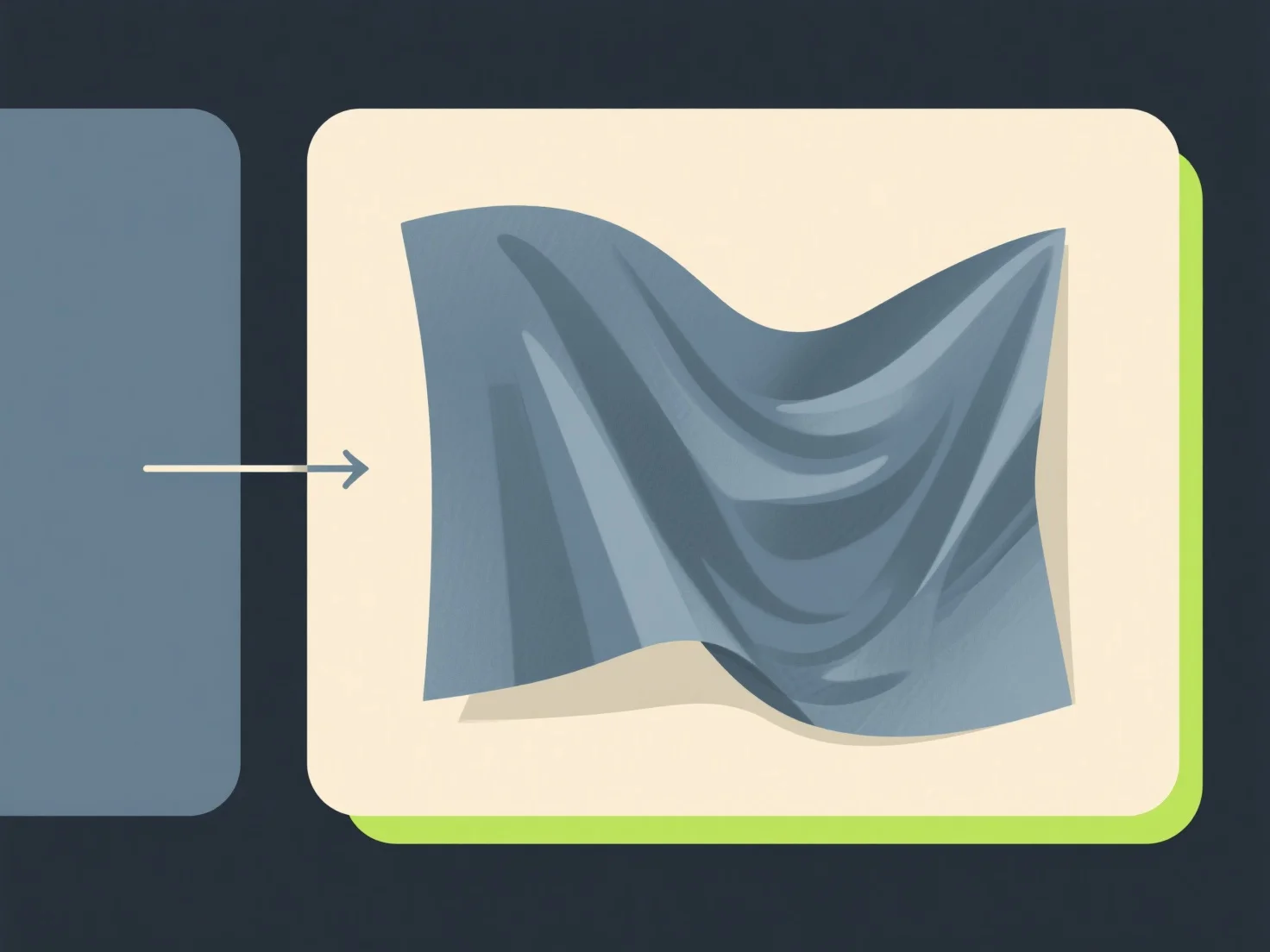
Die Simulation von Stofffalten und -knittern in 3D-Modellen verwendet hauptsächlich physikbasierte Stoffsimulations-Engines, um das Verhalten von Stoffen in der realen Welt nachzuahmen, und erzeugt natürliche Falten durch berechnete Kräfte und Materialeigenschaften.
Wichtige Schritte umfassen: - **Berechnung der Physik-Engine**: Engines berechnen Kräfte wie Schwerkraft, Spannung und Reibung in Kombination mit Stoffeigenschaften (z. B. Steifigkeit, Elastizität), um Deformationen zu simulieren. - **Parameter-Einstellung**: Die Definition von Variablen wie Materialstärke und angewandtem Druck steuert, wie sich der Stoff im Laufe der Zeit faltet. - **Anfängerwerkzeuge**: Software mit integrierter Stoffsimulation.
Diese Methode gewährleistet ein realistisches, dynamisches Verhalten von Stoffen in 3D-Modellen.