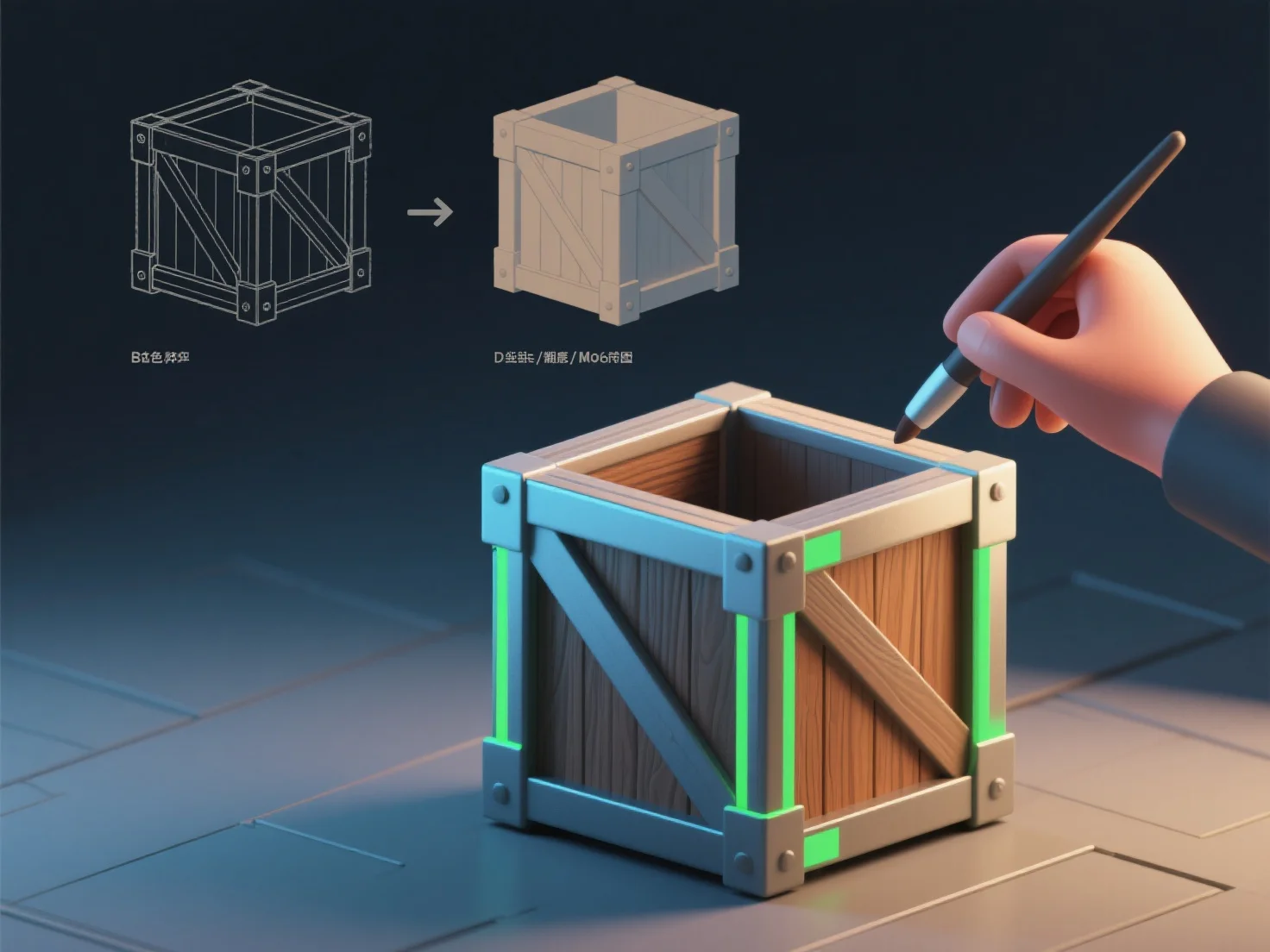
The texturing process of 3D modeling typically involves four core steps: UV unwrapping, texture creation/import, texture application, and detail adjustment. UV unwrapping converts the 3D model’s surface into a 2D layout, ensuring textures align without distortion, like flattening a 3D object into a 2D map. Texture creation/import involves either making custom textures (e.g., via software like Substance Painter) or importing pre-made ones from texture libraries. Texture application maps these 2D images to the model’s surfaces, linking the 2D texture to the 3D geometry. Detail adjustment refines properties such as color, roughness, or normal maps to enhance realism, tweaking for lifelike results. For beginners, using user-friendly tools (e.g., Blender’s UV Editor) and basic texture libraries can simplify mastering the process.


What steps are involved in the texturing process of 3D modeling?
3D modeling texturing has four core steps: UV unwrapping, texture creation/import, application, and detail adjustment, with beginner-friendly tools simplifying it.