


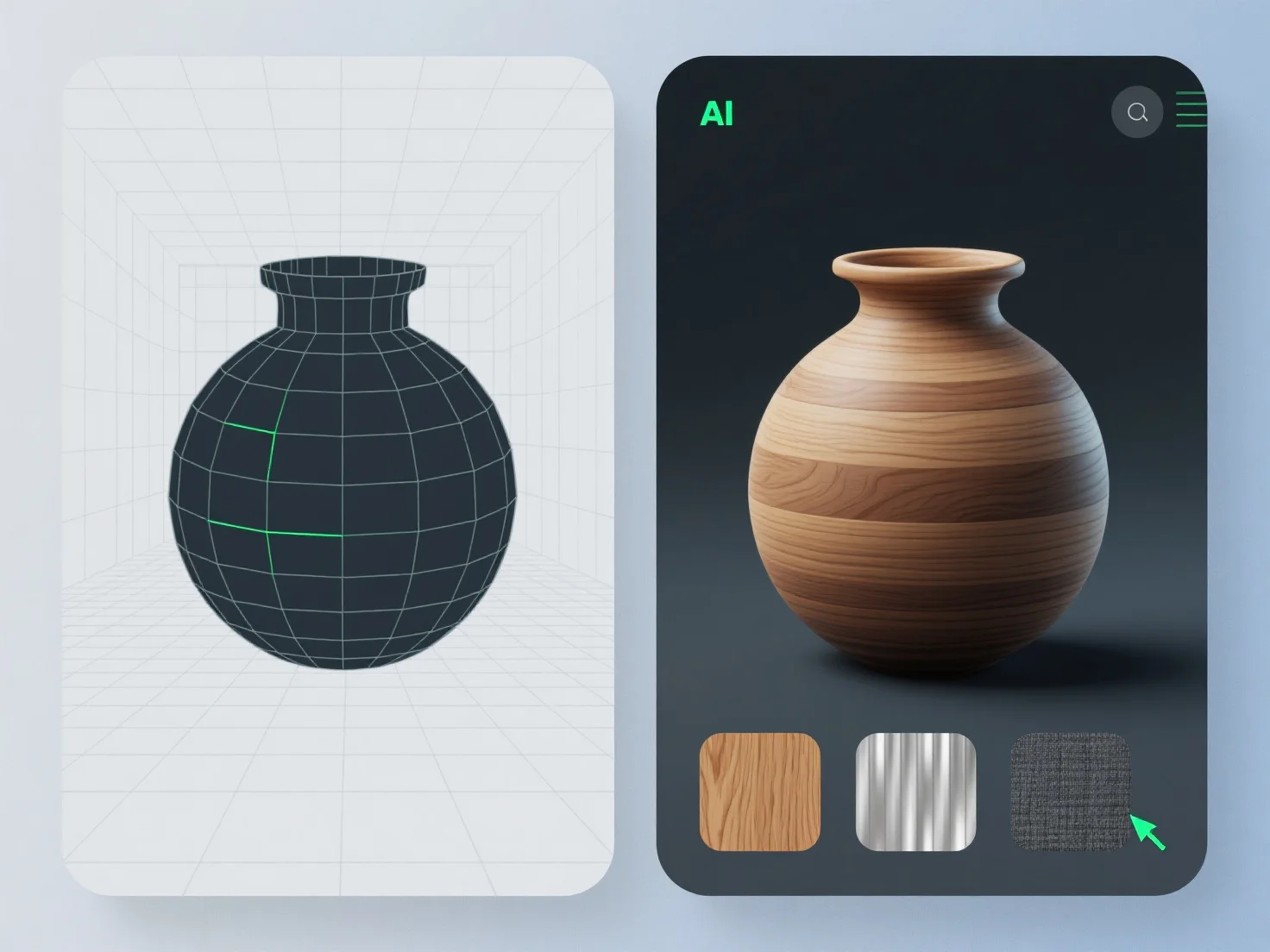
3Dモデリングにおけるテクスチャリングとマテリアルの割り当て段階では、表面の詳細を追加し、視覚的な現実感を高めるためのマテリアルのプロパティを定義することが関わってきます。この段階は、モデリングとレンダリングの間にある橋渡しの役割を果たすものです。
主な要素は次のとおりです: - テクスチャマップの適用:アルベド(色)、バンプ、またはノーマルマップなどを適用して、柄や深みなどの表面詳細をシミュレートします。 - マテリアル属性の割り当て:反射率、粗さ、透明度などのプロパティを定義して、現実世界の材料(例えば、金属、布)を模倣します。 - ジオメトリとの調整:テクスチャがモデルのトポロジに合わせて配置され、自然で一貫した結果が得られるようにします。
初心者の方は、基本的なテクスチャセットやプリセット素材から始めることで、効率的にコアワークフローを把握することができます。