


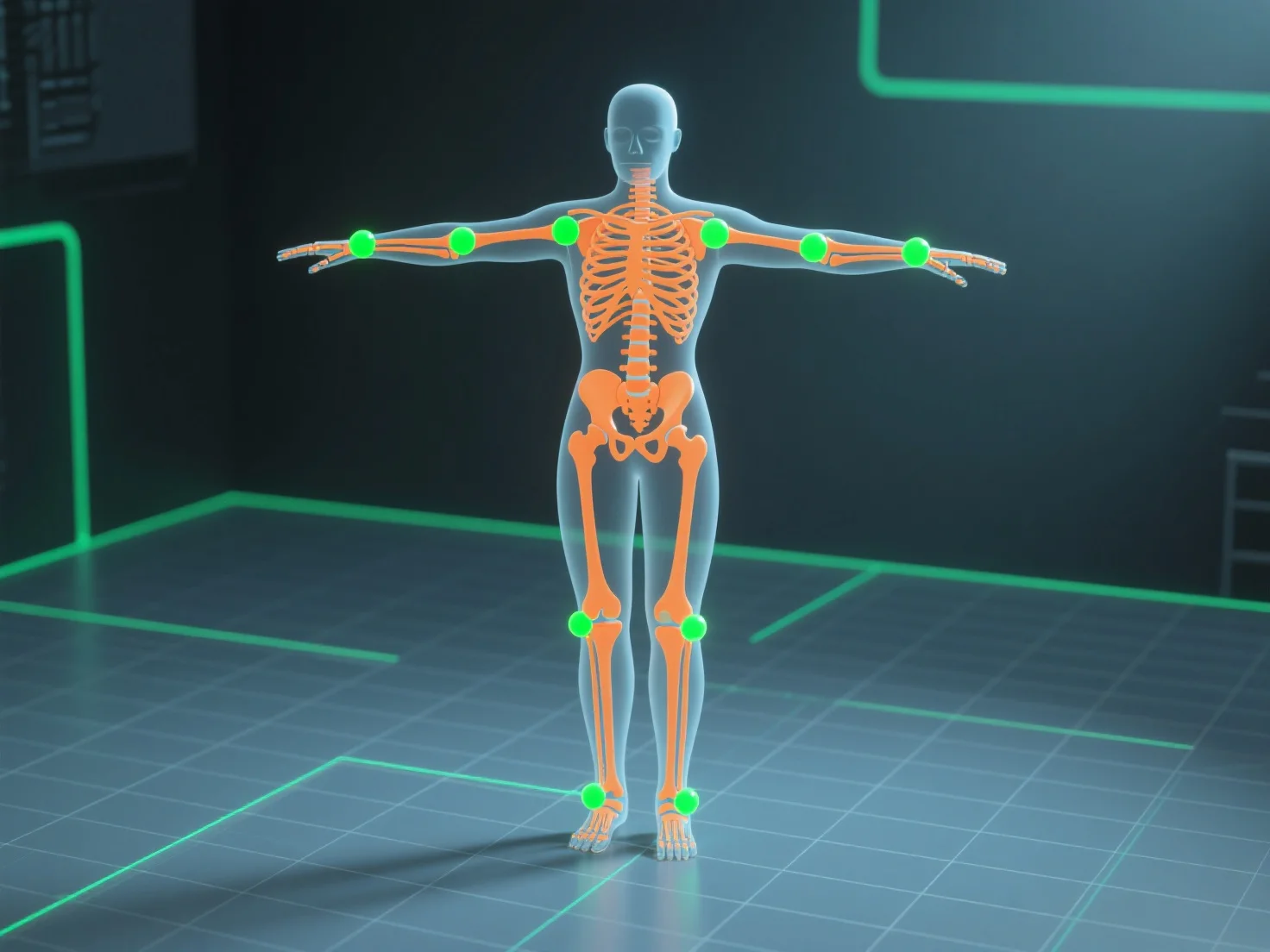
Риггінг у 3D-анімації персонажів включає в себе створення цифрового скелета (арматури) та системи управління, що забезпечує реалістичний рух персонажа, виступаючи в ролі зв'язку між 3D-моделюванням та анімацією.
Це починається з побудови ієрархічної кісткової структури, яка відтворює анатомічні особливості: кінцівки, хребет, лицьові кістки, щоб імітувати природний рух.
Далі додаються обмеження, такі як зворотна кінематика (IK) або пряма кінематика (FK): IK спрощує позиціонування кінцівок.
Нарешті, інтегровані зручні елементи управління (слайдери, ручки), що дозволяють аніматорам легко регулювати пози, вирази обличчя або жести, не маніпулюючи окремими кістками.
Це гарантує, що персонажі рухаються природно, роблячи риггінг критичним етапом перед анімацією.