


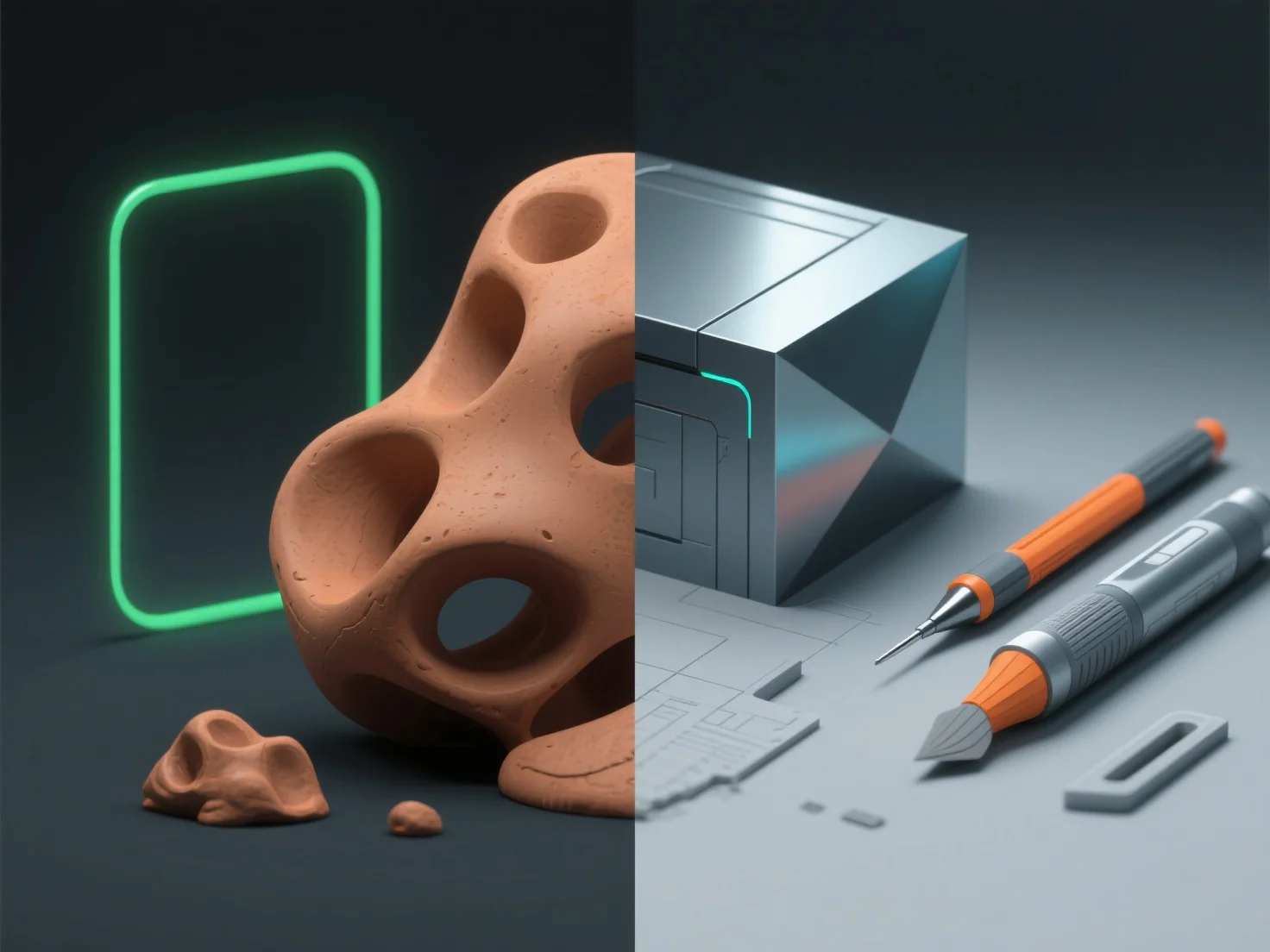
When combining sculpting and hard surface modeling tools, key considerations include workflow integration, geometry compatibility, and topology consistency, ensuring smooth merging of organic details (e.g., character features) and precise hard surface elements (e.g., mechanical parts).
- **Workflow integration**: Plan tool transitions early—use sculpting tools (e.g., ZBrush) for organic details and hard surface tools (e.g., Blender’s Boolean) for sharp edges to avoid disjointed processes. - **Geometry compatibility**: Balance mesh resolution: high poly for sculpted details to capture fine textures, optimized low poly for hard surfaces to prevent performance lags. - **Topology consistency**: Align edge flow between sculpted and hard surface areas; inconsistent topology may cause deformation issues in animation or 3D printing.
Retopologizing sculpted meshes first often improves alignment with hard surface components, enhancing overall model integrity.