


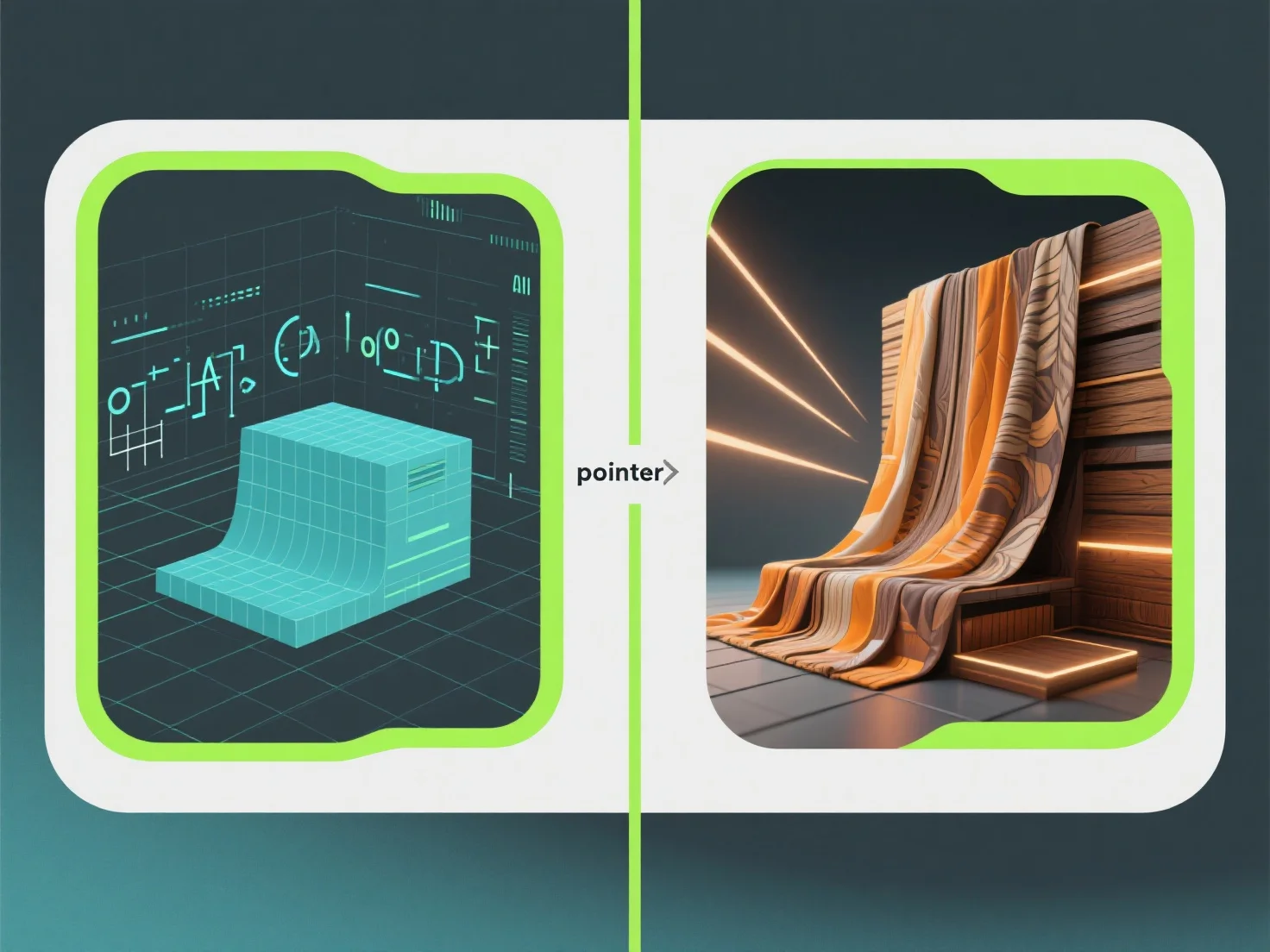
Real-time and offline rendering differ in texture and material handling by prioritizing speed/simplicity versus detail/accuracy, respectively.
Real-time rendering focuses on speed for interactive use (e.g., games). It uses compressed or low-resolution textures and simplified material models (e.g., basic PBR shaders) to ensure quick processing, limiting complexity to meet frame rate demands.
Offline rendering, unconstrained by real-time speed (e.g., for film/animation), prioritizes detail. It employs high-resolution textures, multi-layered materials, and complex light interactions (e.g., subsurface scattering, accurate reflections) to achieve realistic results, with rendering time being secondary.