


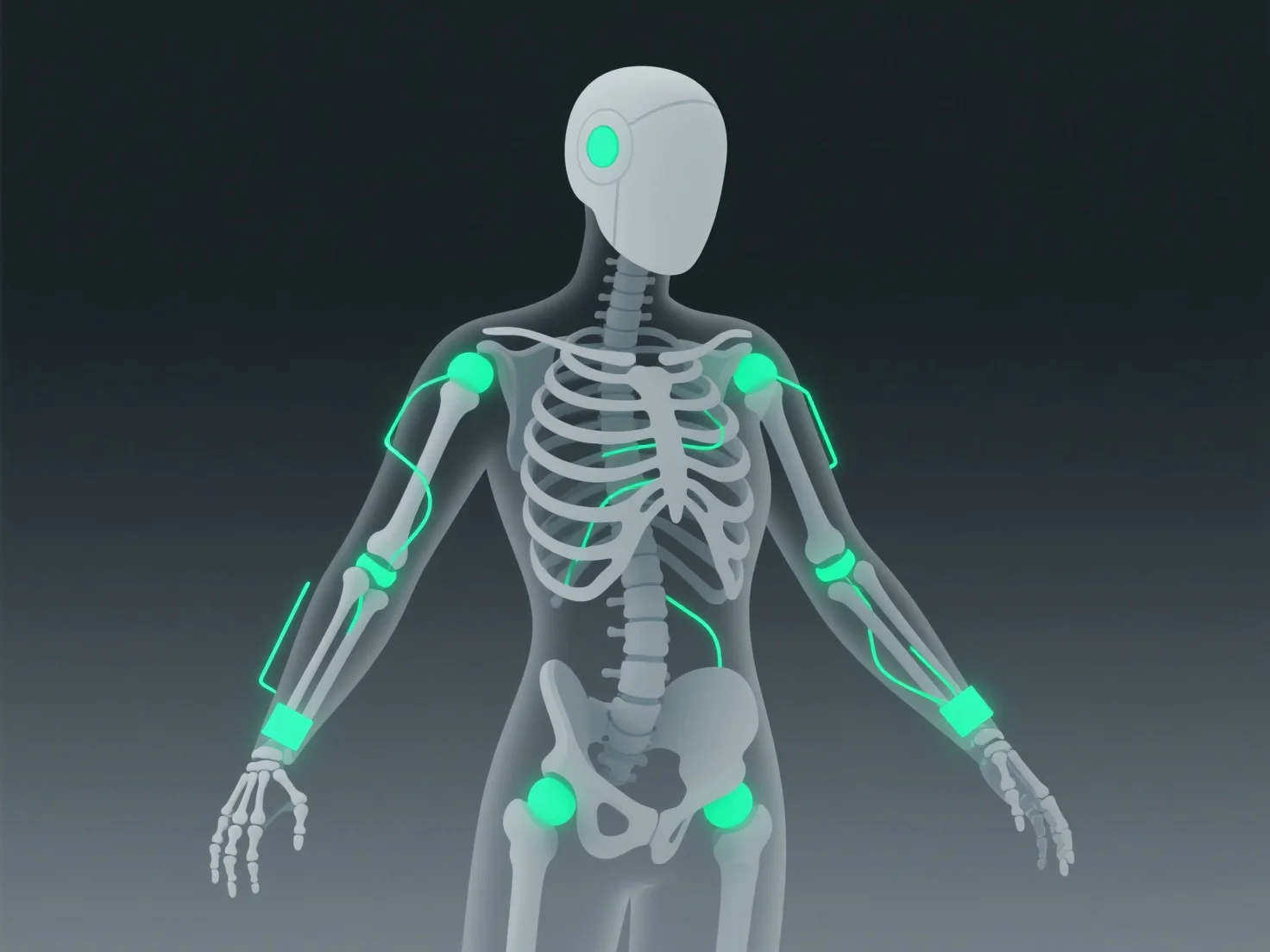
The key components of a 3D character rig include the skeleton, control rig, skinning, and constraints, which collectively enable smooth, animator-friendly character movement.
- **Skeleton**: The underlying bone structure that defines the character’s movement range, mimicking anatomical joints to support rotation and limb motion. - **Control Rig**: Animator-focused interfaces (e.g., sliders, handles) that simplify pose manipulation, reducing complexity compared to direct bone adjustment. - **Skinning**: The process binding the 3D mesh to the skeleton, ensuring the mesh deforms naturally as bones move (e.g., arm bending stretching the skin). - **Constraints**: Rules regulating interactions, such as limiting joint rotation to prevent unnatural poses or linking controls for synchronized movement.
These components work together to create rigs for games, films, and simulations, balancing flexibility with ease of animation.