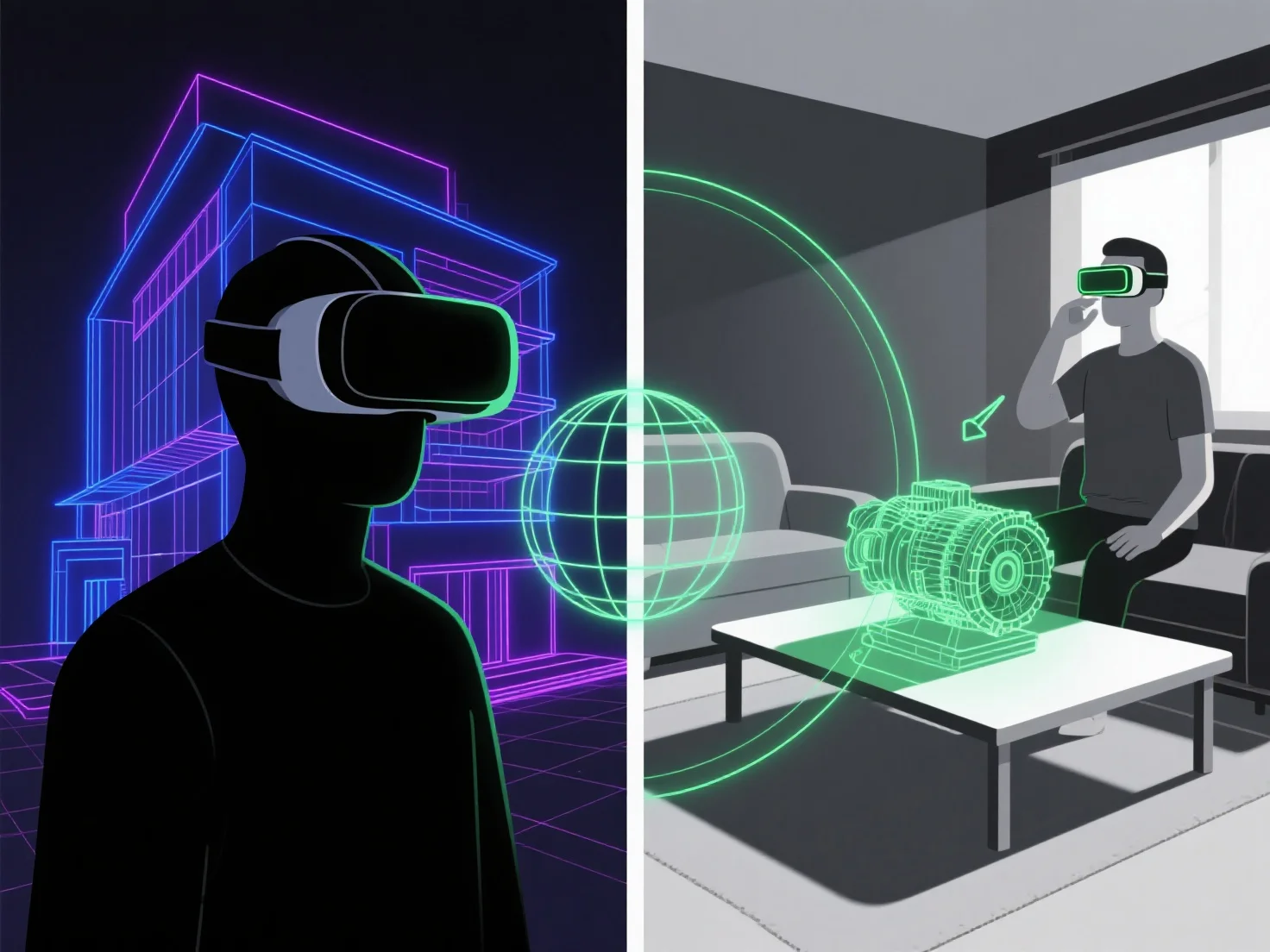
Bei 3D-Anwendungen liegt der Hauptunterschied zwischen VR und AR in ihrer Beziehung zur realen Welt: VR schafft eine vollständig immersive, isolierte virtuelle 3D-Umgebung, während AR 3D-Digitalinhalte über die Sicht auf die reale Welt legt. VR blockiert die Eingaben aus der realen Welt und priorisiert die Interaktion mit 3D-Modellen in einem simulierten Raum. Es ist ideal für vollständig virtuelle 3D-Erlebnisse, wie z. B. Walkthroughs für 3D-Designs oder virtuelle Trainingssimulationen. AR behält den Kontext der realen Welt bei und ermöglicht es 3D-Inhalten, mit der physischen Umgebung zu interagieren. Beispiele hierfür sind die Platzierung von 3D-Möbeln in Wohnungsdekor-Apps oder Echtzeit-3D-Anmerkungen in der industriellen Wartung. Kurz gesagt, wählen Sie VR für 3D-Anwendungen, die ein vollständiges Eintauchen erfordern; entscheiden Sie sich für AR, wenn 3D-Inhalte in die reale Welt integriert werden müssen.


Was sind die Unterschiede zwischen VR und AR für 3D-Anwendungen?
VR schafft eine immersive virtuelle 3D-Umgebung, während AR 3D-Inhalte auf die reale Welt überlagert.