


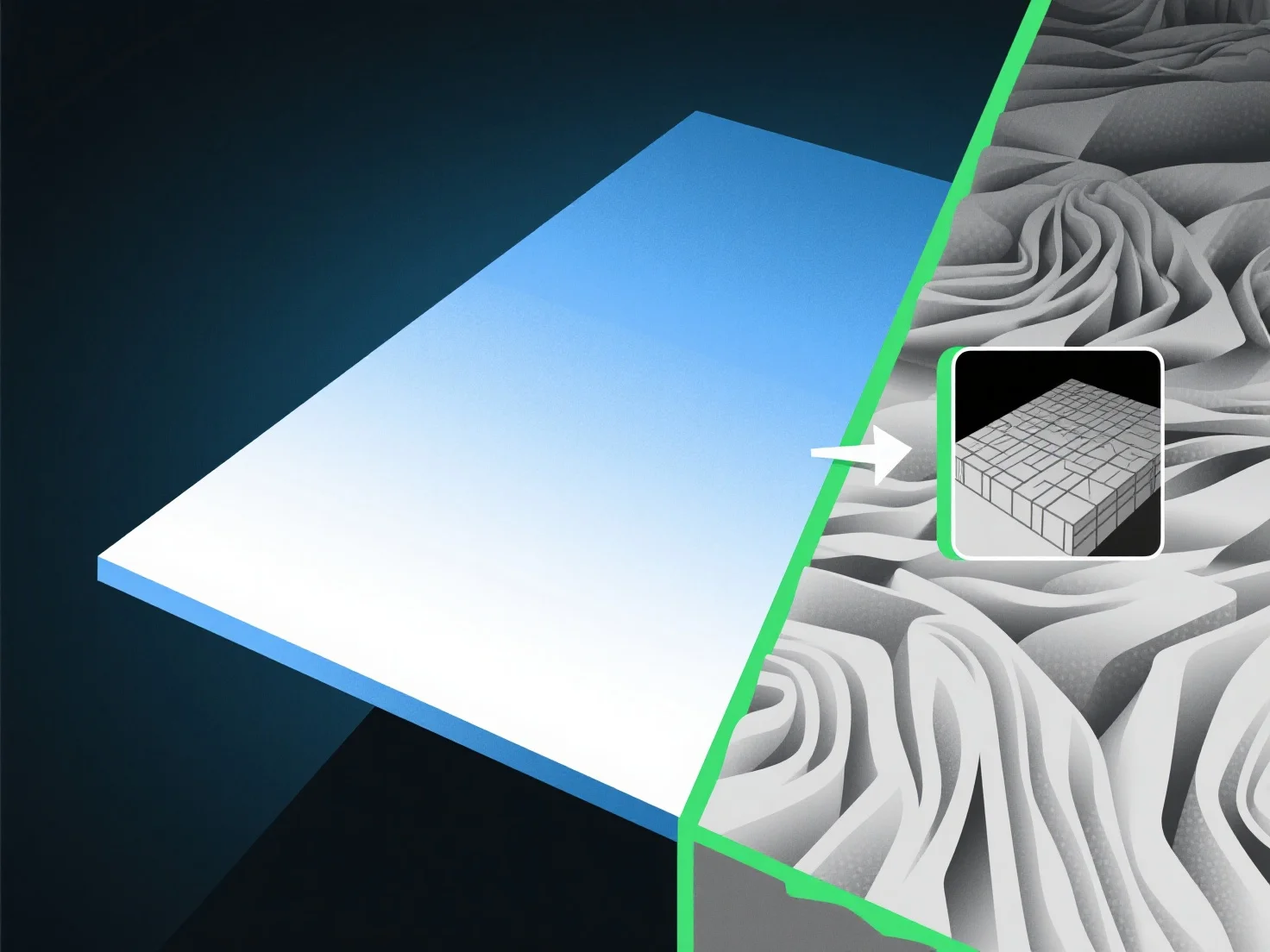
Die Displacement-Mapping in der 3D-Texturierung modifiziert die Oberflächengeometrie eines Modells, indem die Eckpunkte basierend auf einer Graustufen-Textur verschoben werden, wodurch eine tatsächliche physische Tiefe erzeugt wird.
- **Kernfunktion**: Es fügt eine greifbare Oberflächenrelief hinzu, wodurch Texturen physikalisch korrekt und nicht nur visuell überzeugend werden. - **Typische Anwendungen**: Wird für Terrain, Felsen oder organische Materialien in Spielen, Filmen und Produktvisualisierungen verwendet, um Realismus und Immersion zu steigern. - **Wichtiger Aspekt**: Erfordert eine höhere Polygonanzahl, um sicherzustellen, dass verschobene Oberflächen glatt erscheinen, im Gegensatz zu normalem Mapping, das auf Modellen mit weniger Polygonen funktioniert.