


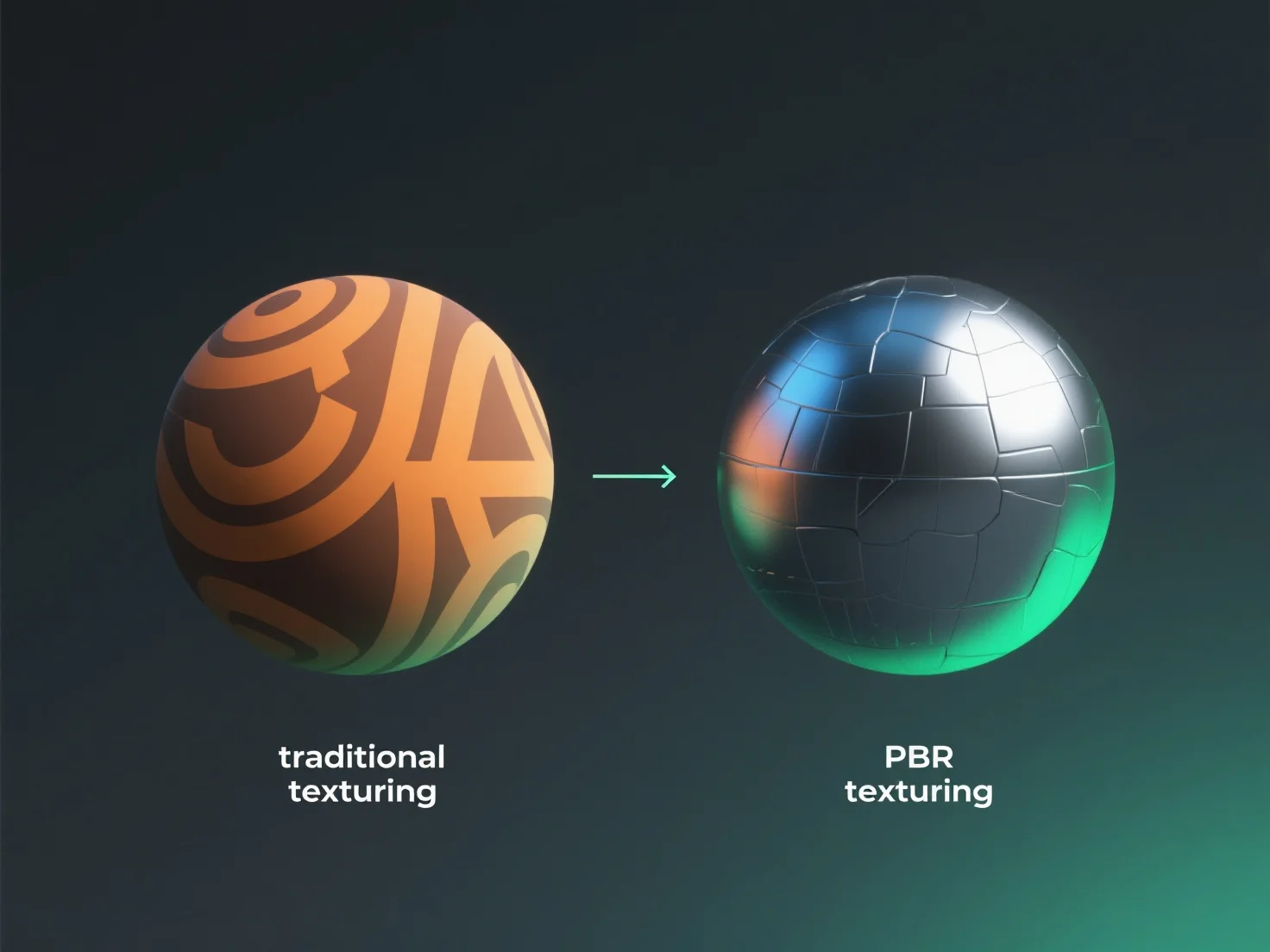
PBR texturing differs from traditional texturing techniques primarily by focusing on physically accurate light-surface interactions rather than artistic approximation.
It simulates light behavior using inherent material properties (e.g., albedo, roughness, metallicity), whereas traditional methods rely on hand-painted color and shading to manually mimic lighting effects.
This leads to key consistency differences: PBR ensures realism across varying light conditions, while traditional texturing may look unnatural or require rework when lighting changes.
In practical use—such as gaming, film, or architectural visualization—PBR delivers more lifelike, adaptable results, making it ideal for creating realistic 3D assets.