


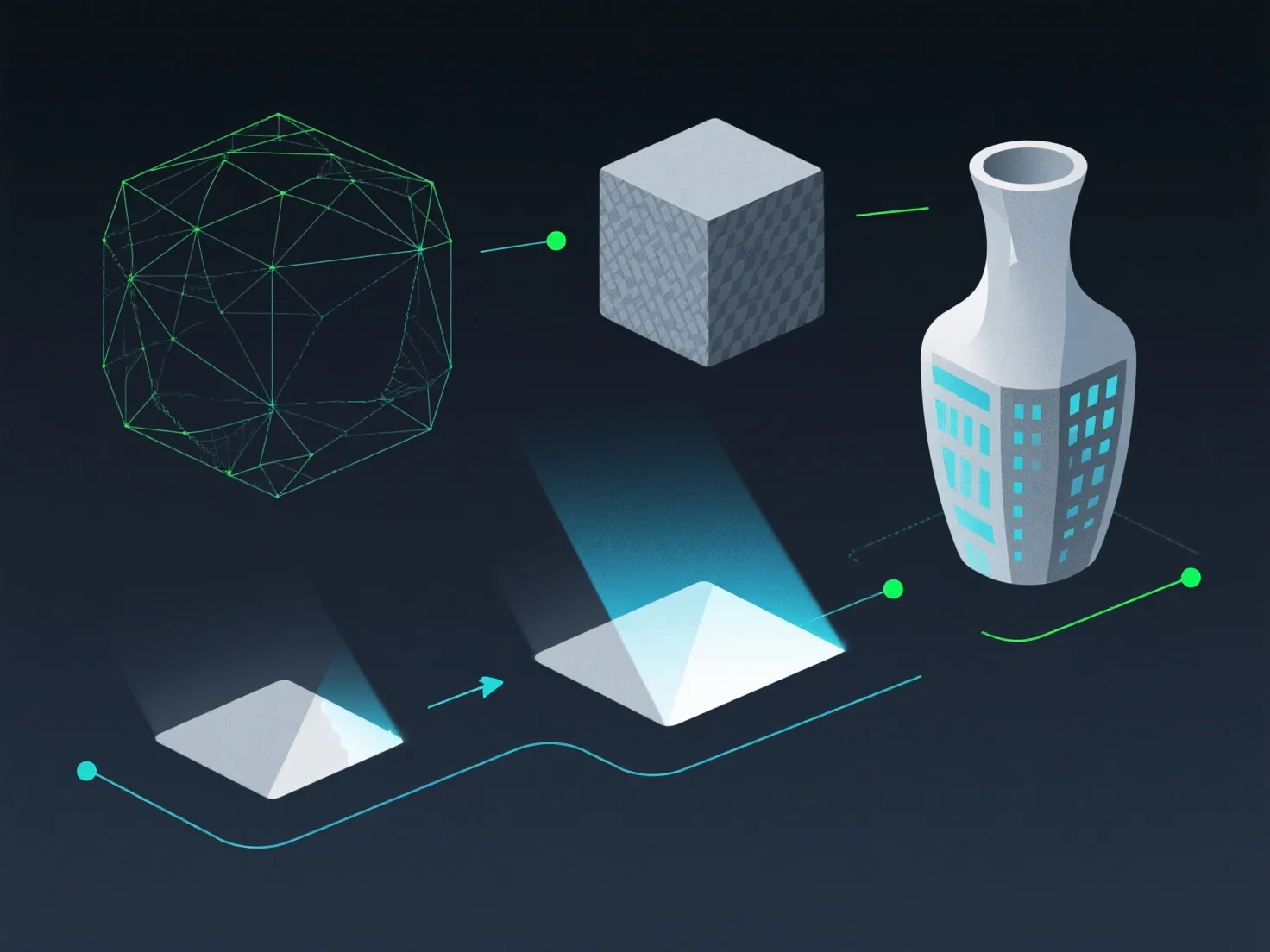
The render pipeline in 3D modeling functions by processing 3D data through sequential stages to generate 2D images, converting raw model data (vertices, textures, lighting) into visually coherent renderings via geometry transformation, lighting calculation, and pixel color determination.
Key stages include: - **Vertex Processing**: Transforms 3D coordinates into 2D screen space, handling scaling, rotation, and position calculations to map vertices onto the viewing plane. - **Rasterization**: Converts 3D shapes (e.g., triangles) into pixel grids, determining which pixels each shape covers to form the basic image structure. - **Pixel Shading**: Applies textures, lighting effects, and color details to each pixel, refining the image with realism through shading, reflections, and material properties.
These stages work sequentially to turn 3D models into the 2D visuals seen in games, animations, or renders.