


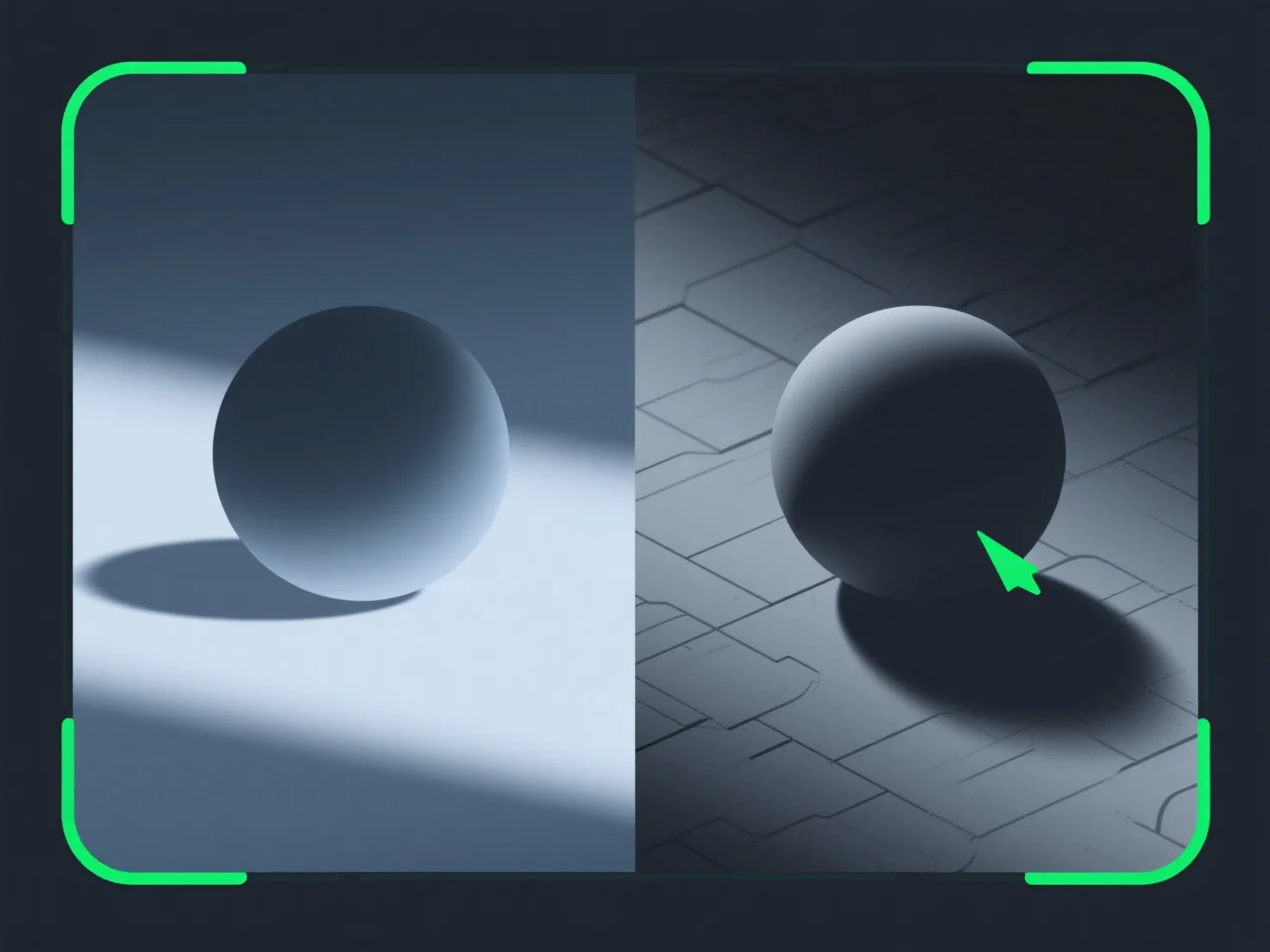
Відображення в реальному часі обробляє тіні за допомогою спрощених методів, орієнтованих на швидкість, тоді як офлайн-рендеринг використовує складні техніки для забезпечення високої якості тіней.
У режимі реального часу часто використовуються карти тіней: вони приблизно відображають тіні, проектуючи інформацію про глибину на 2D-текстуру, віддаючи пріоритет швидким обчисленням, а не деталізації. Однак офлайн-рендеринг використовує трасування променів для точного розрахунку шляхів світла, що призводить до більш плавних країв, ефектів півтіні та реалістичної взаємодії зі складними сценами.
На практиці методи тіньових ефектів у реальному часі підходять для інтерактивних середовищ, таких як ігри, тоді як офлайн-методи ідеальні для високоякісних статичних рендерингів, наприклад, у фільмах.