


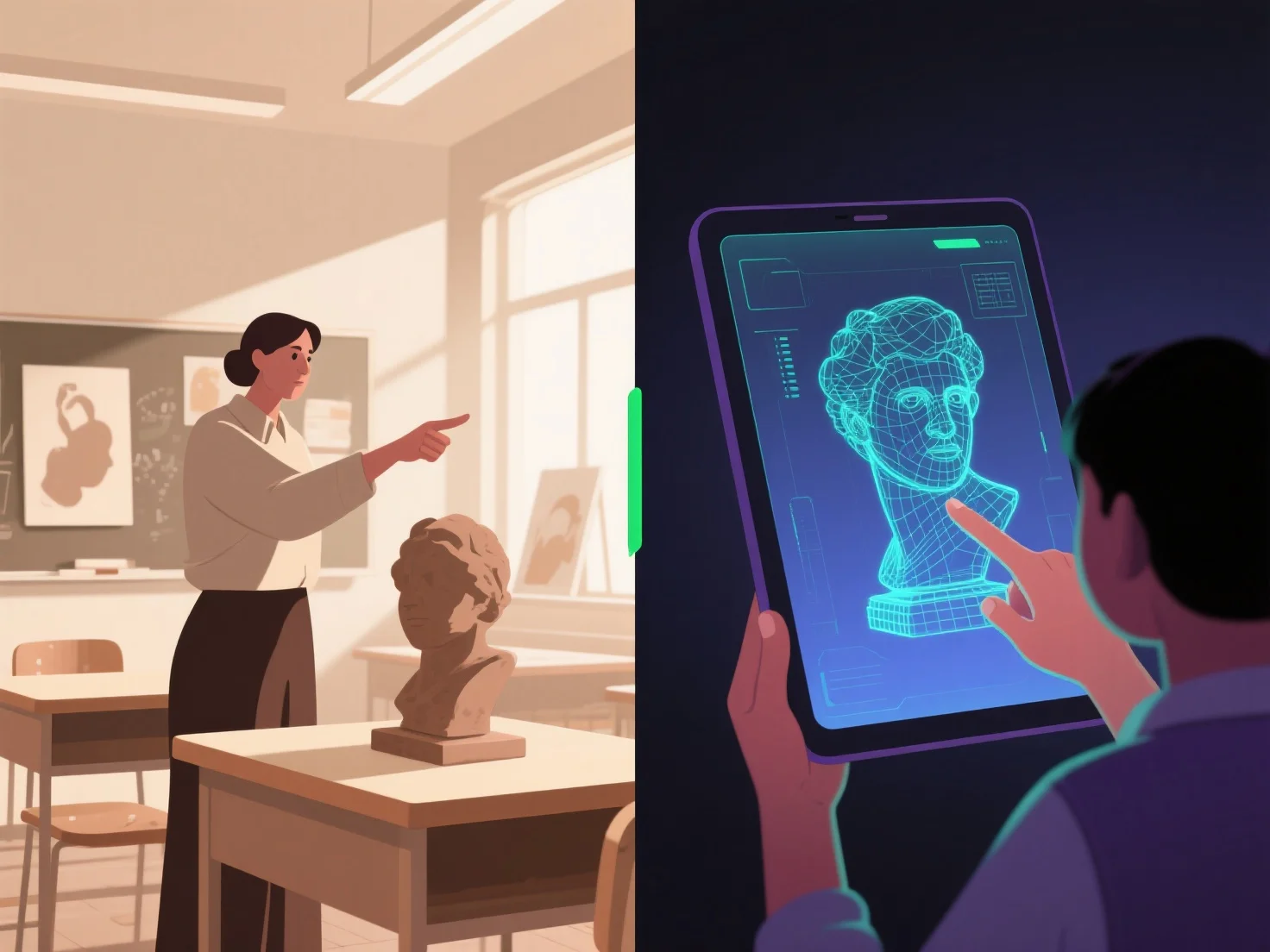
3D modeling enhances art and design teaching by enabling students to visualize, manipulate, and iterate on three-dimensional forms, deepening understanding of spatial relationships and design principles. It provides a digital platform for hands-on creation, allowing adjustments to designs—such as modifying proportions or testing structures—without physical material waste.
Key applications include: - Sculpture: Experimenting with complex shapes and textures digitally before physical creation. - Product Design: Prototyping functional objects to test ergonomics and aesthetics. - Architecture: Visualizing building spaces to grasp scale and layout.
User-friendly 3D software further makes learning engaging and accessible for beginners, fostering creativity and practical skill development.