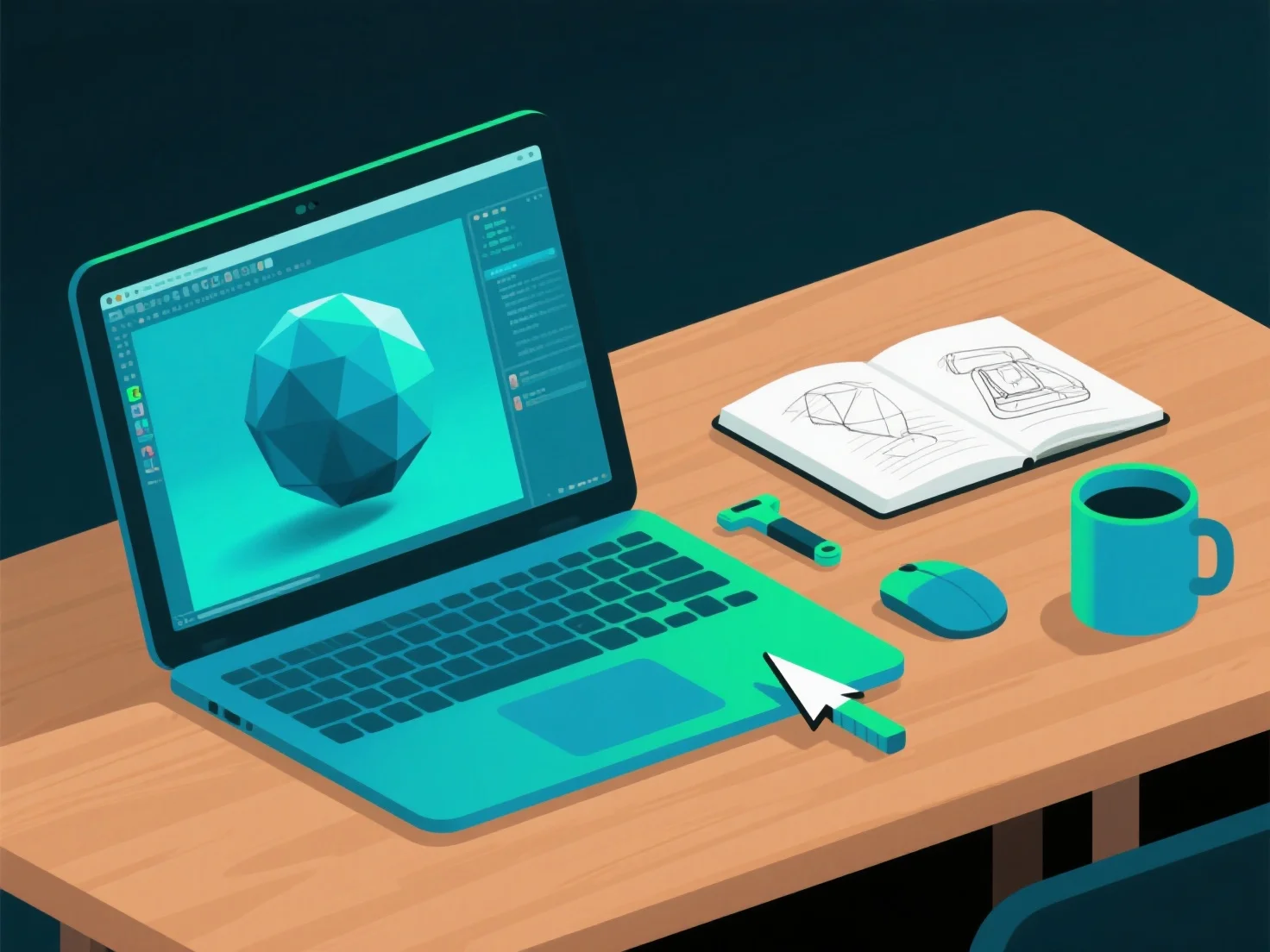
The first steps to learn 3D modeling for game design involve selecting suitable software, mastering basic tools, and practicing simple projects—laying the foundation for creating game assets.
Select software: Choose beginner-friendly tools like Blender (free, widely used) or Maya (industry standard) to align with learning goals and professional workflows.
Learn basic tools: Focus on core functions such as extrusion (shaping forms), scaling (adjusting size), and vertex manipulation (fine-tuning details)—these are essential for building 3D objects.
Practice simple projects: Start with low-poly props (e.g., a cube, a cup) to apply basic skills, reinforce learning, and build confidence before moving to complex assets like characters or environments.
These steps ensure a solid base, making it easier to progress to advanced game design modeling later.
