Home/Hitem3D FAQ/How does the PBR (Physically Based Rendering) model improve lighting accuracy?

How does the PBR (Physically Based Rendering) model improve lighting accuracy?

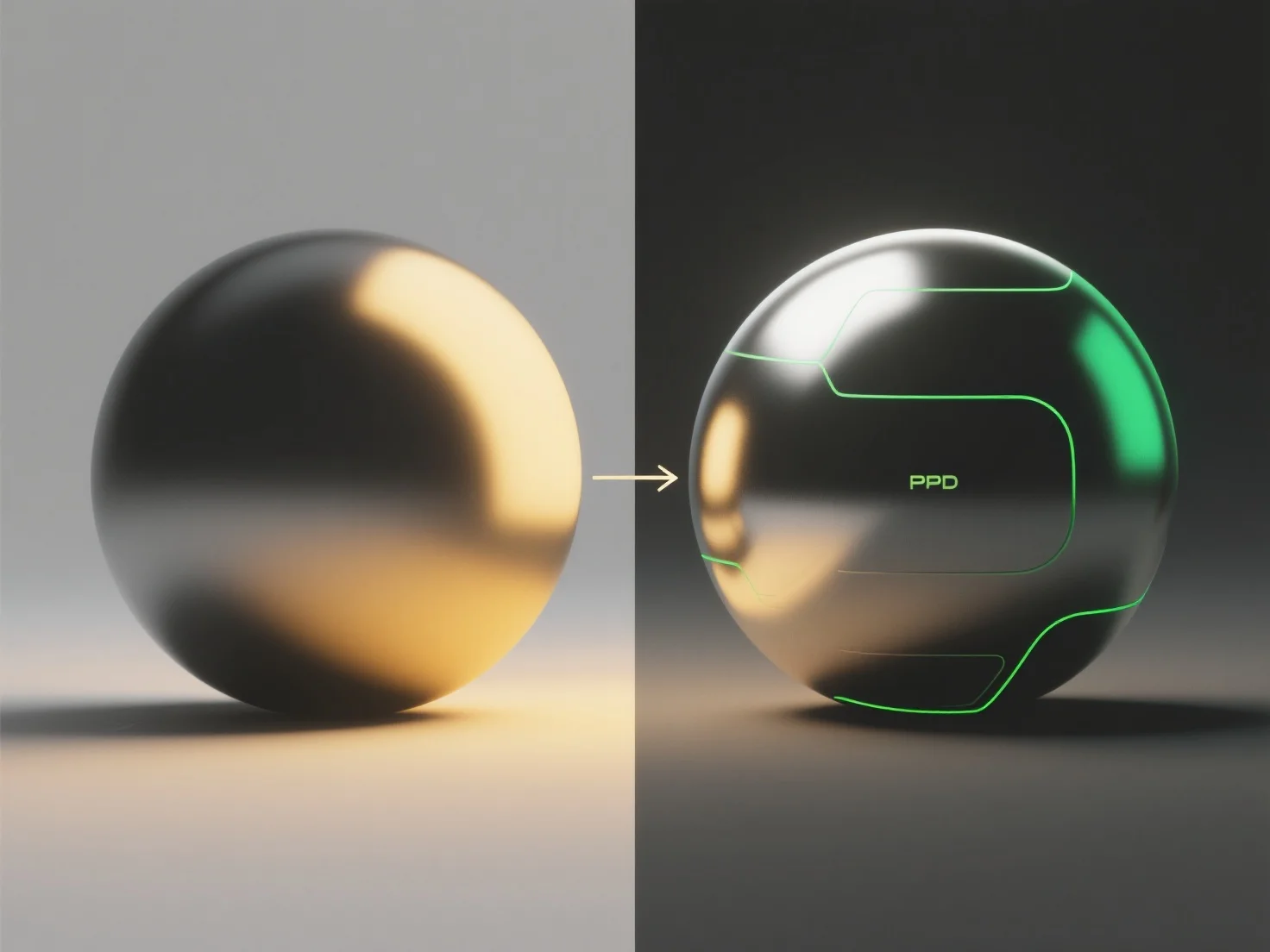
PBR enhances lighting accuracy by simulating real-world light-material interactions via physical algorithms and material properties.

How does the PBR (Physically Based Rendering) model improve lighting accuracy?

PBR (Physically Based Rendering) improves lighting accuracy by simulating real-world light-material interactions through physically accurate algorithms, ensuring consistent, lifelike lighting by replicating natural light behaviors (e.g., reflection, energy conservation) based on material properties like albedo, roughness, and metallicity.

Key mechanisms for accuracy: - Relies on physical material attributes: Uses albedo (base color), roughness (surface texture), and metallicity (conductivity) to define light interaction, avoiding arbitrary manual adjustments. - Enforces energy conservation: Mimics real-world physics where light energy isn’t created or destroyed—e.g., rough surfaces scatter more light, smooth ones reflect more, maintaining realistic energy balance. - Adapts to dynamic environments: Automatically adjusts to varying light conditions (sunlight, indoor lamps), unlike traditional rendering requiring scene-specific tweaks.

This makes PBR ideal for gaming, film, and product visualization, simplifying accurate, natural lighting without complex manual tuning.

PreviousNext
产品
Web 工作室
API 平台
功能
图片转 3D
多视图转 3D
浮雕
分割
模型
通用模型
人像模型
资源
博客
常见问题
API 文档
关于我们
定价