


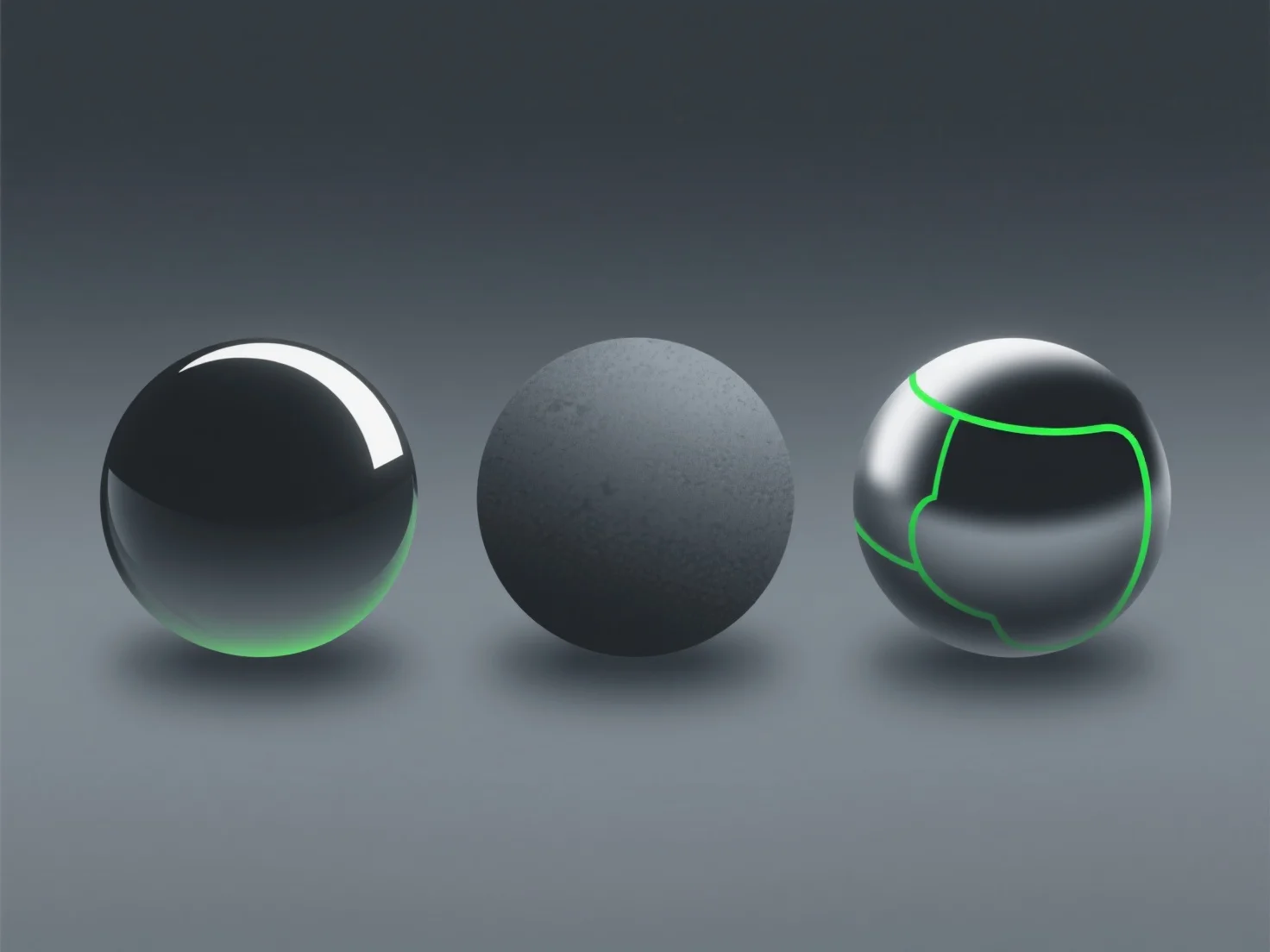
Матеріали безпосередньо формують візуальний вигляд 3D-моделей, визначаючи зовнішній вигляд поверхні та реалізм за допомогою взаємодії зі світлом, такого як відбиття, поглинання або прозорість.
Вони деталізують основні властивості, такі як колір, текстура, блиск і шорсткість, визначаючи, чи виглядає модель металевою, матовою, прозорою або текстурованою в рендерах або в режимі реального часу.
Ключові застосування у різних галузях включають: - Ігри: Створення реалістичних поверхонь (наприклад, металевої броні, тканинного одягу), щоб підвищити занурення у сцену. - Архітектура: Моделювання таких матеріалів, як дерево, скло або бетон, для реалістичних попередніх відображень будівель. - Дизайн продукту: Перегляд того, як матеріали (пластик, метал, шкіра) виглядають на прототипах при різному освітленні.
Коригування властивостей матеріалу.