


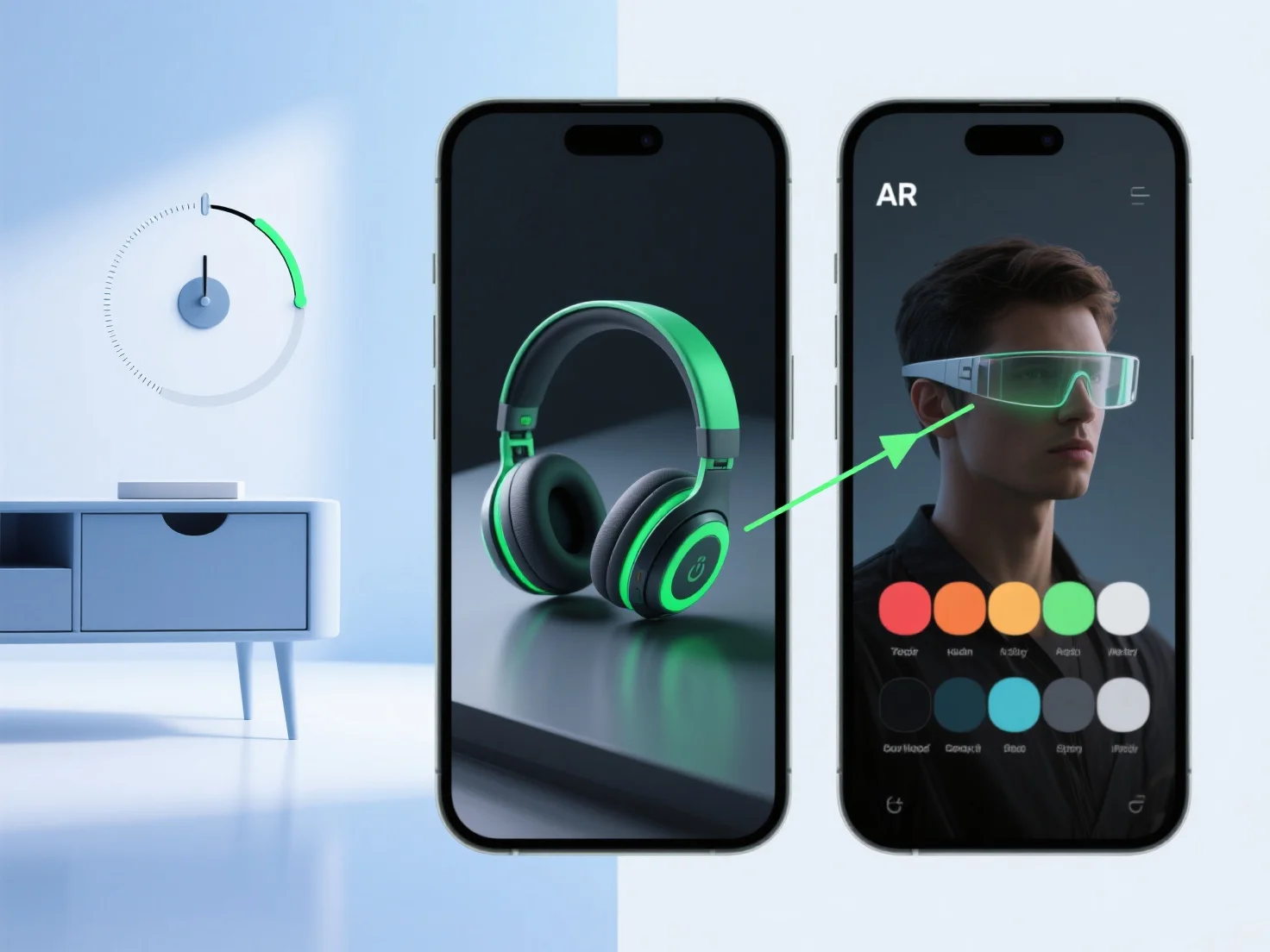
Звичні форми використання 3D в електронній комерції включають 3D-моделі продуктів, інтерактивні перегляди на 360 градусів, інструменти віртуальної примірки та конфігуратори віртуальних продуктів, усі спрямовані на покращення візуалізації продукту та зменшення розриву між онлайн- та офлайн-досвідом.
1. 3D-моделі продуктів: Пропонують детальні 360-градусні обертання та зум, що дозволяє користувачам уважно оглядати текстури, розміри та особливості. Ідеально підходить для складних предметів, таких як електроніка або меблі. 2. 360-градусні інтерактивні перегляди: Прості у виготовленні з послідовними зображеннями, що показують продукти з усіх кутів; недорогий варіант для малих підприємств, які тільки починають використовувати 3D-технології. 3. Інструменти віртуальної примірки: Використовують доповнену реальність для симуляції використання продукту (наприклад, віртуальне приміркування ювелірних виробів, проби косметики), підвищуючи залученість та зменшуючи кількість повернень товару. 4. Віртуальні конфігуратори продуктів: Дозволяють клієнтам налаштовувати продукти (колір, матеріал, деталі) в режимі реального часу, візуалізуючи персоналізовані варіанти перед покупкою.
Ці реалізації роблять онлайн-продукти більш відчутними, сприяють конверсії, зменшують невизначеність і підвищують загальну задоволеність покупками.