


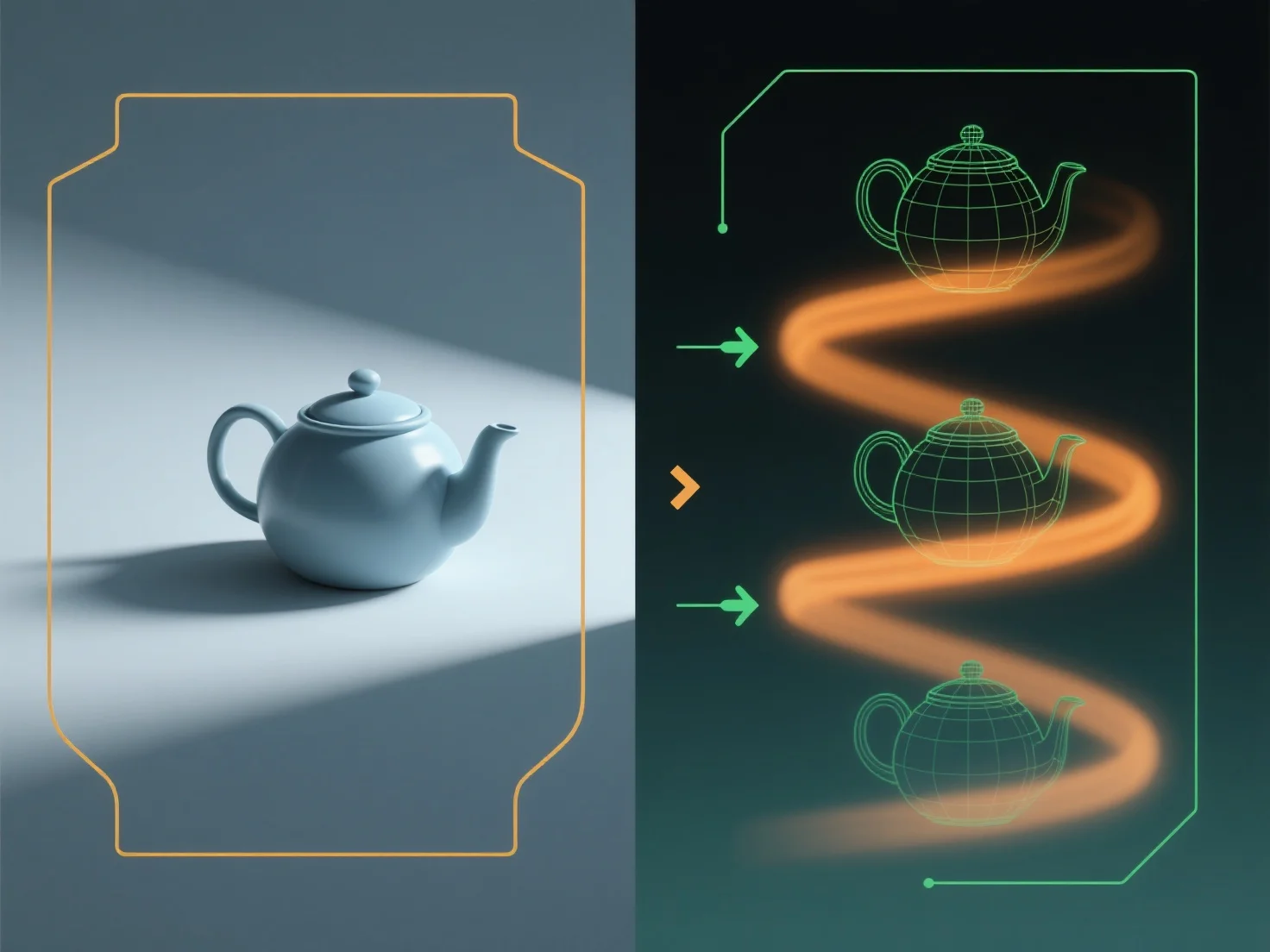
Піплін рендерингу для статичних зображень і анімованих сцен відрізняється в основному залежно від часу: статичні зображення фокусуються на одному кадрі, тоді як анімовані сцени вимагають послідовності кадрів у часі та розрахунків руху.
Статичні процеси обробки зображень обробляють один кадр із фіксованою геометрією, текстурами та освітленням. Не залучаються ніякі часові змінні. Основні етапи включають обробку геометрії, освітлення та затінення для створення одного фінального зображення.
На відміну від цього, анімовані пайплайни працюють у режимі реального часу, оновлюючи положення, обертання або деформації об'єктів кадр за кадром. Вони також інтегрують ефекти, пов'язані з рухом, такі як розмиття руху, щоб імітувати плавний рух між послідовними кадрами.
Коротко кажучи, статичне рендериння обробляє один момент, тоді як анімоване рендериння керує послідовністю динамічних моментів у часі.