


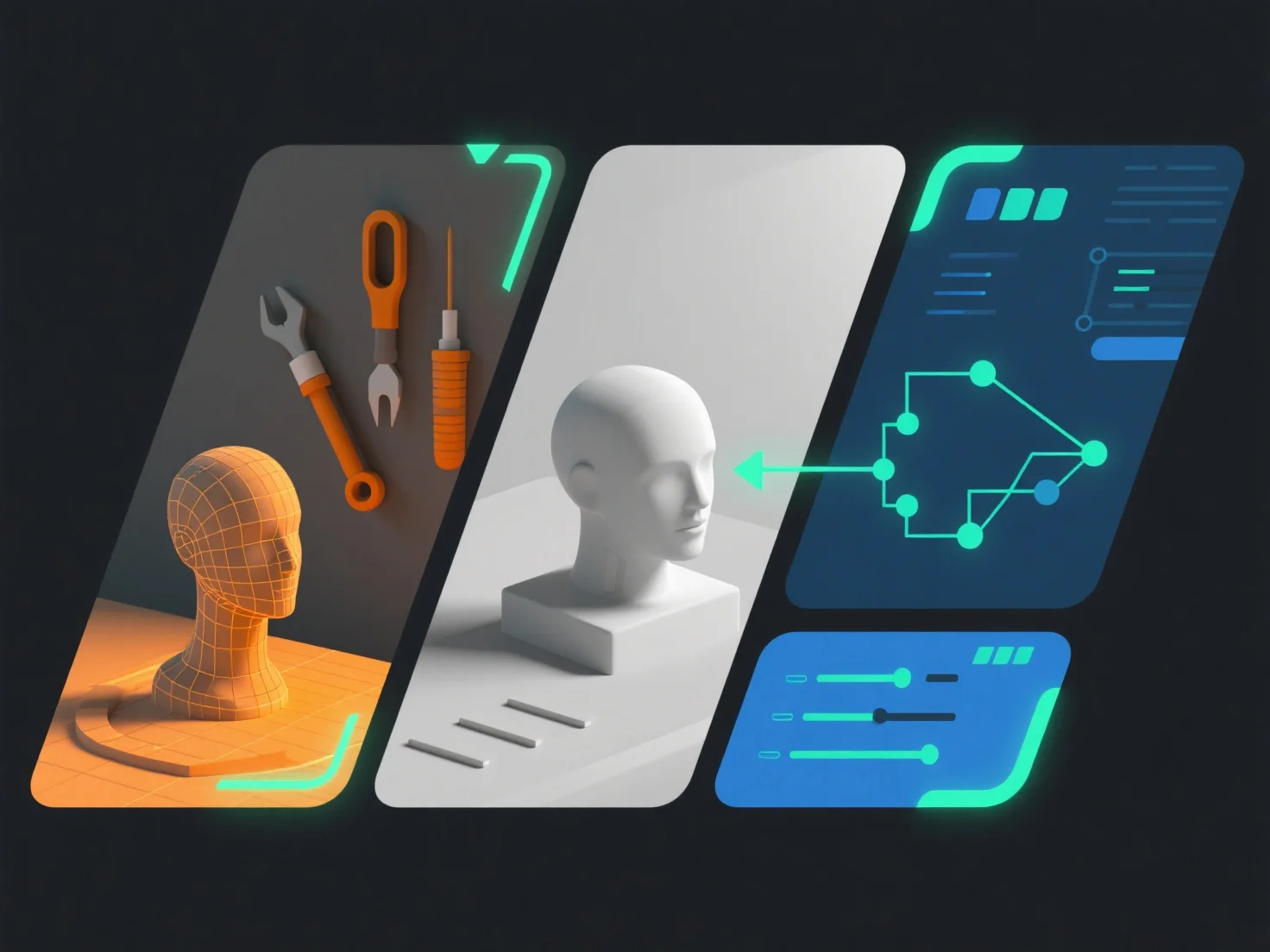
Інструменти на основі ролей підвищують ефективність 3D-робочого процесу, налаштовуючи інструменти та інтерфейси відповідно до конкретних ролей користувачів, зменшуючи складність і спрощуючи виконання завдань.
- **Індивідуальний доступ до інструментів**: Кожна роль (наприклад, моделери, аніматори, рендерери) має доступ лише до відповідних інструментів, що зменшує відволікання та непотрібні кроки. - **Скорочення часу на навчання**: Спрощені інтерфейси, орієнтовані на конкретні ролі, скорочують час навчання, дозволяючи користувачам швидше освоювати інструменти. - **Покращення координації**: Чіткі визначення ролей узгоджують зусилля команди, уникаючи дублювання або прогалин у таких завданнях, як текстурування або риггінг.
Зосереджуючись на потребах, специфічних для певної ролі, це оптимізує продуктивність і забезпечує безперешкодний прогрес у робочому процесі.