


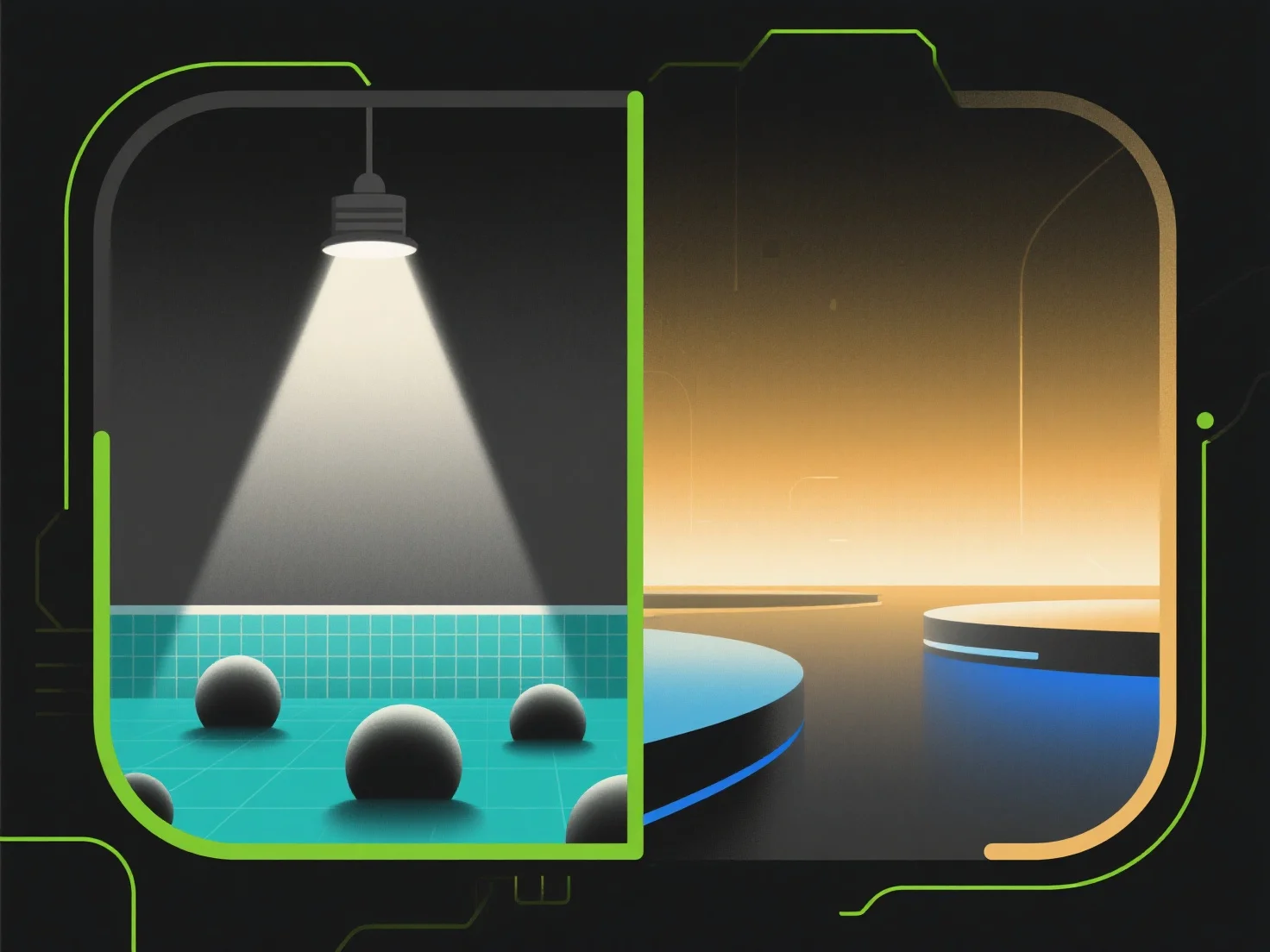
Зменшення інтенсивності світла у 3D-рендерингу безпосередньо впливає на реалізм, глибину та настрій сцени, контролюючи те, як інтенсивність світла зменшується з відстанню від джерела.
Він імітує фізичні закони реального світу: близькі об'єкти виглядають яскравіше, а далекі об'єкти природним чином стають менш яскравими, що допомагає глядачам сприймати просторові відносини та уникнути плоского, штучного вигляду.
Настрій залежить від типу згасання: м'яке, поступове згасання.
Неправильне затухання порушує занурення. Рівномірна інтенсивність (без затухання) виглядає нереально, а надто стріме затухання може надто затемнити віддалені області.
Зрештою, налаштування параметрів ослаблення є ключовим для балансування реалізму, глибини та бажаного емоційного настрою у рендерах.